Acetonitrile → Caprolactam
Reaction equation

[H][H].S.[C:4]1(=[O:11])[NH:10][CH2:9][CH2:8][CH2:7][CH2:6][CH2:5]1.[C:12](#N)C>C1COCC1>[CH3:12][CH:4]1[CH2:5][CH2:6][CH:7]([CH3:8])[O:11]1.[C:4]1(=[O:11])[NH:10][CH2:9][CH2:8][CH2:7][CH2:6][CH2:5]1Participants
6
Reactant 3

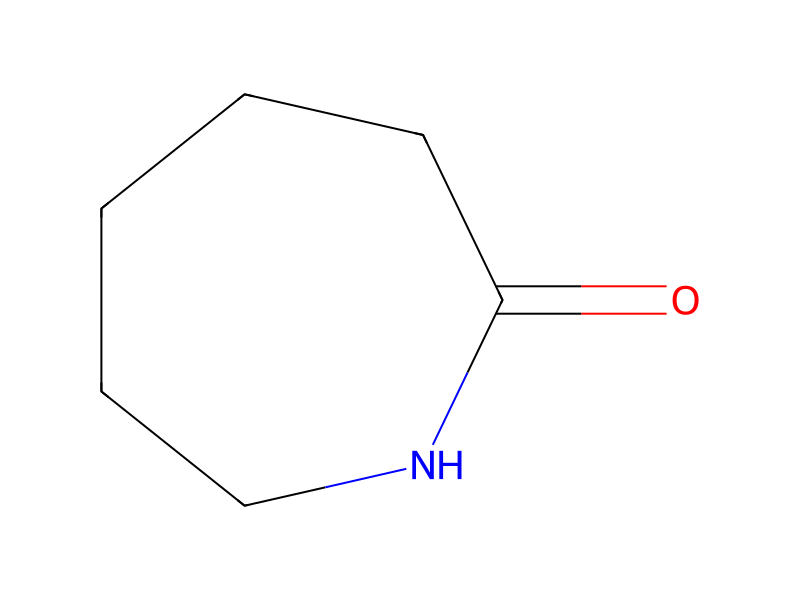

Product 2

Reagents, catalysts & solvents 1

Procedure
Prior to optimization of the initial H2/H2S atmosphere and the mol % catalyst of presulfided Pt (Pt—S/C) employed, a range of solvents is examined (Table 5). No formation of caprolactam is observed using acetonitrile (entry 1, Table 5) as solvent. The highest yield of caprolactam is achieved using THF (entry 2, Table 5). Use of 2,5-dimethyltetrahydrofuran (entry 3, Table 5) results in a tenfold reduction in the yield of caprolactam relative to use of THF as solvent (entry 3 vs. entry 2, Table 5).
Sources & evidence
- ORD record
- ord-087dcbe524b9493688bef85ca497372e
- Source dataset
- uspto-grants-2012_10
- Patent number
- US08283466B2
Reaction notes
Loading…