Trichloroisocyanuric Acid → Methyl 1-formylcyclopropane-1-carboxylate
Reaction equation

[OH:1][CH2:2][C:3]1([C:6]([O:8][CH3:9])=[O:7])[CH2:5][CH2:4]1.ClN1C(=O)N(Cl)C(=O)N(Cl)C1=O>ClCCl.CC1(C)N([O])C(C)(C)CCC1>[CH:2]([C:3]1([C:6]([O:8][CH3:9])=[O:7])[CH2:5][CH2:4]1)=[O:1]Participants


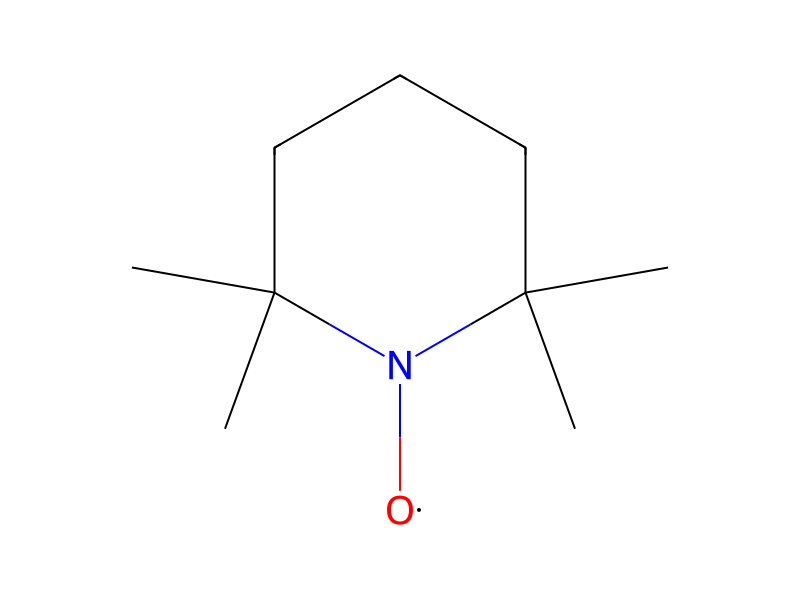

Conditions
- Temperature
- -5 °C
Procedure
Methyl 1-(hydroxymethyl)cyclopropanecarboxylate (16.0 g, 123.07 mmol) is dissolved in dichloromethane (320 mL) and the mixture is cooled to −5° C. Trichloroisocyanuric acid (29.1 g, 125.5 mmol) is added portionwise followed by the addition of TEMPO (1.9 g, 12.3 mmol). The reaction mixture is stirred at −5° C. for 20 min, allowed to warm to RT, and stirred for 20 min. The mixture is filtered through a pad of CELITE® and diluted with dichloromethane (500 mL). The solution is washed with saturated Na2CO3 (300 mL), 1 N HCl (300 mL), brine (300 mL), and saturated ammonium chloride (3×200 mL). The organic portion is dried over MgSO4, filtered, and concentrated under reduced pressure to obtain 19 g of the title compound, still containing dichloromethane (theoretical 15.75 g). The material is used as is in the next reaction. 1H NMR (400 MHz, CDCl3); δ 1.7-1.6 (m, 4H), 3.81 (s, 3H), 10.38 (s, 1H).
Workup
- temperatureto warm to RT
- stirringstirred for 20 min
- filtrationThe mixture is filtered through a pad of CELITE®
- additiondiluted with dichloromethane (500 mL)
- washThe solution is washed with saturated Na2CO3 (300 mL), 1 N HCl (300 mL), brine (300 mL), and saturated ammonium chloride (3×200 mL)
- dry with materialThe organic portion is dried over MgSO4
- filtrationfiltered
- concentrationconcentrated under reduced pressure
Sources & evidence
- ORD record
- ord-f2f32ee37baa43828d37d34f880d40da
- Source dataset
- uspto-grants-2012_10
- Patent number
- US08288548B2
Reaction notes
Loading…