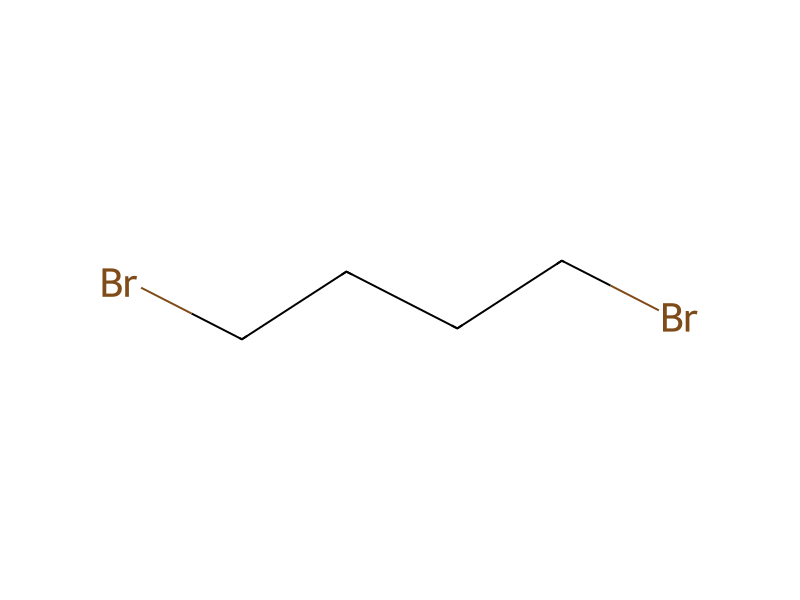
1,4-Dibromobutane → HCID 57815681, compound
Reaction equation

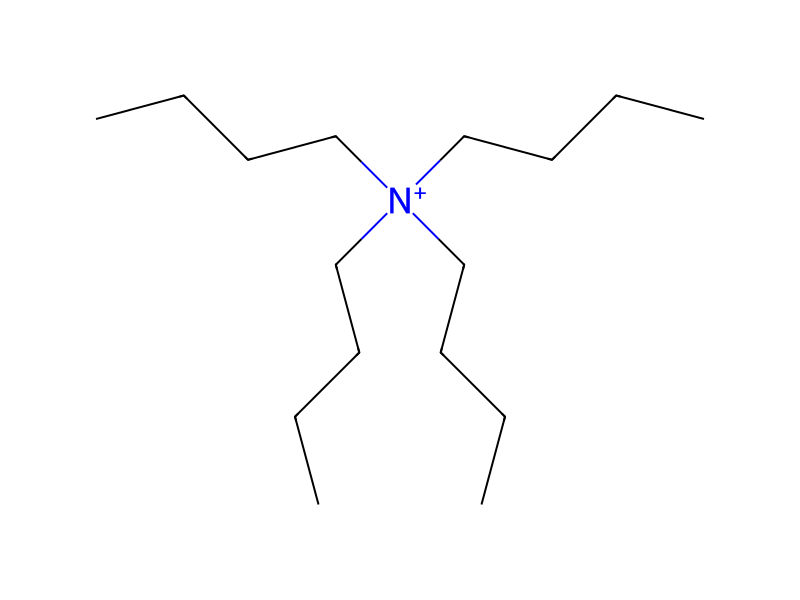
[Br:1][CH2:2][CH2:3][CH2:4][CH2:5]Br.[CH3:7][C:8](=[CH:10][CH2:11][CH2:12]/[C:13](=[CH:15]/[CH2:16][OH:17])/[CH3:14])[CH3:9].C([N+](CCCC)(CCCC)CCCC)CCC>CCCCCC.O>[CH2:16]([O:17][CH2:5][CH2:4][CH2:3][CH2:2][Br:1])/[CH:15]=[C:13](/[CH2:12][CH2:11][CH:10]=[C:8]([CH3:9])[CH3:7])\[CH3:14]Participants
Reactant 3

Product 1

Reagents, catalysts & solvents 2


Procedure
1,4-Dibromobutane (42.7 g, 198 mmol), geraniol (8.78 g, 56.9 mmol) and tetrabutylammonium w/v, 70 mL) was added with stirring. The reaction mixture was heated at reflux for 3 h under N2. then left stirring under N2 for a further two days. Heating at reflux was resumed for a further 20 h and then the reaction mixture was cooled to room temperature and diluted with hexane (80 mL) and water (80 ml). The product was partitioned into the hexane layer and then the water layer was extracted with ether (2×20 mL). The combined organic layers were dried (Na2SO4) and the solvent was removed under reduced pressure to give a pale yellow oil. The oil was distilled under high vacuum (Kugelrohr) to remove the remaining dibromobutane thereby leaving the product as a yellow/orange oil (58 g).
Workup
- addition70 mL) was added
- temperatureThe reaction mixture was heated
- temperatureat reflux for 3 h under N2
- waitthen left
- stirringstirring under N2 for a further two days
- temperatureHeating
- temperatureat reflux
- customThe product was partitioned into the hexane layer
- extractionthe water layer was extracted with ether (2×20 mL)
- dry with materialThe combined organic layers were dried (Na2SO4)
- customthe solvent was removed under reduced pressure
- customto give a pale yellow oil
- distillationThe oil was distilled under high vacuum (Kugelrohr)
- customto remove the remaining dibromobutane
Sources & evidence
- ORD record
- ord-0c8407e2b4a84bb4836128840365de83
- Source dataset
- uspto-grants-2012_10
- Patent number
- US08292995B2
Reaction notes
Loading…