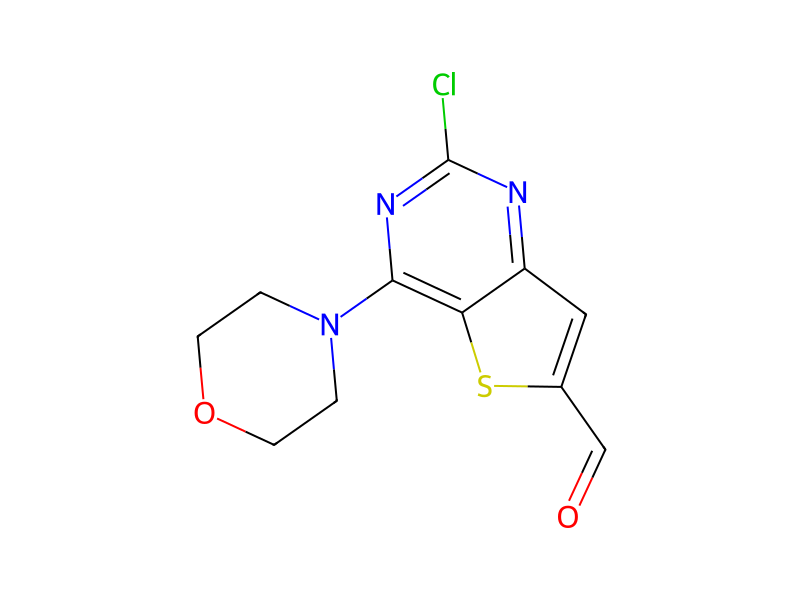
2-Chloro-4-morpholinothieno[3,2-d]pyrimidine-6-carbaldehyde → HCID 58117120, compound
Reaction equation

[CH3:1][CH:2]1[CH:6]([N:7]2[CH2:12][CH2:11][NH:10][CH2:9][CH2:8]2)[CH2:5][CH2:4][O:3]1.[Cl:13][C:14]1[N:15]=[C:16]([N:25]2[CH2:30][CH2:29][O:28][CH2:27][CH2:26]2)[C:17]2[S:22][C:21]([CH:23]=O)=[CH:20][C:18]=2[N:19]=1>>[Cl:13][C:14]1[N:15]=[C:16]([N:25]2[CH2:26][CH2:27][O:28][CH2:29][CH2:30]2)[C:17]2[S:22][C:21]([CH2:23][N:10]3[CH2:9][CH2:8][N:7]([CH:6]4[CH2:5][CH2:4][O:3][CH:2]4[CH3:1])[CH2:12][CH2:11]3)=[CH:20][C:18]=2[N:19]=1Participants
3


Procedure
1-(2-methyl-tetrahydro-furan-3-yl)-piperazine was reacted with 2-chloro-4-morpholin-4-yl-thieno[3,2-d]pyrimidine-6-carbaldehyde under reductive amination conditions described in Reference Example 39, to give, after silica chromatography purification the title compound as a white solid (110 mg, 43%).
Workup
- customto give
- customafter silica chromatography purification the title compound as a white solid (110 mg, 43%)
Sources & evidence
- ORD record
- ord-3719893d9b424563bf94a47eb46f29e1
- Source dataset
- uspto-grants-2012_10
- Patent number
- US08293735B2
Reaction notes
Loading…