Potassium Carbonate → 1-(4-(3-Hydroxypropyl)piperazin-1-yl)ethan-1-one
Reaction equation

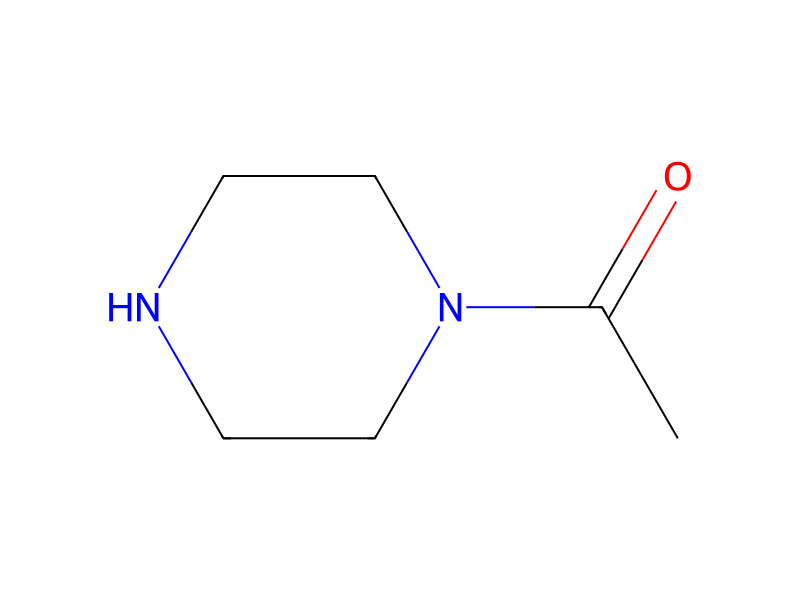
[C:1]([N:4]1[CH2:9][CH2:8][NH:7][CH2:6][CH2:5]1)(=[O:3])[CH3:2].C(=O)([O-])[O-].[K+].[K+].Br[CH2:17][CH2:18][CH2:19][OH:20]>C(#N)C.C(OCC)C>[C:1]([N:4]1[CH2:9][CH2:8][N:7]([CH2:17][CH2:18][CH2:19][OH:20])[CH2:6][CH2:5]1)(=[O:3])[CH3:2]Participants
6





Procedure
1-Acetylpiperazine (15.0 g, 117 mmol) was dissolved in acetonitrile (200 ml) and potassium carbonate (40.4 g, 293 mmol) was added followed by 3-bromo-1-propanol (10.6 ml, 117 mmol). The mixture was heated at reflux for 2.5 hours, cooled, filtered and concentrated under reduced pressure. The resulting viscous oil was cooled in ice for 3 hours and the crystalline product that formed was suspended in diethyl ether and filtered off. The hydroscopic solid was dried under vacuum (P2O5) overnight to give 3-(4-acetylpiperazin-1-yl)propan-1-ol (17.3 g, 90%) as a pale yellow solid.
Workup
- temperatureThe mixture was heated
- temperatureat reflux for 2.5 hours
- temperaturecooled
- filtrationfiltered
- concentrationconcentrated under reduced pressure
- temperatureThe resulting viscous oil was cooled in ice for 3 hours
- customthe crystalline product that formed
- filtrationfiltered off
- dry with materialThe hydroscopic solid was dried under vacuum (P2O5) overnight
Sources & evidence
- ORD record
- ord-3a3f212492f745749b3344bedb77a229
- Source dataset
- uspto-grants-2012_10
- Patent number
- US08293902B2
Reaction notes
Loading…