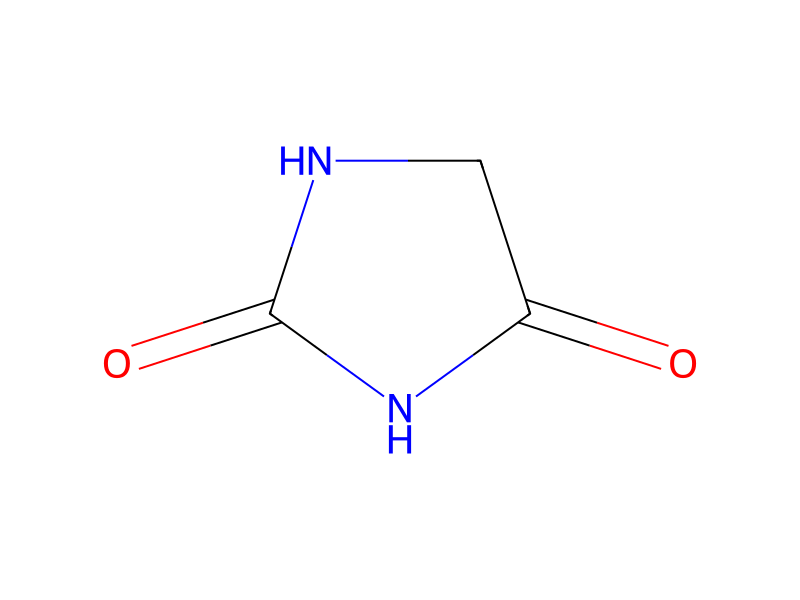
Hydantoin → 3-(3-Benzyloxypropyl)imidazolidine-2,4-dione
Reaction equation

[NH:1]1[CH2:5][C:4](=[O:6])[NH:3][C:2]1=[O:7].[CH2:8]([O:15][CH2:16][CH2:17][CH2:18]O)[C:9]1[CH:14]=[CH:13][CH:12]=[CH:11][CH:10]=1.C1(P(C2C=CC=CC=2)C2C=CC=CC=2)C=CC=CC=1.N(C(OC(C)C)=O)=NC(OC(C)C)=O>C(Cl)Cl>[CH2:8]([O:15][CH2:16][CH2:17][CH2:18][N:3]1[C:4](=[O:6])[CH2:5][NH:1][C:2]1=[O:7])[C:9]1[CH:14]=[CH:13][CH:12]=[CH:11][CH:10]=1Participants
6





Conditions
- Temperature
- 0 °C
Procedure
Imidazolidine-2,4-dione (1.0 g, 9.99 mmol), 3-benzyloxypropan-1-ol (1.91 ml, 12.0 mmol) and triphenylphosphine (3.1 g, 12.0 mmol) were stirred in methylene chloride (20 ml) and cooled to 0° C. Diisopropyl azodicarboxylate (2.36 μl, 12.0 mmol) in dichloromethane (5 ml) was slowly added and the mixture stirred at ambient temperature overnight. The mixture was washed with water, dried (MgSO4) and concentrated under reduced pressure. The residue was purified by column chromatography eluting with methylene chloride/methanol (98/2) to give 3-(3-benzyloxypropyl)imidazolidine-2,4-dione (1.3 g, 53%, containing 7% w/w triphenylphosphine oxide) as a pale yellow solid.
Workup
- washThe mixture was washed with water
- dry with materialdried (MgSO4)
- concentrationconcentrated under reduced pressure
- customThe residue was purified by column chromatography
- washeluting with methylene chloride/methanol (98/2)
Sources & evidence
- ORD record
- ord-c03970a2f494461e81e55fd60f6da13d
- Source dataset
- uspto-grants-2012_10
- Patent number
- US08293902B2
Reaction notes
Loading…