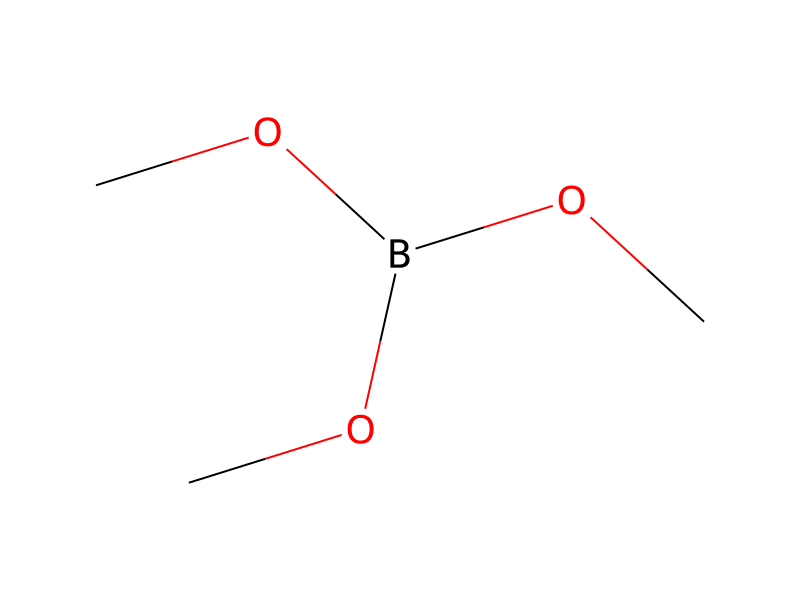
Trimethyl borate → (5-Cyano-2-Methoxyphenyl)Boronic Acid
Reaction equation

Br[C:2]1[CH:3]=[C:4]([CH:7]=[CH:8][C:9]=1[O:10][CH3:11])[C:5]#[N:6].C([Mg]Cl)(C)C.[B:17](OC)([O:20]C)[O:18]C>O1CCCC1>[C:5]([C:4]1[CH:7]=[CH:8][C:9]([O:10][CH3:11])=[C:2]([B:17]([OH:20])[OH:18])[CH:3]=1)#[N:6]Participants
Reactant 3

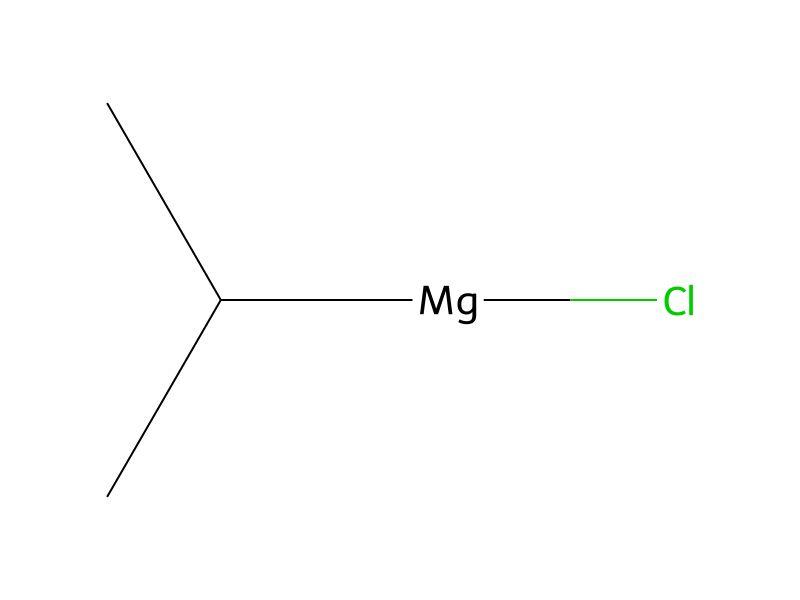
Product 1

Reagents, catalysts & solvents 1

Conditions
- Temperature
- -10 °C
Procedure
3-Bromo-4-methoxybenzonitrile (3.0 g, 14.2 mmol, 1.0 eq) was dissolved in anhydrous tetrahydrofuran (10 mLs). The solution cooled at −10° C. and stirred while isopropylmagnesium chloride (17.7 mmol, 8.8 mLs, 2.0 M in THF, 1.25 eq.) was added. The mixture was stirred for 1 hour and then trimethyl borate (1.87 g, 17.7 mmol, 2.0 mL) was added dropwise. The mixture was allowed to warm slowly to room temperature for 1 hour. The solvent was evaporated and the residue was partitioned between 5% citric acid and ethyl acetate. The organic layer was separated, washed with water and brine, dried over anhydrous magnesium sulfate and concentrated to a minimum volume under reduced pressure. The residue was recrystallized from hexanes to give 5-cyano-2-methoxybenzeneboronic acid (2.48 g, 99%) as a fluffy white powder.
Workup
- additionwas added
- temperatureto warm slowly to room temperature for 1 hour
- customThe solvent was evaporated
- customthe residue was partitioned between 5% citric acid and ethyl acetate
- customThe organic layer was separated
- washwashed with water and brine
- dry with materialdried over anhydrous magnesium sulfate
- concentrationconcentrated to a minimum volume under reduced pressure
- customThe residue was recrystallized from hexanes
Sources & evidence
- ORD record
- ord-ec2add57e93f4fa7b8edc10c442a2f96
- Source dataset
- uspto-grants-2012_10
- Patent number
- US08299110B2
Reaction notes
Loading…