O-Xylene → Bis(1-methylethyl)benzene
Reaction equation

C([Al](CC)CC)C.[O-2].[O-2].[O-2].[Al+3].[Al+3].[H][H].[C:15]1([CH:21]([CH3:23])[CH3:22])[CH:20]=[CH:19][CH:18]=[CH:17][CH:16]=1.[C:24]1(C)[C:25](C)=CC=C[CH:29]=1>[Ti](Cl)(Cl)(Cl)Cl.C1(C)C=CC=CC=1.C1C=CC=CC=1>[CH:21]([C:15]1[CH:20]=[CH:19][CH:18]=[CH:17][C:16]=1[CH:24]([CH3:25])[CH3:29])([CH3:23])[CH3:22]Participants
Reactant 5

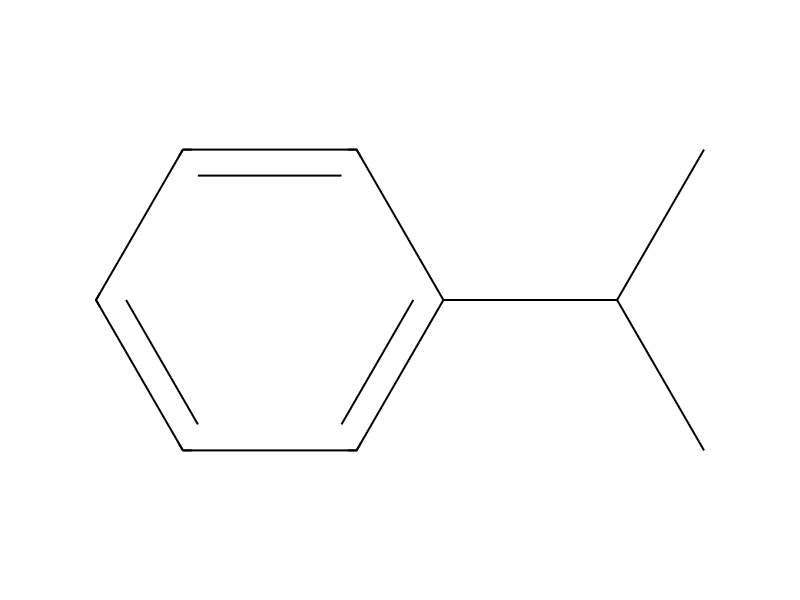
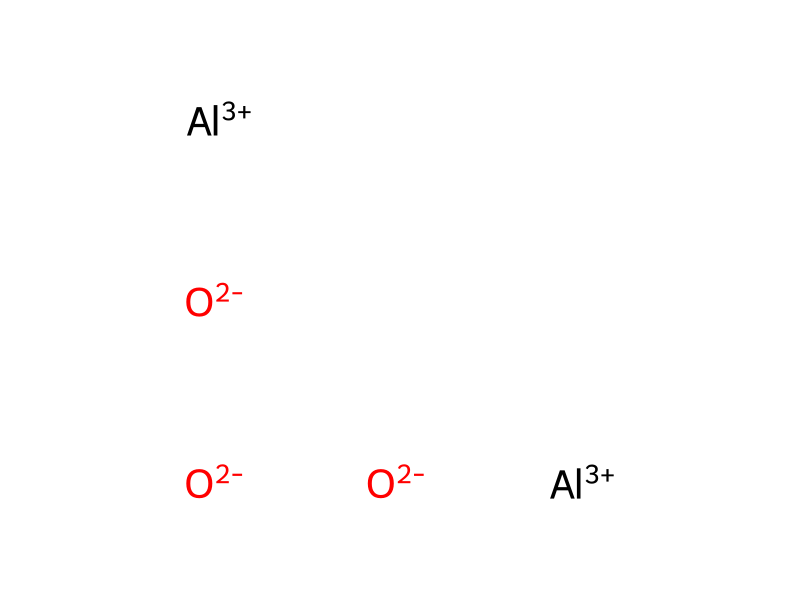
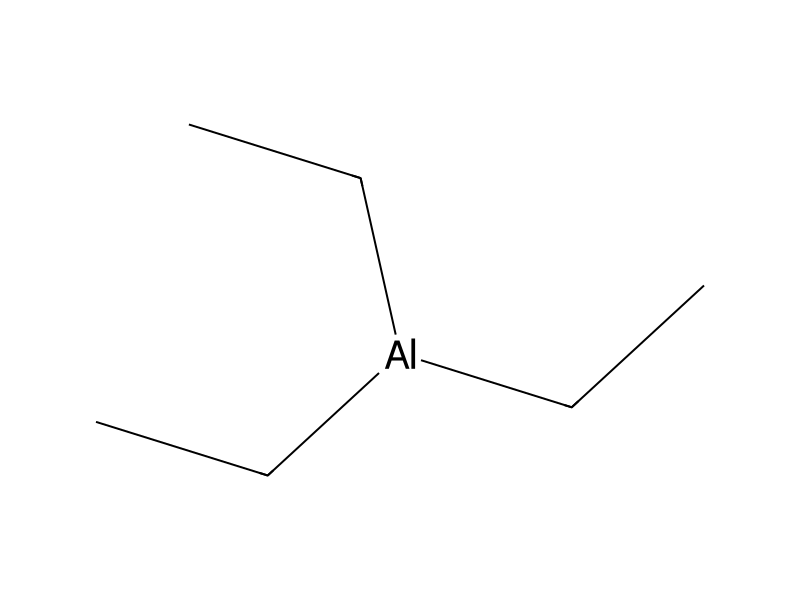

Product 1
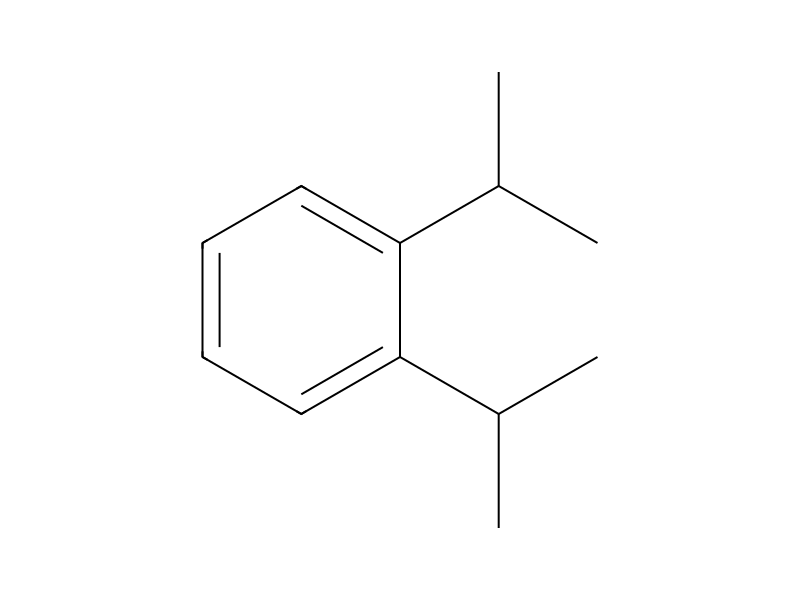
Reagents, catalysts & solvents 4



Procedure
Heretofore, the prior art has disclosed catalysts for the polymerization of olefins, said catalysts comprising those known in the art as Ziegler-Natta catalysts. These catalysts typically consist of titanium tetrachloride which has been activated with an aluminum alkyl and operate in the form of a sludge or slurry. For example, U.S. Pat. No. 2,945,845 discloses a titanium tetrachloride catalyst which is used in conjunction with an organic compound such as triethyl aluminum or U.S. Pat. Nos. 3,660,419 and 3,725,497 which also teach the use of titanium tetrachloride catalysts which have been activated with the organoaluminum compounds. Titanium tetrachloride is reduced to lower valent titanium chloride by the aluminum alkyl. Other titanium halide catalysts which have been disclosed in the prior art include those such as shown in U.S. Pat. No. 3,153,634 in which a titanium tetrahalide is impregnated on an alumina such as gamma-alumina and is thereafter subjected to reducing conditions such as by treatment with hydrogen at temperatures ranging from 250° to 500° C. Alternatively, the impregnated alumina could be reduced by contact with a solution or dispersion of a reducing agent such as the alkali or alkaline earth metals or metal hydrides, etc. However, the catalysts thus prepared are useful in polymerizing olefins to form solid polymers, and specifically, high molecular weight solid polymers in which the molecular weight will range from 300 to 100,000. In addition to describing the preparation of solid polymers, this patent also states that aromatic hydrocarbons such as benzene, toluene, xylene or ethers may be used as suitable diluents. However, this is in contradistinction to the heterogeneous oligomerization catalyst of the type hereinafter set forth in greater detail in which it has been found that it is not possible to utilize aromatic hydrocarbons as diluents inasmuch as the olefinic hydrocarbon, if present, would enter into the reaction in which the olefin would act as an alkylating agent rather than as a monomer in a polymerization reaction. Another prior art patent, namely, U.S. Pat. No. 2,965,686, discloses a catalyst which is prepared by activating alumina by evacuation at a temperature of 600° C. for a period ranging from about 18 hours to about 21.5 hours. After activation of the alumina, the base was then treated with a mixture of argon, an inert gas, and titanium tetrachloride vapor at a temperature of about 600° C for an unspecified period of time. The resultant catalyst was then used in an alkylation reaction for the propylation of cumene to form diisopropylbenzene. This patent is silent as to the type of alumina which was used as the base for the catalyst. In the process of the present invention, as will hereinafter be set forth in greater detail, it is believed that the substrate or base which is utilized must possess surface hydroxyl groups and therefore it is necessary to use specific type of alumina such as gamma-alumina, eta-alumina, etc. Another prior art reference which discloses polymerization catalysts is U.S. Pat. No. 3,506,633 which teaches polymeriation catalysts having a chlorine:titanium ratio of 2.5 to 3.5. However, in contradistinction to the catalyst of the present invention, this catalyst is used to prepare solid polymers. Yet another prior patent in this field is U.S. Pat. No. 2,381,481 in which the preparation and use of a catalyst prepared by treating alumina gel with fluotitanic acid is disclosed. However, as is the case of the previously mentioned patents, this catalyst is used to polymerize olefins to heavier hydrocarbons, i.e., solid polymers and is also used to alkylate paraffins with olefins, usually at temperatures ranging between 700° and 900° F. or higher. U.S. Pat. No. 2,951,885 discloses a titanium trihalide on an activated alumina or other activated acidic oxides. However, the catalyst is originally a tetrahalide which is subsequently reduced to a trihalide with an alkali metal such as sodium, potassium or lithium and used to alkylate benzene with olefins rather than for the oligomerization of olefins containing from 2 to about 6 carbon atoms.
Workup
- customranging from 250° to 500° C
- customthe catalysts thus prepared
- customto form solid polymers
- additionIn addition
- customthe preparation of solid polymers
- customwould act as an alkylating agent rather than as a monomer in a polymerization reaction
- customis prepared
- customat a temperature of 600° C.
- waitranging from about 18 hours to about 21.5 hours
- additionAfter activation of the alumina, the base was then treated with a mixture of argon
Sources & evidence
- ORD record
- ord-43e91a1e44a045bcbe1d3a306eeddeb3
- Source dataset
- uspto-grants-1977_09
- Patent number
- US04048109
Reaction notes
Loading…