Acrylonitrile → HCID 20310058, compound
Reaction equation

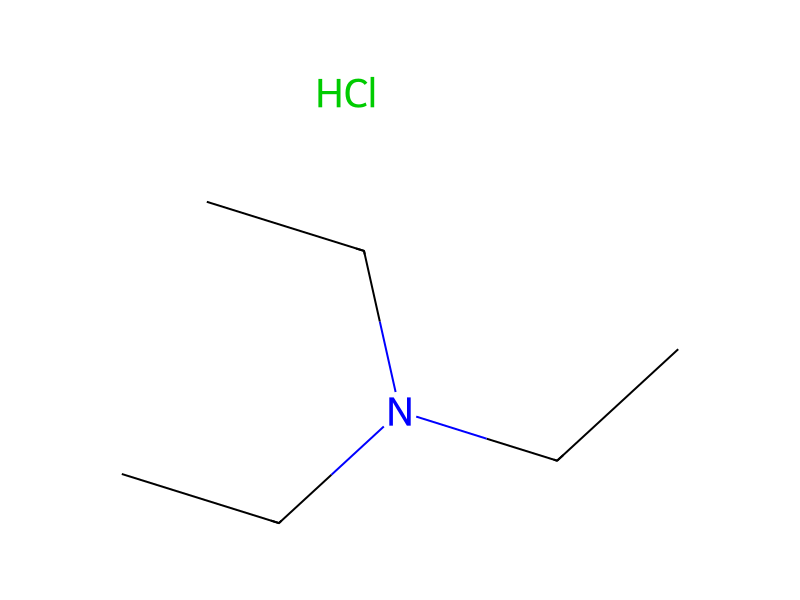
[Cl:1][CH:2]([Cl:17])[C:3]([F:16])([F:15])[O:4][C:5]1[CH:10]=[CH:9][C:8]([S:11](Cl)(=[O:13])=[O:12])=[CH:7][CH:6]=1.[C:18](#[N:21])[CH:19]=[CH2:20].[ClH:22].C(N(CC)CC)C>C(#N)C>[Cl:22][CH:19]([CH2:20][S:11]([C:8]1[CH:9]=[CH:10][C:5]([O:4][C:3]([F:16])([F:15])[CH:2]([Cl:17])[Cl:1])=[CH:6][CH:7]=1)(=[O:13])=[O:12])[C:18]#[N:21]Participants




Conditions
- Temperature
- 115 °C
Procedure
2-Chloro-3-((4-(2,2-dichloro-1,1-difluoroethoxy)phenyl)sulfonyl)propanenitrile (hereinafter "Compound") is prepared by mixing together 4-(2,2-dichloro-1,1-difluoroethoxy)benzenesulfonyl chloride with substantially two molecular proportions of acrylonitrile in the presence of acetonitrile, cupric chloride and triethylamine hydrochloride whereby the following reaction takes place: ##STR1## In the process, 4-(2,2-dichloro-1,1-difluoroethoxy)-benzenesulfonyl chloride (1 molar proportion), acrylonitrile (2 molar proportions), acetonitrile, anhydrous cupric chloride (.02 molar proportion) and triethylamine hydrochloride (0.032 molar proportion) are placed in a reaction vessel which is cooled, evacuated to about 2 mm mercury pressure, sealed and heated in an oil bath at about 115° C. for about six hours. The vessel is opened and the product is isolated by crystallization from methanol to give the title compound as a white, crystalline solid, melting at 109° C.
Workup
- customthe following reaction
- temperaturewhich is cooled
- customevacuated to about 2 mm mercury pressure
- customsealed
- customthe product is isolated by crystallization from methanol
Sources & evidence
- ORD record
- ord-80440a01130d4b228f7543726247170a
- Source dataset
- uspto-grants-1977_09
- Patent number
- US04049693
Reaction notes
Loading…