Water → Cobalt tetrakis(4-ethynylphenyl)porphyrin
Reaction equation

O.O.O.O.C([O-])(=O)C.[Co+2:9].C([O-])(=O)C.C12C=C3N=C(C=C3)C=C3NC(C=C3)=CC3=NC(C=C3)=CC(N1)=CC=2.[C:38]([C:40]1[CH:45]=[CH:44][C:43]([C:46]2[C:65]3[NH:66][C:62](=[CH:63][CH:64]=3)[C:61]([C:67]3[CH:72]=[CH:71][C:70]([C:73]#[CH:74])=[CH:69][CH:68]=3)=[C:60]3[N:75]=[C:57]([CH:58]=[CH:59]3)[C:56]([C:76]3[CH:81]=[CH:80][C:79]([C:82]#[CH:83])=[CH:78][CH:77]=3)=[C:55]3[NH:84][C:52]([CH:53]=[CH:54]3)=[C:51]([C:85]3[CH:90]=[CH:89][C:88]([C:91]#[CH:92])=[CH:87][CH:86]=3)[C:50]3=[N:93][C:47]=2[CH:48]=[CH:49]3)=[CH:42][CH:41]=1)#[CH:39].O>CN(C=O)C>[C:82]([C:79]1[CH:78]=[CH:77][C:76]([C:56]2[C:55]3[NH:84][C:52](=[CH:53][CH:54]=3)[C:51]([C:85]3[CH:90]=[CH:89][C:88]([C:91]#[CH:92])=[CH:87][CH:86]=3)=[C:50]3[N:93]=[C:47]([CH:48]=[CH:49]3)[C:46]([C:43]3[CH:44]=[CH:45][C:40]([C:38]#[CH:39])=[CH:41][CH:42]=3)=[C:65]3[NH:66][C:62]([CH:63]=[CH:64]3)=[C:61]([C:67]3[CH:68]=[CH:69][C:70]([C:73]#[CH:74])=[CH:71][CH:72]=3)[C:60]3=[N:75][C:57]=2[CH:58]=[CH:59]3)=[CH:81][CH:80]=1)#[CH:83].[Co:9]Participants
Reactant 4



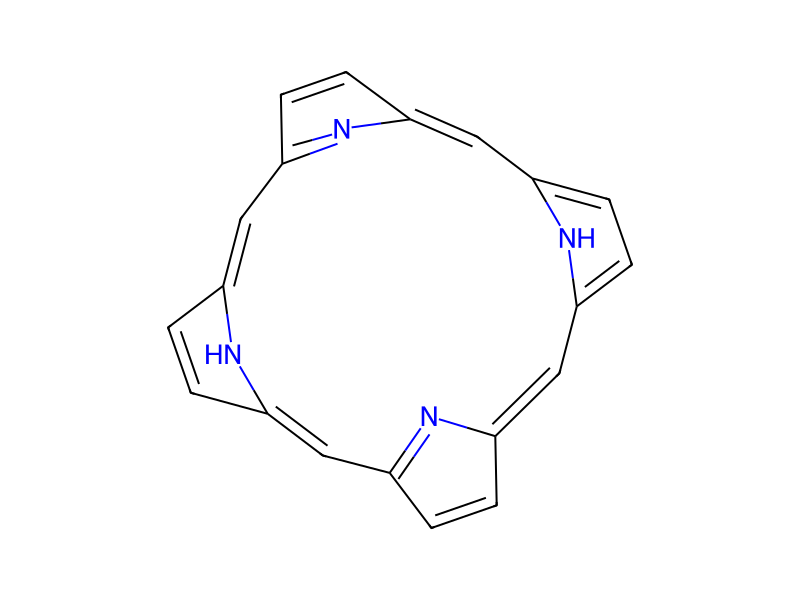
Product 1

Reagents, catalysts & solvents 1

Procedure
A solution of 8.71 g (35 mmol) of cobalt acetate tetrahydrate (Co(CH3COO)2.4H2O) in 100 ml of DMF was added portionwise to a solution of 1.7 g (2.39 mmol) of porphyrin TEPP (2) as obtained above in step 2), in 500 ml of DMF. The mixture obtained was refluxed for 20 hours. The heating was stopped and 150 ml of water were added to the reaction medium. The mixture was subsequently extracted with ethanol (4×200 ml) and the organic phase was then evaporated. The residue was dissolved in 300 ml of ethanol, and the organic phase was washed with 3×200 ml of water and dried over sodium sulfate. The solvent was evaporated off and the cobalt tetrakis(4-ethynylphenyl)porphyrin (Co-TEPP) (4) (1.19 g; 1.55 mmol; yield: 65%) was obtained in the form of a powder that was purple/black in color, and red in solution in chloroform.
Workup
- customThe mixture obtained
- temperaturewas refluxed for 20 hours
- extractionThe mixture was subsequently extracted with ethanol (4×200 ml)
- customthe organic phase was then evaporated
- dissolutionThe residue was dissolved in 300 ml of ethanol
- washthe organic phase was washed with 3×200 ml of water
- dry with materialdried over sodium sulfate
- customThe solvent was evaporated off
Sources & evidence
- ORD record
- ord-e045ffce964f454db3b0de71a4b4c582
- Source dataset
- uspto-grants-2011_04
- Patent number
- US07919046B2
Reaction notes
Loading…