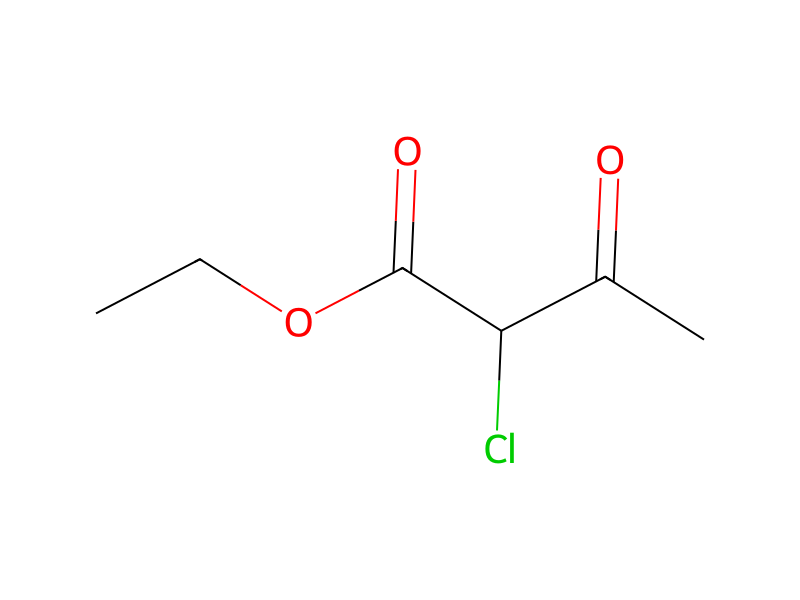
Ethyl 2-chloroacetoacetate → Ethyl 7-methoxy-2-methylimidazo[1,2-a]pyridine-3-carboxylate
Reaction equation

OC1C=CN2C(C(NC)=O)=C(C)N=C2C=1.[CH3:16][O:17][C:18]1[CH:23]=[CH:22][N:21]=[C:20]([NH2:24])[CH:19]=1.Cl[CH:26]([C:32](=O)[CH3:33])[C:27]([O:29][CH2:30][CH3:31])=[O:28]>C(O)C>[CH3:16][O:17][C:18]1[CH:23]=[CH:22][N:21]2[C:26]([C:27]([O:29][CH2:30][CH3:31])=[O:28])=[C:32]([CH3:33])[N:24]=[C:20]2[CH:19]=1Participants
5



Procedure
Note that 7-hydroxy-N,2-dimethylimidazo[1,2-α]pyridine-3-carboxamide 111-B was obtained by the following procedure. To a solution of 4-methoxypyridin-2-amine (prepared as in Org. Prep. & Proc. Int., 29, 1, 117-122, 1997) 2.8 g, 22.6 mmol in ethanol (100 ml) was added ethyl 2-chloro-3-oxobutanoate (6.2 ml, 45.2 mmol) and the resulting solution heated to reflux for 16 hours under a nitrogen atmosphere. The solvents were removed in-vacuo and the yellow solid was titrated with dichloromethane to extract the crude product. The dichloromethane extracts were concentrated and purified by flash chromatography (eluting with ethyl acetate) to yield ethyl 7-methoxy-2-methylimidazo[1,2-α]pyridine-3-carboxylate, 2 g, 38%, as a yellow solid.
Workup
- customwas obtained by the following procedure
- temperaturethe resulting solution heated
- temperatureto reflux for 16 hours under a nitrogen atmosphere
- customThe solvents were removed in-vacuo
- extractionto extract the crude product
- concentrationThe dichloromethane extracts were concentrated
- custompurified by flash chromatography (eluting with ethyl acetate)
Sources & evidence
- ORD record
- ord-c3ef833701c440b381ea38408143b629
- Source dataset
- uspto-grants-2011_04
- Patent number
- US07923457B2
Reaction notes
Loading…