3-Bromo-1-propanol → 4-(3-Hydroxypropoxy)benzonitrile
Reaction equation

[OH:1][C:2]1[CH:9]=[CH:8][C:5]([C:6]#[N:7])=[CH:4][CH:3]=1.Br[CH2:11][CH2:12][CH2:13][OH:14].[OH-].[Na+]>C1(C)C=CC=CC=1>[OH:14][CH2:13][CH2:12][CH2:11][O:1][C:2]1[CH:9]=[CH:8][C:5]([C:6]#[N:7])=[CH:4][CH:3]=1Participants
5
Reactant 3

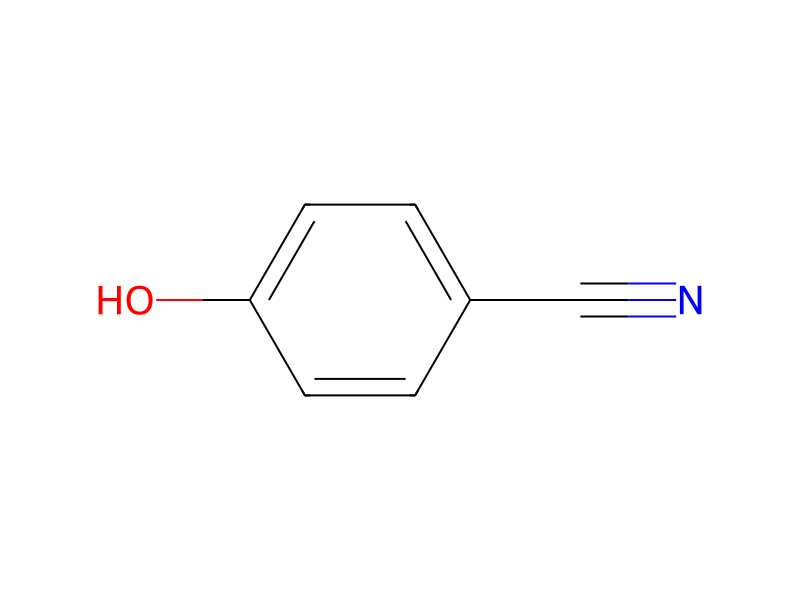

Product 1

Reagents, catalysts & solvents 1

Conditions
- Temperature
- 67.5 °C
Procedure
To a flask was added 4-hydroxybenzonitrile (50 g, 0.41 mol, 1 eq.) and toluene (400 mL). The resulting mixture was heated to 65° C.±5° C. To the stirring reaction mixture was added 3-bromo-1-propanol (72.90 g, 0.51 mol, 1.25 eq.) and then, over the course of 20 minutes, sodium hydroxide (210 mL, 2.5 M, 0.52 mol, 1.25 eq.). The reaction was heated to 65 to 70° C. for 17 hours. The aqueous layer was separated from the organic layer at 60 to 65° C. The organic layer was then employed directly in the next step without further purification. LC purity 95.3%.
Workup
- temperatureThe resulting mixture was heated to 65° C.±5° C
- customTo the stirring reaction mixture
- customThe aqueous layer was separated from the organic layer at 60 to 65° C
- customThe organic layer was then employed directly in the next step without further purification
Sources & evidence
- ORD record
- ord-cdfd90d926914ebd92cbca0ac4feda33
- Source dataset
- uspto-grants-2011_04
- Patent number
- US07928225B2
Reaction notes
Loading…