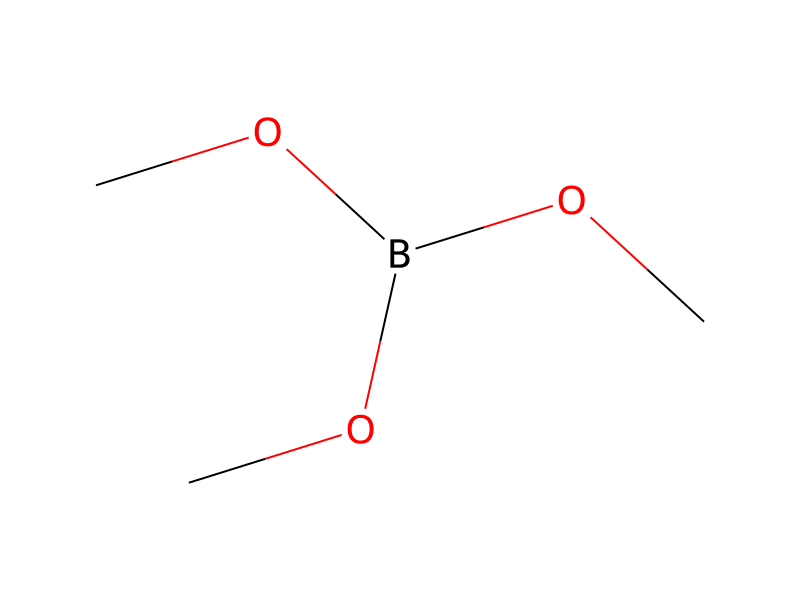
Trimethyl borate → (3-((4-(Tert-butoxycarbonyl)piperazin-1-yl)methyl)phenyl)boronic acid
Reaction equation

Br[C:2]1[CH:3]=[C:4]([CH2:8][N:9]2[CH2:14][CH2:13][N:12]([C:15]([O:17][C:18]([CH3:21])([CH3:20])[CH3:19])=[O:16])[CH2:11][CH2:10]2)[CH:5]=[CH:6][CH:7]=1.C([Li])CCC.C[O:28][B:29](OC)[O:30]C>C1COCC1>[CH3:19][C:18]([O:17][C:15]([N:12]1[CH2:13][CH2:14][N:9]([CH2:8][C:4]2[CH:3]=[C:2]([B:29]([OH:30])[OH:28])[CH:7]=[CH:6][CH:5]=2)[CH2:10][CH2:11]1)=[O:16])([CH3:21])[CH3:20]Participants




Procedure
To a solution of 1,1-dimethylethyl 4-[(3-bromophenyl)methyl]-1-piperazinecarboxylate (6.55 g) in THF (20 mL) at −70° C. was added dropwise n-butyl lithium (15.4 mL, 2.5M solution in hexanes) over 10 minutes. After stirring for 30 mins at that temperature, the resulting orange solution was treated with trimethylborate (8.02 g). The reaction mixture was then allowed to warm up to room temperature and quenched with saturated ammonium chloride (15 mL). The solvent was removed under vacuum and the residue was partitioned between ethyl acetate (20 mL) and water (20 mL). The aqueous phase was separated and further extracted with ethyl acetate (20 mL). The organic phases were combined, dried (MgSO4) and evaporated under vacuum to give the title compound (5 g) which was used directly for the preparation of 1,1-dimethylethyl 4-[(3′-cyano-3-biphenylyl)methyl]-1-piperazinecarboxylate without further purification. LC/MS: m/z, 321 (M+H), 1.91 min.
Workup
- customquenched with saturated ammonium chloride (15 mL)
- customThe solvent was removed under vacuum
- customthe residue was partitioned between ethyl acetate (20 mL) and water (20 mL)
- customThe aqueous phase was separated
- extractionfurther extracted with ethyl acetate (20 mL)
- dry with materialdried (MgSO4)
- customevaporated under vacuum
Sources & evidence
- ORD record
- ord-c1af875a127447caa44ff948b4a3d977
- Source dataset
- uspto-grants-2011_04
- Patent number
- US07932247B2
Reaction notes
Loading…