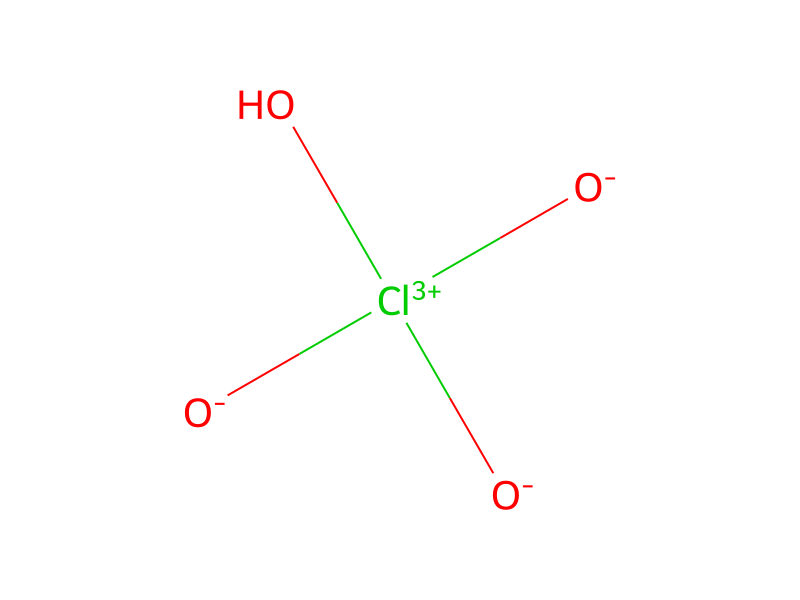
Perchloric Acid → 1-azabicyclo-[2,2,2]-octan-3-carboxaldehyde O-2-propynyloxime
Reaction equation

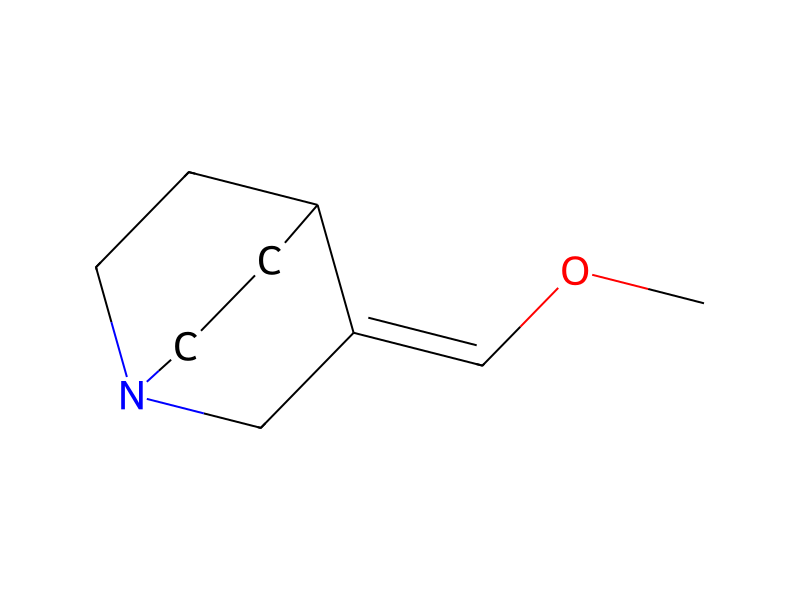
CO[CH:3]=[C:4]1[CH:9]2[CH2:10][CH2:11][N:6]([CH2:7][CH2:8]2)[CH2:5]1.Cl(O)(=O)(=O)=O.Cl.[CH2:18]([O:21][NH2:22])[C:19]#[CH:20]>>[CH2:18]([O:21][N:22]=[CH:3][CH:4]1[CH:9]2[CH2:8][CH2:7][N:6]([CH2:11][CH2:10]2)[CH2:5]1)[C:19]#[CH:20]Participants
4


Procedure
The operation is carried out as in Example 1 using 1.75 g of 3-methoxy methylidene quinuclidine, 3.8 cm3 of perchloric acid and 1.22 g of O-2-propynylhydroxylamine hydrochloride (U.S. Pat. No. 3,398,180 (1968)). After the ethyl ether has been evaporated off, the residue is chromatographed on silica (eluant: chloroform-methanol 7-3) then distilled at 190° C. under 0.05 mbar and 1.35 g of expected product is obtained.
Workup
- customAfter the ethyl ether has been evaporated off
- customthe residue is chromatographed on silica (eluant: chloroform-methanol 7-3)
- distillationthen distilled at 190° C. under 0.05 mbar
Sources & evidence
- ORD record
- ord-8bbcbca163864b06ba63cc38cbea2b70
- Source dataset
- uspto-grants-1993_02
- Patent number
- US05183893
Reaction notes
Loading…