Benzoic anhydride → HCID 22023478, compound
Reaction equation

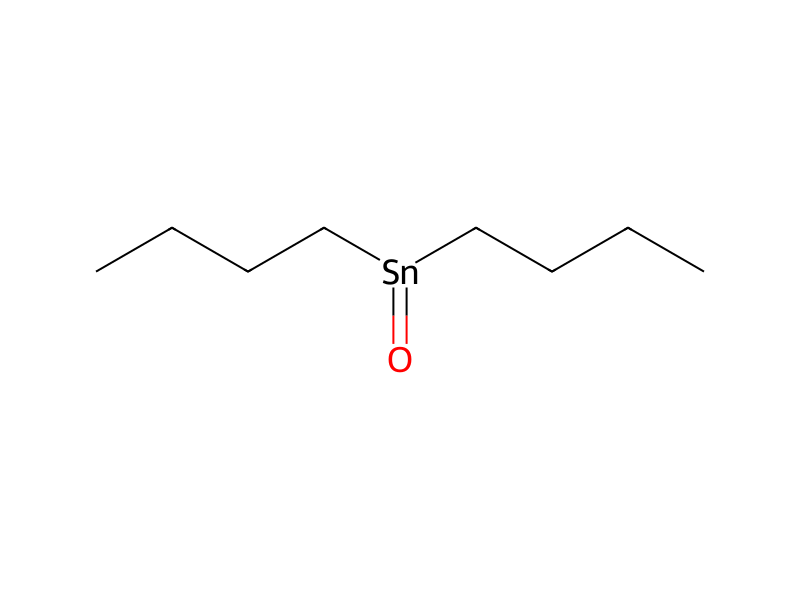
[CH2:1]([Sn:5](=O)[CH2:6][CH2:7][CH2:8][CH3:9])[CH2:2][CH2:3][CH3:4].[C:11]([O:19]C(=O)C1C=CC=CC=1)(=[O:18])[C:12]1[CH:17]=[CH:16][CH:15]=[CH:14][CH:13]=1>>[C:11]([O-:19])(=[O:18])[C:12]1[CH:17]=[CH:16][CH:15]=[CH:14][CH:13]=1.[CH2:1]([Sn+2:5][CH2:6][CH2:7][CH2:8][CH3:9])[CH2:2][CH2:3][CH3:4].[C:11]([O-:19])(=[O:18])[C:12]1[CH:17]=[CH:16][CH:15]=[CH:14][CH:13]=1Participants
3


Procedure
A 49.74 g. (0.2 mole) portion of dibutyltin oxide and 22.62 g. (0.1 mole) of benzoic anhydride were intimately mixed in a Waring® Blender for 1 minute. A reaction initiated almost immediately, as demonstrated by infra-red spectroscopy. After standing at ambient temperature for about three weeks, the reaction appeared to be complete. Infra-red spectroscopic analysis of the product demonstrated that virtually all the original anhydride had been consumed, as demonstrated by the disappearance of absorption maxima at 5.6μ and 5.8μ. New absorption maxima at 6.3μ and 6.5μ are indicative of the presence of ##STR5## moieties. B. Dibutyltin Stearate
Workup
- waitAfter standing at ambient temperature for about three weeks
- customhad been consumed
- customas demonstrated by the disappearance of absorption maxima at 5.6μ and 5.8μ
- customNew absorption maxima at 6.3μ and 6.5μ
Sources & evidence
- ORD record
- ord-c1aa393bdee646c39532785c6263d9a4
- Source dataset
- uspto-grants-1978_04
- Patent number
- US04085077
Reaction notes
Loading…