Acetic Acid → Tri-O-acetyl-D-glucal
Reaction equation

[CH3:1][C:2]([O:4][CH2:5][C@H:6]1[O:11][CH:10]=[CH:9][C@H:8]([O:12][C:13]([CH3:15])=[O:14])[C@@H:7]1[O:16][C@H:17]1[O:22][C@H:21]([CH2:23][O:24][C:25]([CH3:27])=[O:26])[C@@H:20]([O:28][C:29]([CH3:31])=[O:30])[C@H:19]([O:32][C:33]([CH3:35])=[O:34])[C@H:18]1[O:36][C:37]([CH3:39])=[O:38])=[O:3].C(O)[C@H]1O[C@H](O[C@H]2[C@H](O)[C@@H](O)[C@H](O)O[C@@H]2CO)[C@H](O)[C@@H](O)[C@@H]1O.O.C(O)[C@H]1O[C@H](O[C@H]2[C@H](O)[C@@H](O)[C@H](O)O[C@@H]2CO)[C@H](O)[C@@H](O)[C@@H]1O.O=C[C@@H]([C@H]([C@@H]([C@@H](CO)O)O)O)O.C(OC(=O)C)(=O)C.Br.C(O)(=O)C.C([O-])(=O)C.[Na+].C(O)(=O)C>[Zn].O>[CH3:1][C:2]([O:4][CH2:5][C@H:6]1[O:11][CH:10]=[CH:9][C@H:8]([O:12][C:13]([CH3:15])=[O:14])[C@@H:7]1[O:16][C@H:17]1[O:22][C@H:21]([CH2:23][O:24][C:25]([CH3:27])=[O:26])[C@@H:20]([O:28][C:29]([CH3:31])=[O:30])[C@H:19]([O:32][C:33]([CH3:35])=[O:34])[C@H:18]1[O:36][C:37]([CH3:39])=[O:38])=[O:3].[C:13]([O:12][C@H:8]1[C@H:7]([O:16][C:17](=[O:22])[CH3:18])[C@@H:6]([CH2:5][O:4][C:2](=[O:3])[CH3:1])[O:11][CH:10]=[CH:9]1)(=[O:14])[CH3:15]Participants
Reactant 8
 HCID 176Acetic Acid2×
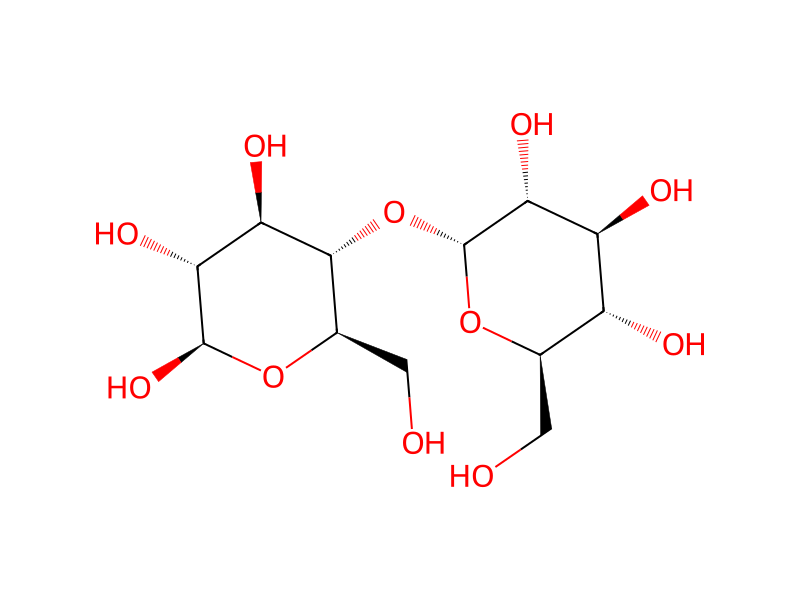 HCID 6255beta-Maltose
 HCID 7918Acetic Anhydride
 HCID 107526(2R,3S,4R,5R)-2,3,4,5,6-pentahydroxyhexanal
 HCID 517045Sodium Acetate
 HCID 2723821(2R,3S,4S,5R,6R)-2-(hydroxymethyl)-6-[(2R,3S,4R,5R,6R)-4,5,6-trihydroxy-2-(hydroxymethyl)oxan-3-yl]oxyoxane-3,4,5-triol;hydrate
 HCID 21893785Acetic Acid Mixture with Hydrobromic Acid2×
 HCID 90474636hexa-O-acetyl maltal
Product 2

Reagents, catalysts & solvents 2


Procedure
This example describes the synthesis of hexa-O-acetyl-maltal, which is not commercially available. This procedure has the advantage of using the same solvent for the entire workup. Maltose monohydrate (1.00 g of a mixture of 90% maltose, 10% glucose and maltatriose) was suspended in a solution of acetic acid (10 mL) and acetic anhydride (2.83 g, 10.0 equiv) and 1.00 g of a 31% HBr/acetic acid solution was added. The reaction mixture stirred for 1 h, after which 9.00 g more of a 31% HBr/acetic acid solution was added and allowed to stir overnight. The reaction mixture was then poured into a suspension containing pulverized CuSO4.5H2O (0.182 g), zinc (7.290 g), water (10 mL), sodium acetate (5.470 g), and acetic acid (5 mL) and the resultant reaction mixture was stirred vigorously for 1.5 h. The solution was then filtered and the solid washed with ethyl acetate (100 mL) and water (100 mL). The organic layer of the filtrate was then washed with NaHCO3 (100 mL) and brine (50 mL), dried over anhydrous sodium sulfate, filtered and the solvent removed under reduced pressure to provide a colorless oil which was purified by silica gel chromatography (50% ethyl acetate in hexanes) to give hexa-O-acetyl-maltal (1.21 g, 86%) as a colorless solid and tri-O-acetyl-glucal (0.132 g, 88%) as a colorless oil. Regarding the maltose starting material, a more pure commercial sample would be preferred, obviating the need for the aforementioned chromatographic separation.
Workup
- additionwas added
- stirringto stir overnight
- additionThe reaction mixture was then poured into a suspension
- additioncontaining
- customthe resultant reaction mixture
- stirringwas stirred vigorously for 1.5 h
- filtrationThe solution was then filtered
- washthe solid washed with ethyl acetate (100 mL) and water (100 mL)
- washThe organic layer of the filtrate was then washed with NaHCO3 (100 mL) and brine (50 mL)
- dry with materialdried over anhydrous sodium sulfate
- filtrationfiltered
- customthe solvent removed under reduced pressure
- customto provide a colorless oil which
- customwas purified by silica gel chromatography (50% ethyl acetate in hexanes)
Sources & evidence
- ORD record
- ord-1c023d38bd0f4a6492668e3eee371147
- Source dataset
- uspto-grants-2004_04
- Patent number
- US06720307B2
Reaction notes
Loading…