Bromine → HCID 2783260, compound
Reaction equation

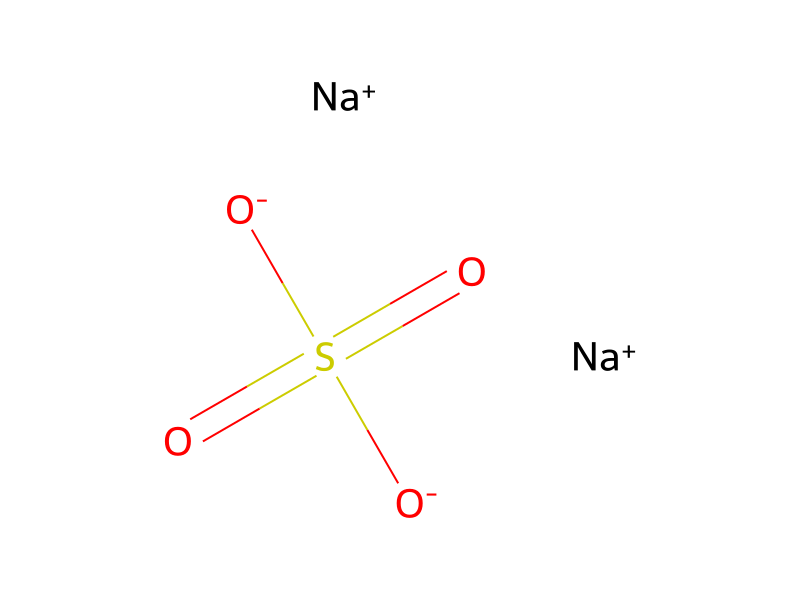
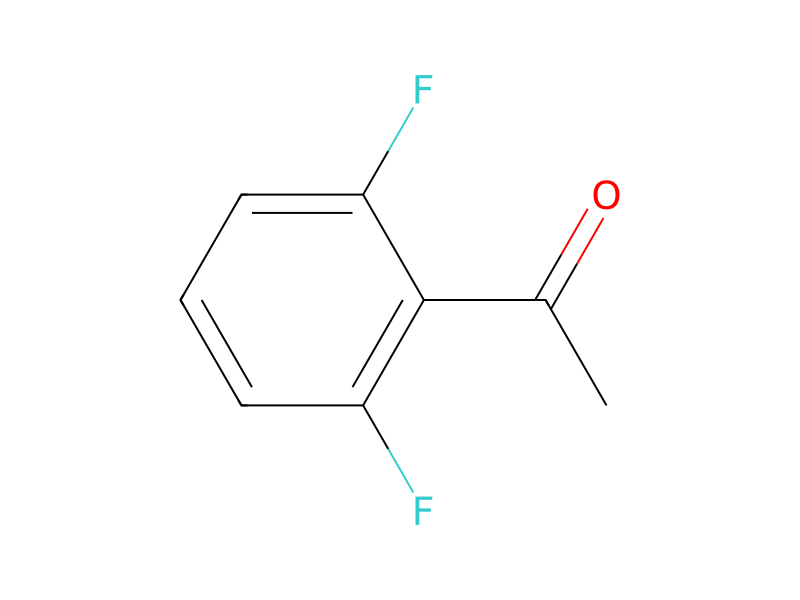
[CH3:1][C:2]([C:4]1[C:9]([F:10])=[CH:8][CH:7]=[CH:6][C:5]=1[F:11])=[O:3].BrBr.S([O-])([O-])(=O)=[O:15].[Na+].[Na+].C(=O)([O-])O.[Na+]>CS(C)=O.ClCCl>[F:11][C:5]1[CH:6]=[CH:7][CH:8]=[C:9]([F:10])[C:4]=1[C:2](=[O:3])[CH:1]=[O:15]Participants
7





Conditions
- Temperature
- 80 °C
Procedure
5 g of 2,6-difluoroacetophenone are placed in 13.6 ml of DMSO, and 2.7 ml of bromine (8.8M in water) are added dropwise, the reaction temperature rising from room temperature to 40° C. When the addition of bromine is complete, the mixture is heated at 80° C. for 30 min. After cooling to room temperature, the reaction mixture is poured into 100 ml of dichloromethane; with stirring, sodium sulfate and solid sodium hydrogen carbonate are added to the solution, filtration is carried out and the reaction mixture is concentrated using a rotary evaporator. The crude product is subjected to flash chromatography with dichloromethane. In this way (2,6-difluorophenyl)-oxoacetaldehyde is obtained in the form of a colourless viscous oil.
Workup
- customrising from room temperature to 40° C
- temperatureAfter cooling to room temperature
- concentrationthe reaction mixture is concentrated
- customa rotary evaporator
Sources & evidence
- ORD record
- ord-e9b69fc7438c4ec4a910b57867f3dae8
- Source dataset
- uspto-grants-2004_04
- Patent number
- US06723720B2
Reaction notes
Loading…