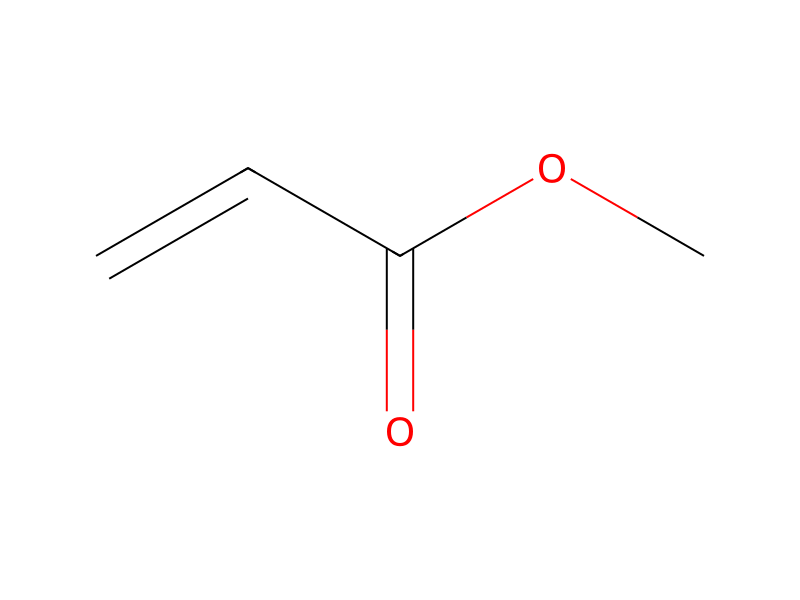
Methyl Acrylate → HCID 10774415, compound
Reaction equation

N1CCOCC1.[CH:7](=[O:14])[CH2:8][CH2:9][CH2:10][CH2:11][CH2:12][CH3:13].[C:15]([O:19][CH3:20])(=[O:18])[CH:16]=[CH2:17].O.O.O.C([O-])(=O)C.[Na+]>O.C(O)(=O)C.C1CCCCC1>[CH:7]([CH:8]([CH2:9][CH2:10][CH2:11][CH2:12][CH3:13])[CH2:17][CH2:16][C:15]([O:19][CH3:20])=[O:18])=[O:14]Participants






Conditions
- Temperature
- 40 °C
Procedure
418.0 g (4.80 mol) of morpholine and 344.0 g of cyclohexane are placed in a four-liter round-bottomed flask with a magnetic stirrer, a water separator, a thermometer and an addition funnel. The mixture is brought to a temperature of 65° C. to 70° C. 444.2 g (3.89 mol) of heptanal are added over five hours. The boiling point (80° C.-84° C. at the start of addition and then 87° C. toward the end of the operation) is thus rapidly obtained. The water formed during the reaction is recovered in a water separator. The reaction medium is then cooled and the cyclohexane and the excess morpholine are distilled off under reduced pressure (about 4400 Pa) without exceeding 80° C. in the bulk. The mixture is cooled to 40° C., brought to ambient pressure and 4.0 g of potassium hydroxide in 40 ml of methanol are added to the 4-hept-1(E/Z)-enylmorpholine. The mixture is brought to 60° C. and 237.5 g (2.76 mol) of methyl acrylate are then added over 4 hours. The mixture is stirred for 12 hours at 60° C. and a further 165.3 g (1.92 mol) of methyl acrylate are then added over two hours thirty minutes. At the end of the addition, the temperature of the reaction medium is increased to 80° C. and stirring is continued for 12 hours. An aqueous solution of acetic acid buffered to pH 4 (587.3 g of acetic acid, 215.3 g of sodium acetate trihydrate and 697.5 g of water) is added dropwise over two hours at this temperature. Stirring is continued for a further four hours. The phases are allowed to settle and are separated. The aqueous phase is extracted twice with 200 ml of cyclohexane. The organic phases are combined and washed once with 100 ml of water, once with 100 ml of saturated sodium bicarbonate solution and once with 150 ml of brine. The resulting organic phase is dried over magnesium sulfate. After evaporating off the solvent under reduced pressure (3990 Pa), without exceeding 50° C. in the bulk, 890.0 g of crude oxo ester are obtained, and are blanched under high vacuum (80° C. to 95° C. at 80 Pa) to give 663.0 g of 82.7% methyl 4-formylnonanoate (yield: 2.74 mol; 70%).
Workup
- customis brought to a temperature of 65° C. to 70° C
- additionThe boiling point (80° C.-84° C. at the start of addition
- custom87° C. toward the end of the operation) is thus rapidly obtained
- customis recovered in a water separator
- temperatureThe reaction medium is then cooled
- distillationthe cyclohexane and the excess morpholine are distilled off under reduced pressure (about 4400 Pa)
- customwithout exceeding 80° C. in the bulk
- additionare added to the 4-hept-1(E/Z)-enylmorpholine
- customis brought to 60° C.
- additionAt the end of the addition
- temperaturethe temperature of the reaction medium is increased to 80° C.
- stirringstirring
- waitis continued for 12 hours
- additionis added dropwise over two hours at this temperature
- stirringStirring
- waitis continued for a further four hours
- customare separated
- extractionThe aqueous phase is extracted twice with 200 ml of cyclohexane
- washwashed once with 100 ml of water, once with 100 ml of saturated sodium bicarbonate solution and once with 150 ml of brine
- dry with materialThe resulting organic phase is dried over magnesium sulfate
- customAfter evaporating off the solvent under reduced pressure (3990 Pa)
- customwithout exceeding 50° C. in the bulk, 890.0 g of crude oxo ester
- customare obtained
- customare blanched under high vacuum (80° C. to 95° C. at 80 Pa)
Sources & evidence
- ORD record
- ord-09b81323a9034cf390cc1383a70e3385
- Source dataset
- uspto-grants-2013_05
- Patent number
- US08440608B2
Reaction notes
Loading…