Aniline → 5-Imino-1-phenyl-4-(phenylhydrazinylidene)-3-pyrazolamine
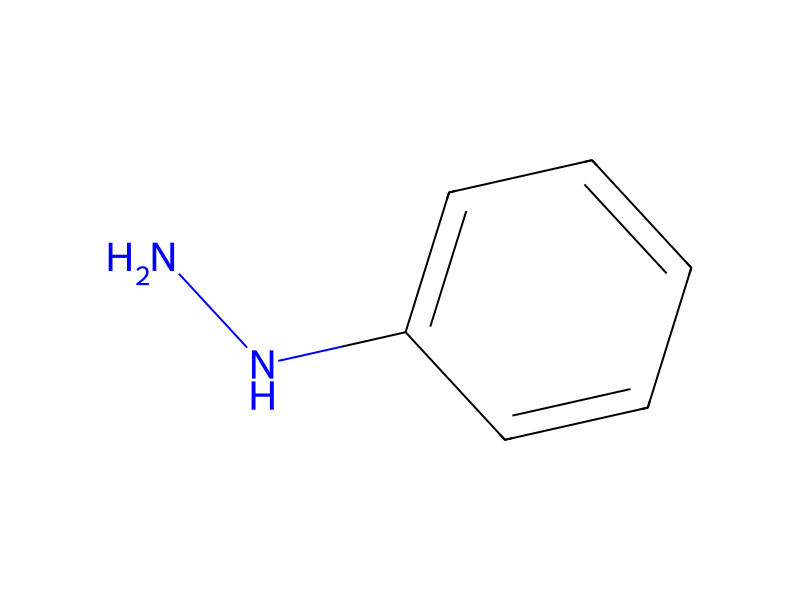
Reaction equation

[C:1]1([NH:7][N:8]=[C:9]([C:12]#[N:13])[C:10]#[N:11])[CH:6]=[CH:5][CH:4]=[CH:3][CH:2]=1.NC1C=CC=CC=1.C(#N)CC#N.[C:26]1([NH:32][NH2:33])[CH:31]=[CH:30][CH:29]=[CH:28][CH:27]=1>>[C:26]1([N:32]2[C:10]([NH2:11])=[C:9]([N:8]=[N:7][C:1]3[CH:6]=[CH:5][CH:4]=[CH:3][CH:2]=3)[C:12]([NH2:13])=[N:33]2)[CH:31]=[CH:30][CH:29]=[CH:28][CH:27]=1Participants
5



Procedure
1-phenyl-4-phenylazo-1H-pyrazole-3,5-diamine was prepared using 200 mg (1.2 mmol) of 2-(phenylhydrazono)malononitrile, which was derived from aniline (10 mL, 107 mmol) and malononitrile (161 mmol), and phenylhydrazine (767 mg, 7.1 mmol). Solids had not formed after heating the reaction at 75° C. for 3 hrs, however, analysis of the reaction solution by TLC indicated that no starting material remained. The solution was allowed to cool to ambient temperature and the solvent was evaporated. The residue was dissolved in ethyl acetate and then precipitated by the addition of hexanes. The resulting solid was isolated by filtration and dried to yield 77 mg (23%) of the compound as an orange coloured solid.
Workup
- customSolids had not formed
- temperatureafter heating
- customthe reaction at 75° C. for 3 hrs
- customthe solvent was evaporated
- dissolutionThe residue was dissolved in ethyl acetate
- customprecipitated by the addition of hexanes
- customThe resulting solid was isolated by filtration
- customdried
Sources & evidence
- ORD record
- ord-051865f2259045fd856c0bd9d870001d
- Source dataset
- uspto-grants-2013_05
- Patent number
- US08445694B2
Reaction notes
Loading…