Sodium Hydroxide → 2,6-Dichloro-3-fluorobenzoic acid
Reaction equation

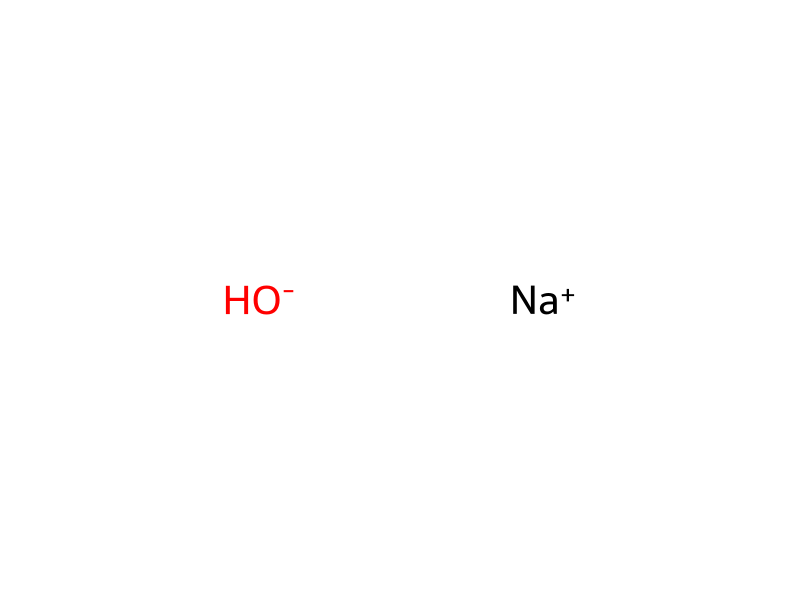
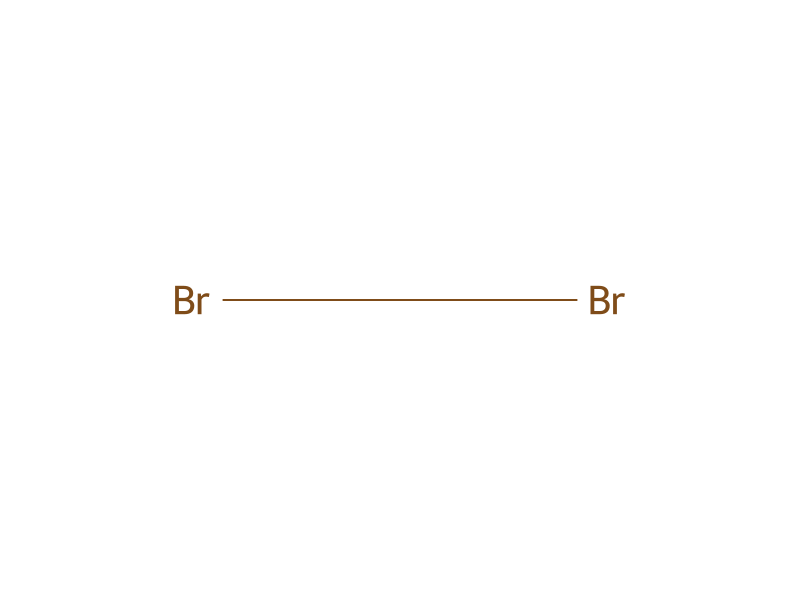
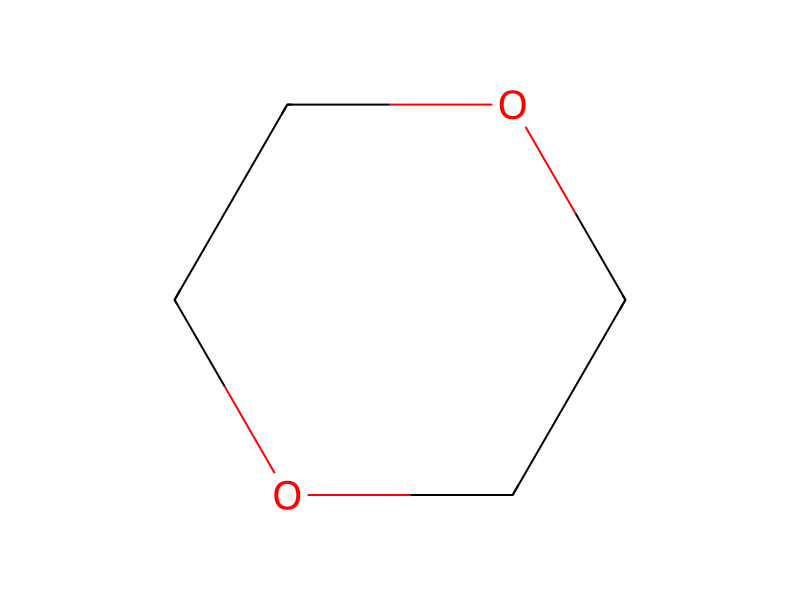
[OH-:1].[Na+].BrBr.[Cl:5][C:6]1[C:11]([F:12])=[CH:10][CH:9]=[C:8]([Cl:13])[C:7]=1[C:14](=[O:16])C.Br[O-].[Na+]>O.O1CCOCC1>[Cl:5][C:6]1[C:11]([F:12])=[CH:10][CH:9]=[C:8]([Cl:13])[C:7]=1[C:14]([OH:16])=[O:1]Participants


Procedure
To a cooled (−5° C.) solution of sodium hydroxide (252 g, 6.3 mol) in water (800 mL) was added bromine (86 mL, 1.68 mol) dropwise. The temperature of the reaction mixture was kept below −5° C. during the addition. A solution of 1-(2,6-Dichloro-3-fluorophenyl)ethanone (100 g, 480 mmol) in dioxane (800 ml) was added to the solution of sodium hypobromide in 1 h while maintaining the temperature below 0° C. The reaction mixture was warmed to room temperature and stirred for 2 h. After the TLC showed absence of starting material, the excess sodium hypobromide was destroyed with sodium sulfite (100 g in 100 mL water). The resulting solution was heated to 90° C. for 2 h. The reaction mixture was acidified with conc. HCl with vigorous stirring. The acidic solution was concentrated to remove all the dioxane and then extracted with dichloromethane (2×500 mL). The organic layer was dried (Na2SO4) and concentrated to give an oily residue, which after trituration with hexanes gave the title compound as a white solid. 1H NMR (CDCl3, 300 MHz): δ=7.20 (dd, 1H, J=8.7, 8.4 Hz), 7.33 (dd, 1H, J=9.3, 4.5 Hz).
Workup
- additionThe temperature of the reaction mixture was kept below −5° C. during the addition
- temperaturewhile maintaining the temperature below 0° C
- customthe excess sodium hypobromide was destroyed with sodium sulfite (100 g in 100 mL water)
- temperatureThe resulting solution was heated to 90° C. for 2 h
- concentrationThe acidic solution was concentrated
- customto remove all the dioxane
- extractionextracted with dichloromethane (2×500 mL)
- dry with materialThe organic layer was dried (Na2SO4)
- concentrationconcentrated
- customto give an oily residue, which after trituration with hexanes
Sources & evidence
- ORD record
- ord-47b6a6378d374372bb08a4c6afdc9b00
- Source dataset
- uspto-grants-2013_05
- Patent number
- US08445510B2
Reaction notes
Loading…