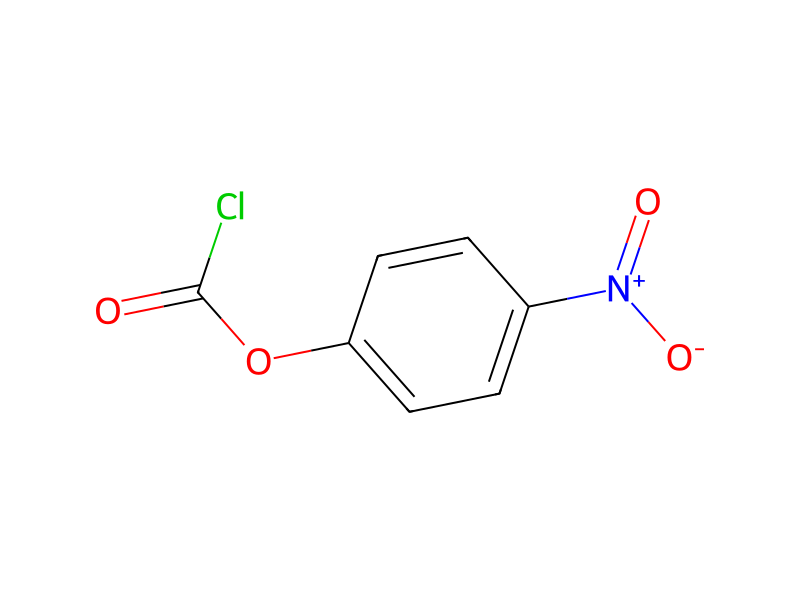
4-Nitrophenyl chloroformate → 3-(5-Bromo-pyridin-2-yloxy)-azetidine-1-carboxylic acid 4-nitro-phenyl ester
Reaction equation

Cl.[NH:2]1[CH2:5][CH:4]([O:6][C:7]2[CH:12]=[CH:11][C:10]([Br:13])=[CH:9][N:8]=2)[CH2:3]1.Cl[C:15]([O:17][C:18]1[CH:23]=[CH:22][C:21]([N+:24]([O-:26])=[O:25])=[CH:20][CH:19]=1)=[O:16]>>[N+:24]([C:21]1[CH:20]=[CH:19][C:18]([O:17][C:15]([N:2]2[CH2:3][CH:4]([O:6][C:7]3[CH:12]=[CH:11][C:10]([Br:13])=[CH:9][N:8]=3)[CH2:5]2)=[O:16])=[CH:23][CH:22]=1)([O-:26])=[O:25]Participants
3


Procedure
This compound was prepared by the method outlined for example 5 step 3. Thus 2-(Azetidin-3-yloxy)-5-bromo-pyridine hydrochloride (2.0 g, 7.53 mmol) was reacted with 4-nitrophenyl chloroformate to afford the title compound (1.11 g, 37%) as a pale-yellow solid.
Workup
- customThis compound was prepared by the method
Sources & evidence
- ORD record
- ord-338e64aa6fec4847a91a1632b2939ad2
- Source dataset
- uspto-grants-2013_05
- Patent number
- US08450346B2
Reaction notes
Loading…