Diisopropylethylamine → HCID 68756823, compound
Reaction equation

[NH2:1][C:2]1[S:3][CH:4]=[C:5]([CH3:10])[C:6]=1[C:7]([NH2:9])=[O:8].[I:11][C:12]1[CH:17]=[CH:16][C:15]([CH2:18][C:19](O)=[O:20])=[CH:14][CH:13]=1.CCN(C(C)C)C(C)C.CN(C(ON1N=NC2C=CC=NC1=2)=[N+](C)C)C.F[P-](F)(F)(F)(F)F>C(Cl)Cl>[I:11][C:12]1[CH:17]=[CH:16][C:15]([CH2:18][C:19]([NH:1][C:2]2[S:3][CH:4]=[C:5]([CH3:10])[C:6]=2[C:7]([NH2:9])=[O:8])=[O:20])=[CH:14][CH:13]=1Participants
6
Reactant 4

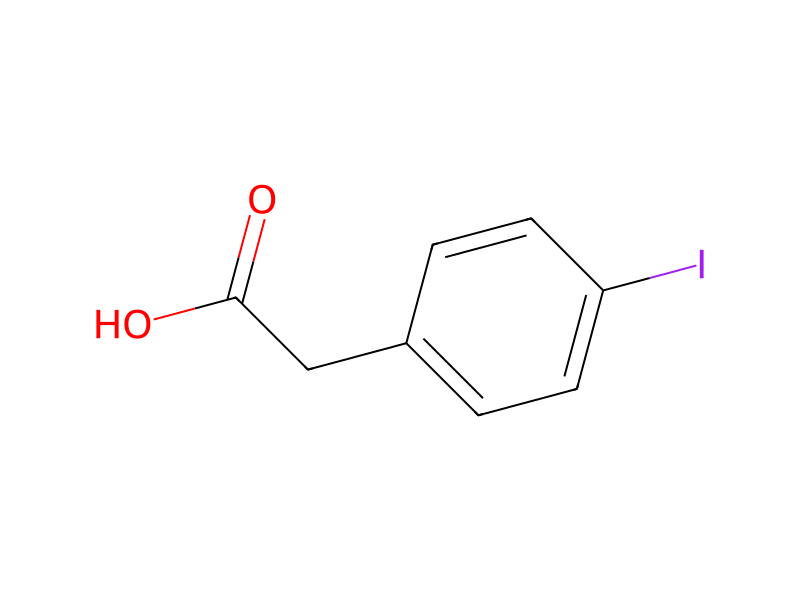


Product 1

Reagents, catalysts & solvents 1

Procedure
To a solution of 2-amino-4-methylthiophene-3-carboxamide (1 g, 6.4 mmol) and 2-(4-iodophenyl)acetic acid (1.83 g, 7.0 mmol) in methylene chloride (10 mL) was added Hunig's base (i.e., N,N-diisopropylethylamine) (30.1 mL, 18 mmol) and HATU (2.66 g, 7.0 mmol). The heterogeneous mixture was stirred for 18 h. The reaction was quenched by addition of saturated aqueous ammonium chloride solution and the biphasic mixture was extracted with additional methylene chloride. The organic layer was washed with brine, dried over sodium sulfate and concentrated under reduced pressure to provide a pale brown solid. LCMS method [2]: rt=2.02 min; M+Na 423.0. Material was used without further purification.
Workup
- customThe reaction was quenched by addition of saturated aqueous ammonium chloride solution
- extractionthe biphasic mixture was extracted with additional methylene chloride
- washThe organic layer was washed with brine
- dry with materialdried over sodium sulfate
- concentrationconcentrated under reduced pressure
- customto provide a pale brown solid
- customrt=2.02 min
- customMaterial was used without further purification
Sources & evidence
- ORD record
- ord-3e24a695807c45eb89919fc3521f2fd6
- Source dataset
- uspto-grants-2013_05
- Patent number
- US08450363B2
Reaction notes
Loading…