Dichloromethane → Decalin
Reaction equation

Cl[CH2:2]Cl.[CH:4]12[CH2:13][CH:8]3[CH2:9][CH:10]([CH2:12][CH:6]([CH2:7]3)C1)[CH2:11]2.[H][H]>O>[CH2:6]1[CH:7]2[CH:8]([CH2:13][CH2:4][CH2:11][CH2:2]2)[CH2:9][CH2:10][CH2:12]1Participants
Reactant 3

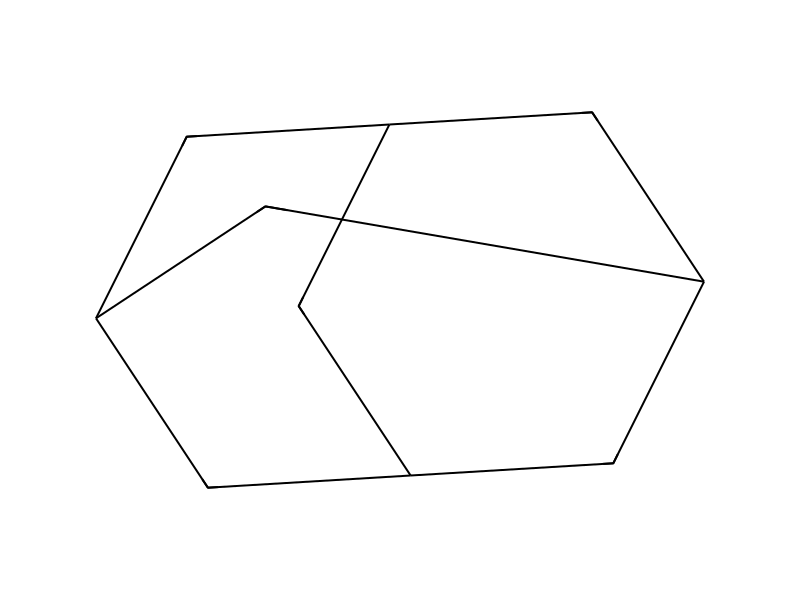

Product 1

Reagents, catalysts & solvents 1

Procedure
EXAMPLE 5 is the comparative example of EXAMPLE 4.65 g of endo-THDCPD crystals from the same source of EXAMPLE 4 are placed in a 250 ml of glass bottle, followed by adding 40 g of dichloromethane thereto to dissolve these crystals, purging with dry nitrogen and stirring in the ice bath. Subsequently, 10 g of AlCl3 is added to the dichloromethane solution of endo-THDCPD, followed by stirring for 2 hours in the ice bath, and continuously stirring for 16 hours at room temperature. The resulting mixture is washed with 100 ml of saturated KCl solution, followed by adding it to a separatory funnel, shaking to allow to separate into two layers and leaving the upper layer in the separatory funnel. The above saturated KCl solution washing procedure is repeated for three times. Subsequently, the mixture washed with the saturated KCl solution is washed with 100 ml of deionized water, followed by adding it to a separatory funnel, shaking to allow to separate into two layers and leaving the lower layer in the separatory funnel. The above deionized water washing procedure is repeated for three times. Subsequently, the lower layer is distilled to remove dichloromethane and water. The bottoms is collected, and determined by chemical analysis. The chemical analysis shows that the bottoms is composed of 85.7 wt % of exo-THDCPD, 0.5 wt % of endo-THDCPD, 1.2 wt % of Decalin, 5.8 wt % of adamantane, 1.3 wt % of exo-THMDCPD, and the other two-stage hydrotreated and saturated C11+ derivatives, namely CPD and/or MCPD diners. The bottoms has a volumetric heating value of 39.17 MJ/L, a density of 0.9339 at 15° C., and a viscosity of 3.52 cSt at 20° C. and more than 26.7 cSt at −20° C. In this example, the isomerization reaction is violent because isomerization reaction time is too long so that portions of exo-THDCPD is further isomerized to adamantane which will increase the viscosity of the high energy fuel. Under such a violent reaction conditions, a small amount of THDCPD will be ring opened by hydrogen to give decalin (the side product) with relatively less volumetric heating value as well as density. Therefore, the isomerization reaction of this example is not suitable for preparing the high energy fuels because the freezing point of the isomerization product is too high.
Workup
- dissolutionto dissolve these crystals
- custompurging with dry nitrogen
- additionSubsequently, 10 g of AlCl3 is added to the dichloromethane solution of endo-THDCPD
- stirringby stirring for 2 hours in the ice bath
- stirringcontinuously stirring for 16 hours at room temperature
- washThe resulting mixture is washed with 100 ml of saturated KCl solution
- additionby adding it to a separatory funnel
- stirringshaking
- customto separate into two layers
- customleaving the upper layer in the separatory funnel
- washThe above saturated KCl solution washing procedure
- washSubsequently, the mixture washed with the saturated KCl solution
- washis washed with 100 ml of deionized water
- additionby adding it to a separatory funnel
- stirringshaking
- customto separate into two layers
- customleaving the lower layer in the separatory funnel
- distillationSubsequently, the lower layer is distilled
- customto remove dichloromethane and water
- customThe bottoms is collected
- customat 15° C.
- customat 20° C.
- customat −20° C
- customis violent because isomerization reaction time
- temperaturewill increase the viscosity of the high energy fuel
- customUnder such a violent reaction conditions
Sources & evidence
- ORD record
- ord-2fa15d533fb44cfba2d7a797a9578056
- Source dataset
- uspto-grants-2013_05
- Patent number
- US08450544B2
Reaction notes
Loading…