Acetaldehyde → 1-(2-Chloro-4-morpholin-4-yl-thieno[3,2-d]pyrimidin-6-yl)-ethanol
Reaction equation

[Cl:1][C:2]1[N:3]=[C:4]([N:11]2[CH2:16][CH2:15][O:14][CH2:13][CH2:12]2)[C:5]2[S:10][CH:9]=[CH:8][C:6]=2[N:7]=1.C([Li])CCC.[CH:22](=[O:24])[CH3:23]>C1COCC1>[Cl:1][C:2]1[N:3]=[C:4]([N:11]2[CH2:16][CH2:15][O:14][CH2:13][CH2:12]2)[C:5]2[S:10][C:9]([CH:22]([OH:24])[CH3:23])=[CH:8][C:6]=2[N:7]=1Participants
5
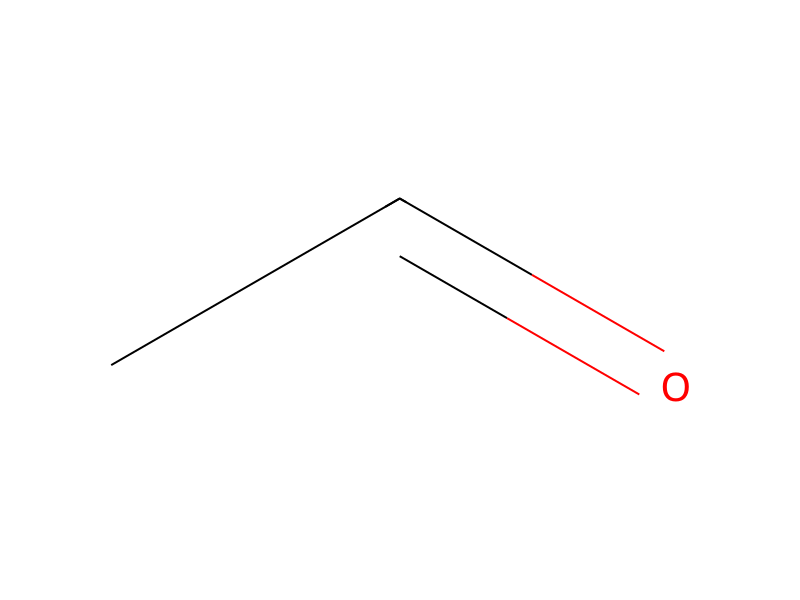




Conditions
- Temperature
- -78 °C
Procedure
To a solution of 2-chloro-4-morpholin-4-yl-thieno[3,2-d]pyrimidine (500 mg) in THF (20 mL) at −78° C. was added n-butyllithium (0.94 mL of a 2.5 M solution in hexanes) and the reaction stirred at −78° C. for 1 h. Then, acetaldehyde (0.33 mL) was added and the reaction allowed to warm to room temperature over 16 h. The reaction was quenched with water (20 mL) and extracted into dichloromethane (2×20 mL). The combined organics were dried (MgSO4) and reduced in vacuo to give 1-(2-chloro-4-morpholin-4-yl-thieno[3,2-d]pyrimidin-6-yl)-ethanol as a cream solid.
Workup
- temperatureto warm to room temperature over 16 h
- customThe reaction was quenched with water (20 mL)
- extractionextracted into dichloromethane (2×20 mL)
- dry with materialThe combined organics were dried (MgSO4)
Sources & evidence
- ORD record
- ord-e379f7090af54f2caf7fe7386e442f92
- Source dataset
- uspto-grants-2013_05
- Patent number
- US08450315B2
Reaction notes
Loading…