Water → HCID 86618453, compound
Reaction equation

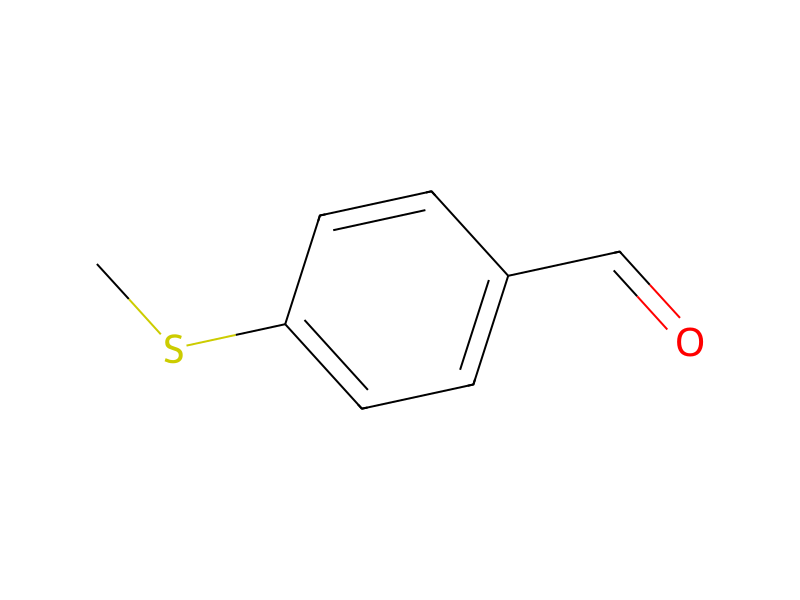
[Cl:1][C:2]1[N:3]=[C:4]([N:11]2[CH2:16][CH2:15][O:14][CH2:13][CH2:12]2)[C:5]2[S:10][CH:9]=[CH:8][C:6]=2[N:7]=1.C([Li])CCC.[CH3:22][S:23][C:24]1[CH:31]=[CH:30][C:27]([CH:28]=[O:29])=[CH:26][CH:25]=1.O>C1COCC1>[Cl:1][C:2]1[N:3]=[C:4]([N:11]2[CH2:16][CH2:15][O:14][CH2:13][CH2:12]2)[C:5]2[S:10][C:9]([CH:28]([C:27]3[CH:30]=[CH:31][C:24]([S:23][CH3:22])=[CH:25][CH:26]=3)[OH:29])=[CH:8][C:6]=2[N:7]=1Participants
6





Conditions
- Temperature
- -78 °C
Procedure
To a solution of 2-chloro-4-morpholin-4-yl-thieno[3,2-d]pyrimidine (2.74 g) in THF (40 mL) at −78° C. was added n-butyllithium (5.15 mL of a 2.5 M solution in hexanes) and the reaction stirred at −78° C. for 1 h. 4-Methylmercaptobenzaldehyde (1.43 mL) was then added and the reaction mixture was lowly warmed to room temperature. Water was added and the resulting precipitate was collected by filtration. Recyrstallisation from EtOAc/hexane yielded (2-chloro-4-morpholin-4-yl-thieno[3,2-d]pyrimidin-6-yl)-(4-methylsulfanyl-phenyl)-methanol (2.53 g).
Workup
- temperaturethe reaction mixture was lowly warmed to room temperature
- filtrationthe resulting precipitate was collected by filtration
Sources & evidence
- ORD record
- ord-b3be3591abca4c648ae479918aa69a3b
- Source dataset
- uspto-grants-2013_05
- Patent number
- US08450315B2
Reaction notes
Loading…