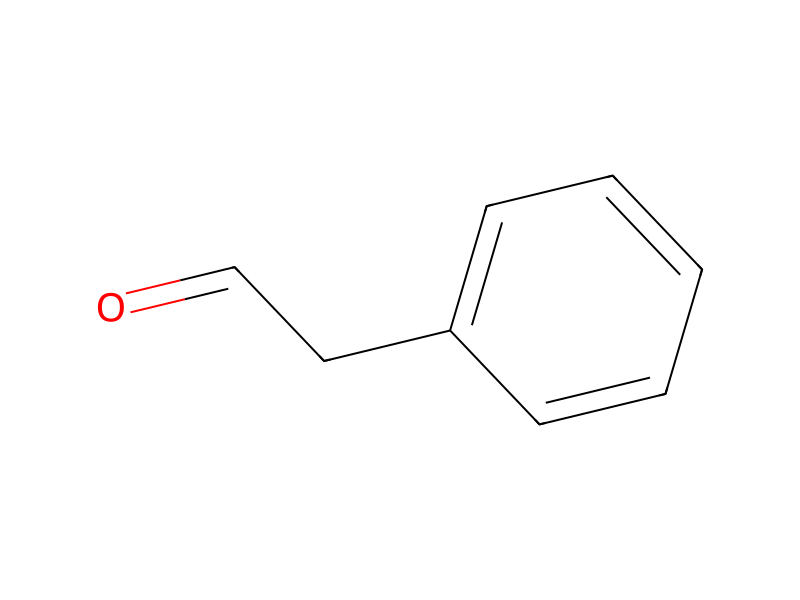
Phenylacetaldehyde → HCID 69055148, compound
Reaction equation

[CH2:1]([N:8]1[CH2:20][C@@H:19]2[C@H:10]([NH:11][C:12](=[O:22])[C:13]3[C:14]([CH3:21])=[CH:15][CH:16]=[CH:17][C:18]=32)[CH2:9]1)C1C=CC=CC=1.[C:23]1([CH2:29]C=O)[CH:28]=[CH:27][CH:26]=[CH:25][CH:24]=1>CO.[Pd]>[CH3:21][C:14]1[C:13]2[C:12](=[O:22])[NH:11][C@@H:10]3[CH2:9][N:8]([CH2:1][CH2:29][C:23]4[CH:28]=[CH:27][CH:26]=[CH:25][CH:24]=4)[CH2:20][C@H:19]3[C:18]=2[CH:17]=[CH:16][CH:15]=1Participants
Reactant 2

Product 1

Reagents, catalysts & solvents 2


Procedure
To a solution of (±)-trans-2-benzyl-6-methyl-2,3,3a,4-tetrahydro-1H-pyrrolo[3,4-c]isoquinolin-5(9bH)-one, from Example 101, Part A (57 mg, 0.2 mmol) in 10 mL of methanol was added phenylacetaldehyde (24 mg, 0.2 mmol) and 10% Pd/C catalyst (6 mg). The reaction mixture was purged several times with hydrogen and stirred under 1 atm of hydrogen, maintained by a balloon, for 18 h. The reaction mixture was filtered through a pad of Celite and concentrated in vacuo. The residue was purified (ISCO, elution with 0-8% methanol/methylene chloride) to afford the title compound of Example 102 as a solid. 1H NMR (CDCl3): δ 7.36-7.20 (m, 6H), 7.18 (d, 1H, J=7.7 Hz), 6.88 (d, 1H, J=7.7 Hz), 6.22 (broad s, 1H), 3.66-3.58 (m, 1H), 3.41 (app t, 1H, J=8.3 Hz), 3.30-3.22 (m, 1H), 3.14 (app t, 1H, J=7.7 Hz), 3.05-2.93 (m, 4H), 2.88-2.81 (m, 2H), 2.70 (s, 3H). LRMS (ESI): 307.3 (M+H)+.
Workup
- customThe reaction mixture was purged several times with hydrogen
- temperaturemaintained by a balloon, for 18 h
- filtrationThe reaction mixture was filtered through a pad of Celite
- concentrationconcentrated in vacuo
- customThe residue was purified
- wash(ISCO, elution with 0-8% methanol/methylene chloride)
Sources & evidence
- ORD record
- ord-9f1ce6712e434641ab7d4f9978eb3404
- Source dataset
- uspto-grants-2009_08
- Patent number
- US07572805B2
Reaction notes
Loading…