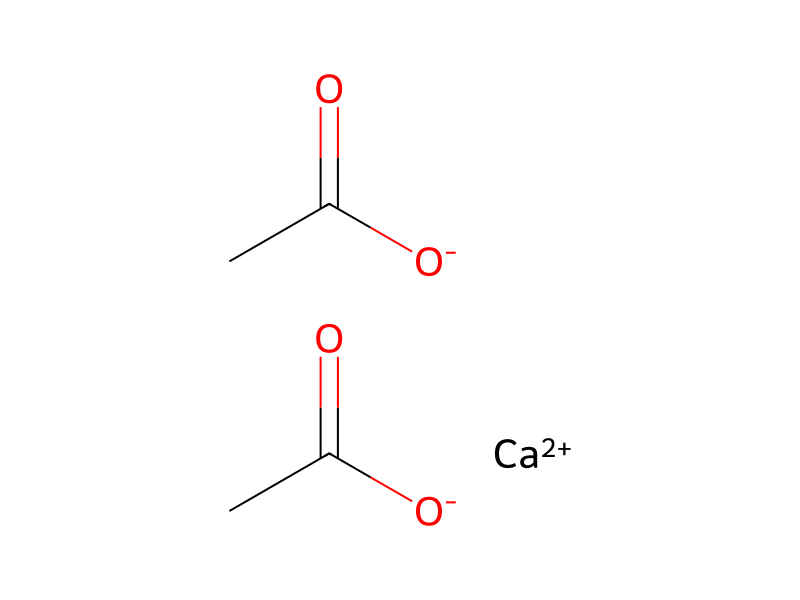
Calcium Acetate → HCID 86623372, compound
Reaction equation

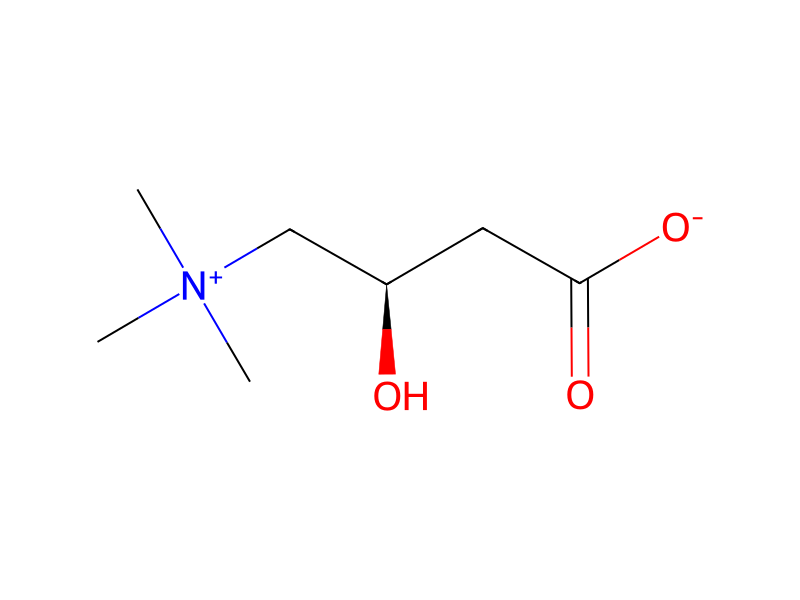
[C:1]([O-:4])(=[O:3])[CH3:2].[Ca+2:5].[C:6]([O-:9])(=[O:8])[CH3:7].[OH:10][C@H:11]([CH2:17][C:18](=[O:20])[O-:19])[CH2:12][N+:13]([CH3:16])([CH3:15])[CH3:14]>O>[C:1]([O-:4])(=[O:3])[CH3:2].[Ca+2:5].[OH:10][C@H:11]([CH2:17][C:18](=[O:19])[O-:20])[CH2:12][N+:13]([CH3:16])([CH3:14])[CH3:15].[C:6]([O-:9])(=[O:8])[CH3:7]Participants
Reactant 2
Product 1

Reagents, catalysts & solvents 1

Procedure
A mixture of calcium acetate (0.5 g, 0.003 mol) and L-carnitine (0.5 g, 0.003 mol) was dissolved in water (15 mL) and stirred for 2 hours. The clear and colorless solution was concentrated at reduced pressure at bath temperatures that were less than about 70° C. to a white solid. The solid, L-carnitine calcium acetate, was obtained in greater than 90% yield and had a melting point of 166-167° C., with decomposition and evolution of trimethylamine. (The melting point of L-carnitine was 186-190° C.) The solid was not hygroscopic. The solid had no objectionable taste. The 1H-Nuclear Magnetic Resonance (1H-NMR) spectrum (FIG. 1) is consistent with the structure of the salt and shows the presence of L-carnitine and acetate in a molar ratio of approximately 1:2. (Calcium is not detected by 1H-NMR.)
Workup
- concentrationThe clear and colorless solution was concentrated at reduced pressure at bath temperatures that
- customwere less than about 70° C. to a white solid
Sources & evidence
- ORD record
- ord-a566e889510a43bc8f454c11851028f0
- Source dataset
- uspto-grants-2009_08
- Patent number
- US07572832B2
Reaction notes
Loading…