Borane → 8-(4-Hydroxymethyl-bicyclo[2.2.2]oct-1-yl)-1,3-dipropyl-3,7-dihydro-purine-2,6-dione
Reaction equation

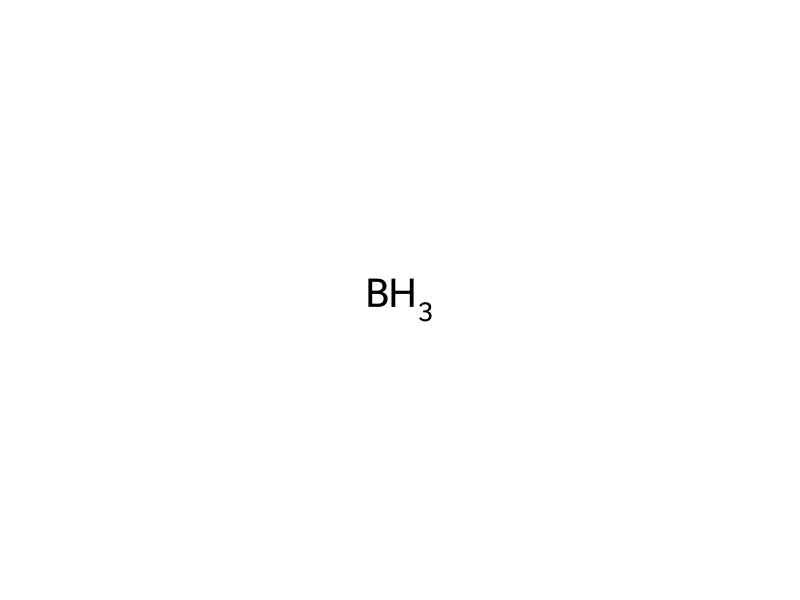
[O:1]=[C:2]1[N:10]([CH2:11][CH2:12][CH3:13])[C:9]2[N:8]=[C:7]([C:14]34[CH2:21][CH2:20][C:17]([C:22](O)=[O:23])([CH2:18][CH2:19]3)[CH2:16][CH2:15]4)[NH:6][C:5]=2[C:4](=[O:25])[N:3]1[CH2:26][CH2:27][CH3:28].B>C1COCC1>[OH:23][CH2:22][C:17]12[CH2:18][CH2:19][C:14]([C:7]3[NH:6][C:5]4[C:4](=[O:25])[N:3]([CH2:26][CH2:27][CH3:28])[C:2](=[O:1])[N:10]([CH2:11][CH2:12][CH3:13])[C:9]=4[N:8]=3)([CH2:21][CH2:20]1)[CH2:15][CH2:16]2Participants
Reactant 2

Product 1

Reagents, catalysts & solvents 1

Procedure
4-(2,6-Dioxo-1,3-dipropyl-2,3,6,7-tetrahydro-1H-purin-8-yl)-bicyclo[2.2.2]octane-1-carboxylic acid, IX, Example 85b, 0.82 kg) and tetrahydrofuran (9.02.1) are mixed under nitrogen and borane.tetrahydrofuran complex (1 M) in THF (4.18 l) is added at such a rate as to maintain the internal temperature between 10 to 20°. The reaction mixture is stirred at 10 to 200 for 17 hours until all of the starting material is consumed (TLC; dichloromethane/methanol, 9/1; visualization UV then potassium permanganate). Methanol (3.44 l) is added to the reaction mixture, and the mixture is heated to reflux for 1 hr. The reaction is cooled to between 15 and 40° and the solvent removed by reduced pressure at 40 to 45°. The residue is partitioned between ethyl acetate (13.61 l) and hydrochloric acid (1 M, 2.23 l) and the aqueous layer is removed with any undissolved solid material. The mixture is clarified and the residual organic phase from the filtration of the aqueous layer/solid mixture is combined with the bulk organic layer. Saturated sodium hydrogen carbonate (2.23 l) is added and the layers separated, retaining any solids with the aqueous phase. The aqueous phase/solid mixture is filtered and the residual organic phase from these mother liquors are combined with the bulk organic layer. The combined organic layers are washed with saturated saline (2.23 l), the layers are separated and residual solids are retained with the aqueous phase. The aqueous layer/solid mixture is filtered and organics in the mother liquors from the filtration are combined with the bulk organic layer, dried with magnesium sulfate (0.41 kg), filtered, washed with ethyl acetate (0.82 l) and the solvent removed under reduced pressure at 40 to 45°to give the title compound.
Workup
- temperatureto maintain the internal temperature between 10 to 20°
- customis consumed (TLC
- additionMethanol (3.44 l) is added to the reaction mixture
- temperaturethe mixture is heated
- temperatureto reflux for 1 hr
- temperatureThe reaction is cooled to between 15 and 40°
- customthe solvent removed by reduced pressure at 40 to 45°
- customThe residue is partitioned between ethyl acetate (13.61 l) and hydrochloric acid (1 M, 2.23 l)
- customthe aqueous layer is removed with any undissolved solid material
- filtrationthe residual organic phase from the filtration of the aqueous layer/solid mixture
- additionSaturated sodium hydrogen carbonate (2.23 l) is added
- customthe layers separated
- filtrationThe aqueous phase/solid mixture is filtered
- washThe combined organic layers are washed with saturated saline (2.23 l)
- customthe layers are separated
- filtrationThe aqueous layer/solid mixture is filtered and organics in the mother liquors from the filtration
- dry with materialdried with magnesium sulfate (0.41 kg)
- filtrationfiltered
- washwashed with ethyl acetate (0.82 l)
- customthe solvent removed under reduced pressure at 40 to 45°to
Sources & evidence
- ORD record
- ord-37d7c3496a3440149e4e5f83d21ef2a5
- Source dataset
- uspto-grants-2009_08
- Patent number
- US07579354B2
Reaction notes
Loading…