1,3-Propanediol → 2-Chloromethyl-2-(2,5-dimethylphenyl)-[1,3]dioxane
Reaction equation

[Cl:1][CH2:2][C:3]([C:5]1[CH:10]=[C:9]([CH3:11])[CH:8]=[CH:7][C:6]=1[CH3:12])=[O:4].[CH2:13](O)[CH2:14][CH2:15][OH:16]>C1(C)C(C)=CC=CC=1>[Cl:1][CH2:2][C:3]1([C:5]2[CH:10]=[C:9]([CH3:11])[CH:8]=[CH:7][C:6]=2[CH3:12])[O:16][CH2:15][CH2:14][CH2:13][O:4]1Participants
4
Reactant 2
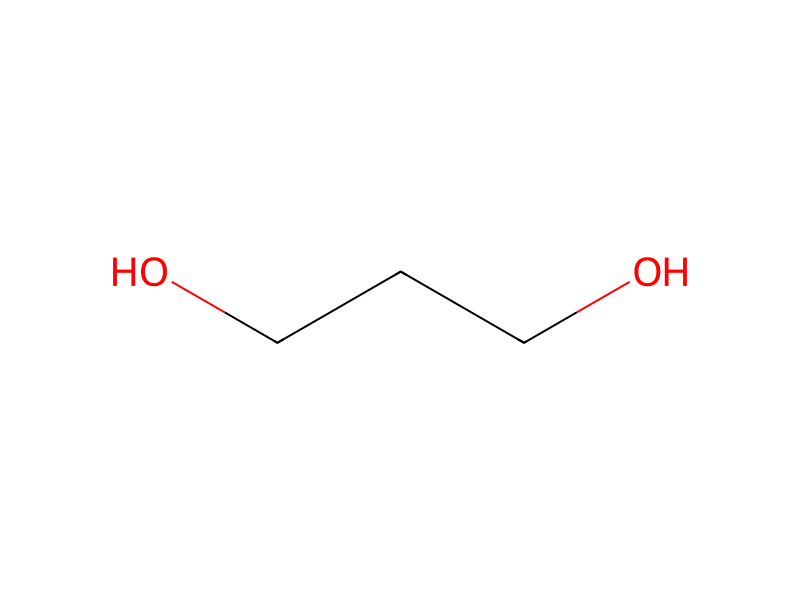

Product 1

Reagents, catalysts & solvents 1

Procedure
A mixture of 18.3 g [0.1 mol] of 2-chloro-1-(2,5-dimethylphenyl)ethanone, 15.2 g [0.2 mol] of trimethylene glycol, 1.9 g [0.01 mol] of p-TsOH hydrate and 150 ml of xylene is heated to boiling with a water trap for about 5 hours. Part of the xylene is then distilled off, and the reaction mixture is extracted at room temperature with 30 ml of saturated aqueous NaCl solution and twice with 100 ml of water each time. The organic phase is dried over sodium sulfate and concentrated in vacuo, and all volatiles are distilled off up to about 87° C. under 0.25 mbar. 22.9 g of residue remain with, according to GC, 83.9% product (79.8% of theory).
Workup
- temperatureis heated
- distillationPart of the xylene is then distilled off
- extractionthe reaction mixture is extracted at room temperature with 30 ml of saturated aqueous NaCl solution and twice with 100 ml of water each time
- dry with materialThe organic phase is dried over sodium sulfate
- concentrationconcentrated in vacuo
- distillationall volatiles are distilled off up to about 87° C. under 0.25 mbar
Sources & evidence
- ORD record
- ord-0b80a20ace484d69aa2ab34a6a9d32e7
- Source dataset
- uspto-grants-2009_08
- Patent number
- US07579500B2
Reaction notes
Loading…