Triethylamine → (4-(5-Bromo-2-chlorobenzyl)phenoxy)(tert-butyl)dimethylsilane
Reaction equation

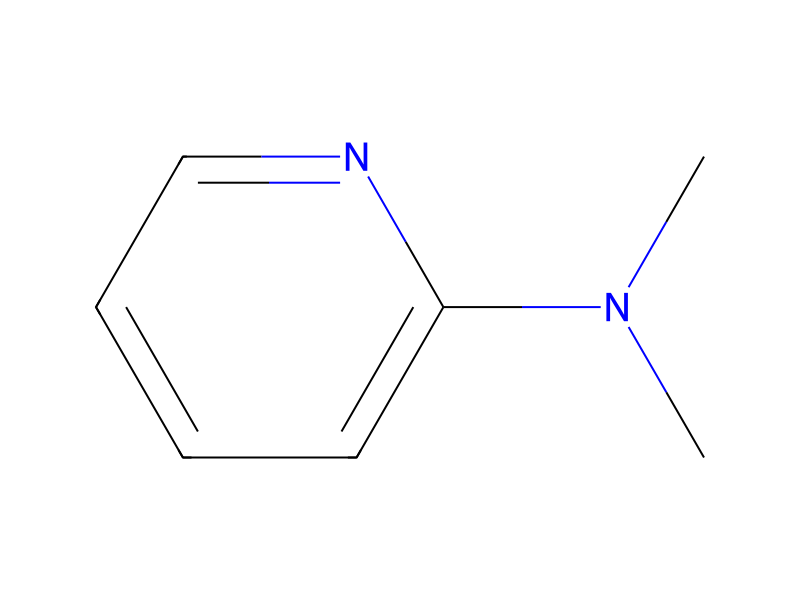
[Br:1][C:2]1[CH:3]=[CH:4][C:5]([Cl:16])=[C:6]([CH:15]=1)[CH2:7][C:8]1[CH:13]=[CH:12][C:11]([OH:14])=[CH:10][CH:9]=1.[Si:17](Cl)([C:20]([CH3:23])([CH3:22])[CH3:21])([CH3:19])[CH3:18].C(N(CC)CC)C.CN(C1C=CC=CN=1)C>ClCCl>[Br:1][C:2]1[CH:3]=[CH:4][C:5]([Cl:16])=[C:6]([CH:15]=1)[CH2:7][C:8]1[CH:13]=[CH:12][C:11]([O:14][Si:17]([C:20]([CH3:23])([CH3:22])[CH3:21])([CH3:19])[CH3:18])=[CH:10][CH:9]=1Participants
6
Reactant 4



Product 1

Reagents, catalysts & solvents 1

Procedure
A solution of 13.9 g 4-(5-bromo-2-chloro-benzyl)-phenol in 140 ml dichloromethane is cooled in the ice bath. Then 7.54 g tert-butyldimethylsilylchlorid in 20 ml dichloromethane are added followed by 9.8 ml triethylamine and 0.5 g dimethylaminopyridine. The solution is stirred for 16 h at ambient temperature and then diluted with 100 ml dichloromethane. The organic phase is washed twice with aqueous 1 M hydrochloric acid and once with aqueous sodium hydrogen carbonate solution and then dried over sodium sulphate. After the solvent has been eliminated the residue is filtered through silica gel (cyclohexane/ethyl acetate 100:1).
Workup
- washThe organic phase is washed twice with aqueous 1 M hydrochloric acid and once with aqueous sodium hydrogen carbonate solution
- dry with materialdried over sodium sulphate
- filtrationis filtered through silica gel (cyclohexane/ethyl acetate 100:1)
Sources & evidence
- ORD record
- ord-2e109b38d6d14e5cbaa02b0ce7d6fbf2
- Source dataset
- uspto-grants-2009_08
- Patent number
- US07579449B2
Reaction notes
Loading…