Potassium Carbonate → 4-(4-Bromothiophen-2-yl)pyridine
Reaction equation

Br[C:2]1[S:3][CH:4]=[C:5]([Br:7])[CH:6]=1.[N:8]1[CH:13]=[CH:12][C:11](B(O)O)=[CH:10][CH:9]=1.C(=O)([O-])[O-].[K+].[K+]>C(O)C.COCCOC.C1C=CC([P]([Pd]([P](C2C=CC=CC=2)(C2C=CC=CC=2)C2C=CC=CC=2)([P](C2C=CC=CC=2)(C2C=CC=CC=2)C2C=CC=CC=2)[P](C2C=CC=CC=2)(C2C=CC=CC=2)C2C=CC=CC=2)(C2C=CC=CC=2)C2C=CC=CC=2)=CC=1>[Br:7][C:5]1[CH:6]=[C:2]([C:11]2[CH:12]=[CH:13][N:8]=[CH:9][CH:10]=2)[S:3][CH:4]=1Participants
6





Procedure
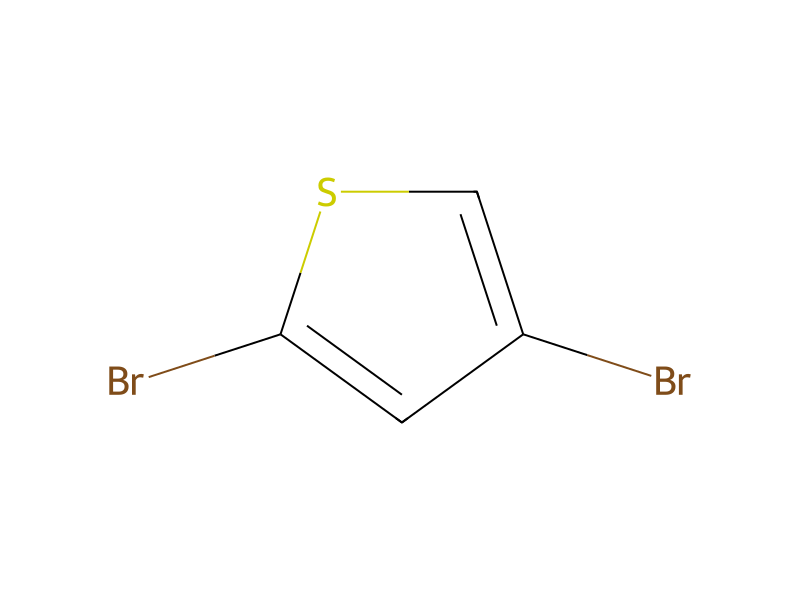
2,4-Dibromothiophene (2.97 g, 12.28 mmol), pyridine-4-boronic acid (1.50 g, 12.28 mmol), potassium carbonate (5.52 g, 39.91 mmol) and tetrakis(triphenylphosphine)palladium (0) (426 mg, 0.38 mmol) were refluxed in ethanol/1,2-dimethoxyethane (1:4 v/v; 100 mL) at 100° C. for 7 hours. The solution was allowed to cool, and then filtered and evaporated. The residue was purified by flash chromatography using a gradient of ethyl acetate in hexane to give a yellow solid as the sub-title compound (1.52 g), m/z 240, 242 (MH+).
Workup
- temperatureto cool
- filtrationfiltered
- customevaporated
- customThe residue was purified by flash chromatography
Sources & evidence
- ORD record
- ord-4caba53d9be4467d8cb428bd04c517de
- Source dataset
- uspto-grants-2009_04
- Patent number
- US07514567B2
Reaction notes
Loading…