1,4-Dioxane → 5-Bromo-4-chloro-N-[(4-methoxyphenyl)methyl]-1,3-thiazol-2-amine
Reaction equation

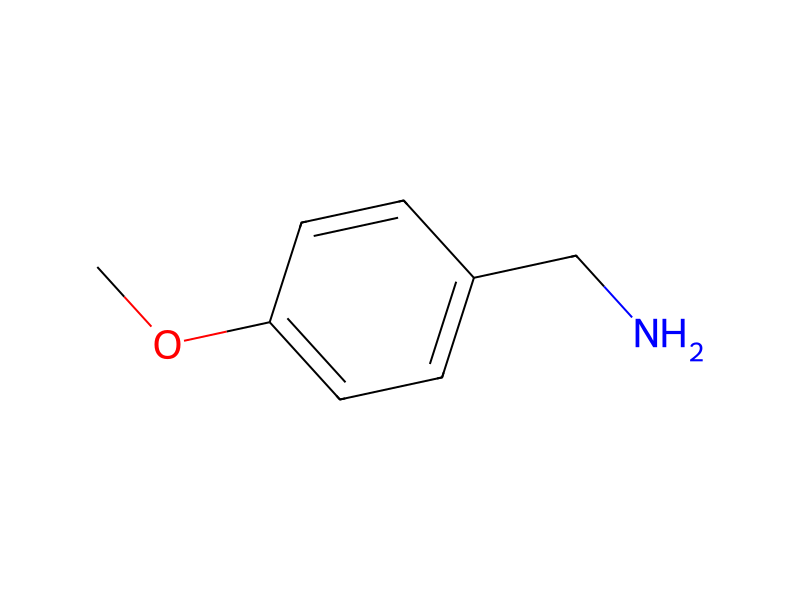
Br[C:2]1[S:3][C:4]([Br:8])=[C:5]([Cl:7])[N:6]=1.O1CCOCC1.[CH3:15][O:16][C:17]1[CH:24]=[CH:23][C:20]([CH2:21][NH2:22])=[CH:19][CH:18]=1>>[CH3:15][O:16][C:17]1[CH:24]=[CH:23][C:20]([CH2:21][NH:22][C:2]2[S:3][C:4]([Br:8])=[C:5]([Cl:7])[N:6]=2)=[CH:19][CH:18]=1Participants



Conditions
- Temperature
- 75 °C
Procedure
To a 250 mL round-bottomed flask was added 2,5-dibromo-4-chlorothiazole (5.9 g, 21 mmol), p-dioxane (50 mL, 587 mmol), and 4-methoxybenzylamine (3 mL, 21 mmol). The solution was stirred at 75° C. for 4 hours. The reaction was cooled to room temperature, and the solvent was removed. The residue was dissolved in EtOAc and washed with saturated NaHCO3 (1×25 mL), saturated sodium chloride (1×25 mL), water (1×25 mL), and dried over Na2SO4, filtered and concentrated in vacuum. The crude product was adsorbed onto a plug of silica gel and chromatographed through a Redi-Sep® pre-packed silica gel column (40 g), eluting with a gradient (5%→50% EtOAc in hexane) to provide N-(4-methoxybenzyl)-5-bromo-4-chlorothiazol-2-amine (5.5 g, 80% yield), m/z (%): 334.1 (100%, M++H).
Workup
- temperatureThe reaction was cooled to room temperature
- customthe solvent was removed
- dissolutionThe residue was dissolved in EtOAc
- washwashed with saturated NaHCO3 (1×25 mL), saturated sodium chloride (1×25 mL), water (1×25 mL)
- dry with materialdried over Na2SO4
- filtrationfiltered
- concentrationconcentrated in vacuum
- customchromatographed through a Redi-Sep® pre-packed silica gel column (40 g)
- washeluting with a gradient (5%→50% EtOAc in hexane)
Sources & evidence
- ORD record
- ord-6a757df7ae674e638d121fdf32c70abe
- Source dataset
- uspto-grants-2009_04
- Patent number
- US07514566B2
Reaction notes
Loading…