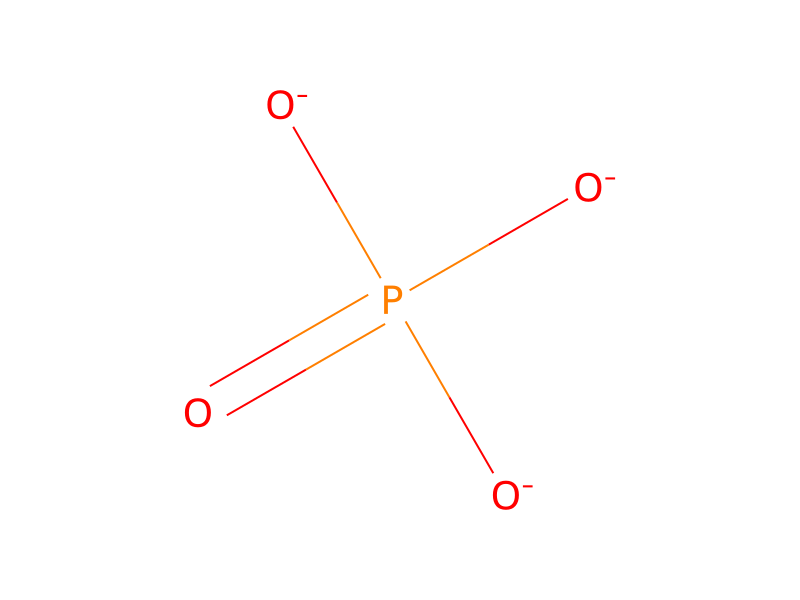
Phosphate → Phosphorus oxide (P4O10)
Reaction equation

[O-:1][P:2]([O-:5])([O-:4])=[O:3].[O-][P:7]([O-:10])([O-:9])=[O:8].[O-][P:12]([O-:15])([O-])=[O:13].[F-].[Ca+2].[Ca+2].[Ca+2].[Ca+2].[Ca+2].[P:22]([O-])([O-])([O-])=[O:23].P([O-])([O-])([O-])=O.[Ca+2].P([O-])([O-])([O-])=O.[Ca+2].[Ca+2]>>[O:3]=[P:2]12[O:5][P:7]3([O:10][P:12]([O:15][P:22]([O:9]3)([O:4]1)=[O:23])(=[O:13])[O:1]2)=[O:8]Participants


Procedure
Phosphate rock in Florida is a typical sedimentary siliceous phosphate consisting of calcium phosphate in form of apatite together with clay, sand and other gangue minerals. The appropriately sized flotation feed with typical grade of 3 to 10% P2O5 is obtained through logging, washing, desliming and sizing. The feed in thick slurry is conditioned with pH modifier, fatty acids, fuel oil, and other co-collectors at pH 8.5 to 10. Sodium silicate sometimes is added as a silica depressant. The slurry is subsequently floated by conventional froth flotation routes. A rougher concentrate with typical grade of 20 to 30% P2O5 and 15-40% silica sand is acid-scrubbed, rinsed free of reagents, and subjected to a reverse cationic flotation to further remove the silica sand at pH 6.5 to 7.5. The final phosphate concentrate is produced with the double flotation process with typical grade ranging from 30 to 34% P2O5 with 10-4% sand (acid insoluble). Therefore, the alkaline pH modifier and silica depressant are only applied in the first stage, the rougher flotation.
Sources & evidence
- ORD record
- ord-53b38b9a15c84988bd0561f20e183aa6
- Source dataset
- uspto-grants-2009_04
- Patent number
- US07516849B2
Reaction notes
Loading…