Phenol → Methyl Salicylate
Reaction equation

[C:1]1([OH:7])[CH:6]=[CH:5][CH:4]=[CH:3][CH:2]=1.C(Cl)(Cl)=O.[OH-].[Na+].[C:14](=O)([O:22]C1C=CC=CC=1)[O:15][C:16]1C=CC=CC=1>C(N(CC)CC)C.C(Cl)Cl.O.C(Cl)(Cl)Cl>[C:14]([O:15][CH3:16])(=[O:22])[C:2]1[C:1](=[CH:6][CH:5]=[CH:4][CH:3]=1)[OH:7]Participants




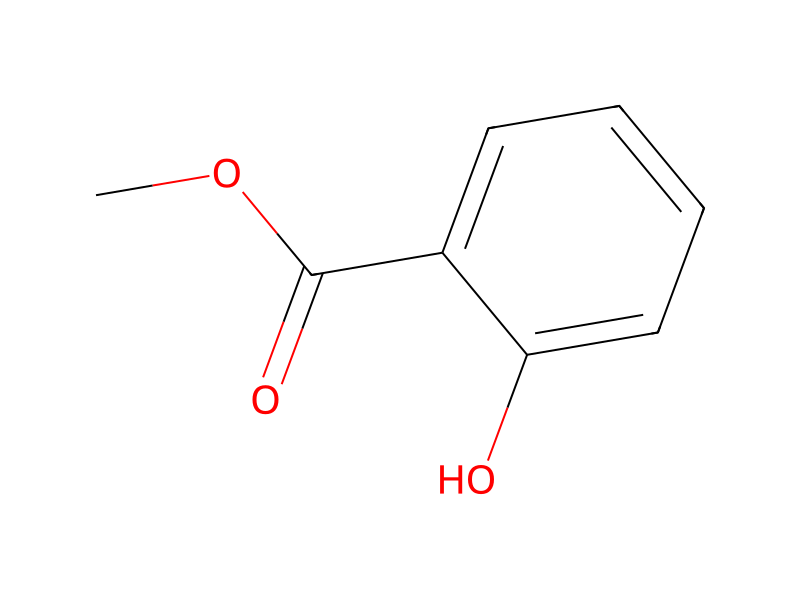




Procedure
A classical preparation of diaryl carbonates involves the reaction of a hydroxy aromatic compound such as phenol with phosgene gas in a two phase reaction system comprising water of formulation, an acid acceptor such as sodium hydroxide and a solvent such as methylene chloride or chloroform. Typical interfacial conditions used to prepare diphenyl carbonate (DPC) utilize water, also known as water of formulation, and methylene chloride phases, sodium hydroxide as a pH control measure and triethylamine as a catalyst. Under such conditions it is possible to convert phenol to DPC in essentially quantitative yield. However, application of these same conditions to ester-substituted phenols such as methyl salicylate results in only modest conversion of this ester-substituted phenol to the corresponding diaryl carbonate. Even the use of as much as 20 percent excess phosgene does not result in conversion of more than 70% to 75% of methyl salicylate to the bis methyl salicyl carbonate.
Sources & evidence
- ORD record
- ord-29adbd106e2043629a3bfdd8848fda84
- Source dataset
- uspto-grants-2009_04
- Patent number
- US07518011B2
Reaction notes
Loading…