1,3-Dibromopropane → HCID 59224762, compound
Reaction equation

CCOCC.CCCCCCC.[C:13]([O:17][C:18]([N:20]1[C:28]2[C:23](=[CH:24][CH:25]=[C:26]([OH:29])[CH:27]=2)[CH:22]=[C:21]1[C:30]1[C:31]2[S:44][C:43]([C:45]3[CH:50]=[CH:49][CH:48]=[C:47]([O:51][CH3:52])[CH:46]=3)=[CH:42][C:32]=2[N:33]([C:35]([O:37][C:38]([CH3:41])([CH3:40])[CH3:39])=[O:36])[N:34]=1)=[O:19])([CH3:16])([CH3:15])[CH3:14].C(=O)([O-])[O-].[Cs+].[Cs+].[Br:59][CH2:60][CH2:61][CH2:62]Br>C(OCC)(=O)C.ClCCl>[C:13]([O:17][C:18]([N:20]1[C:28]2[C:23](=[CH:24][CH:25]=[C:26]([O:29][CH2:62][CH2:61][CH2:60][Br:59])[CH:27]=2)[CH:22]=[C:21]1[C:30]1[C:31]2[S:44][C:43]([C:45]3[CH:50]=[CH:49][CH:48]=[C:47]([O:51][CH3:52])[CH:46]=3)=[CH:42][C:32]=2[N:33]([C:35]([O:37][C:38]([CH3:41])([CH3:40])[CH3:39])=[O:36])[N:34]=1)=[O:19])([CH3:14])([CH3:15])[CH3:16]Participants




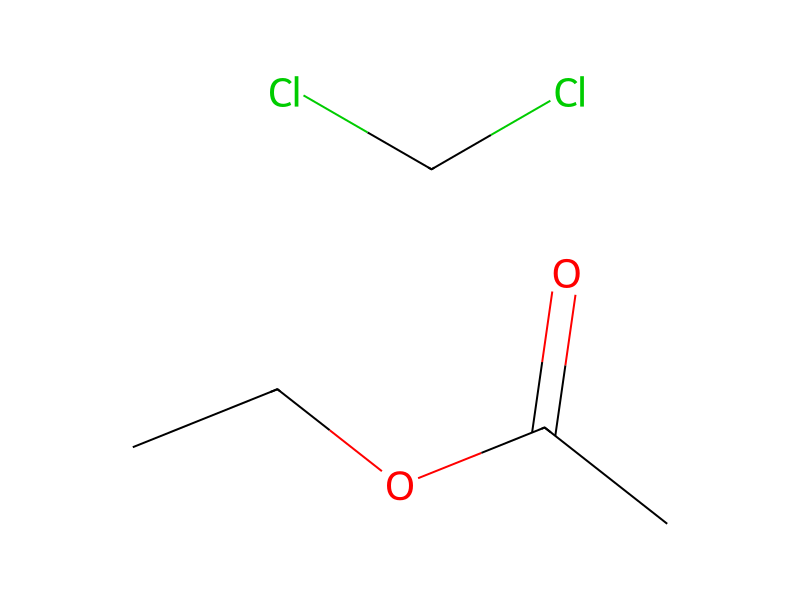
Conditions
- Temperature
- 75 °C
Procedure
A mixture of 1-(thieno[3,2-c]pyrazol-1-yl)-ethanone (5.00 g, 30.1 mmol), N-bromosuccinimide (16.1 g, 90.4 mmol), and chloroform (100 mL) was heated at 50° C. under nitrogen for 5 hours. The orange mixture was stirred at room temperature for an additional 17 hours. The red-orange mixture was filtered, the insolubles washed twice with dichloromethane (60 mL). The filtrate was washed with 10% aqueous NaHSO3 (60 mL) and then twice with water (60 mL), then dried over magnesium sulfate, and concentrated under reduced pressure. The residue was purified by silica gel column chromatography, eluting with 30% ethyl acetate/heptane to 50% ethyl acetate/heptane to give 1-(5-bromo-thieno[3,2-c]pyrazol-1-yl)-ethanone [6.21 g, 84%, Intermediate (51)] as an off-white solid. TLC Rƒ0.50 (silica, 40% ethyl acetate/heptane). LC/MS: 244.93 (M+H), RT=3.10 minutes; 1H NMR [300 Mhz, (CD3)2SO]: δ 8.12 (s, 1H), 7.67 (s, 1H), 2.67 (s, 3H). Step 2. A mixture of 1-(5-bromo-thieno[3,2-c]pyrazol-1-yl)-ethanone [12.0 g, 49.0 mmol Intermediate (51)], 1,4-dioxane (120 mL), and 2 M aqueous potassium carbonate (80.0 mL) was stirred at 95° C. under nitrogen. After 20 hours, the reaction mixture was cooled to room temperature and then diluted with ethyl acetate (200 mL). The mixture was washed twice with water (100 mL) and brine (100 mL) successively, dried over magnesium sulfate, and concentrated in vacuo. The product was dried under vacuum to give 5-bromo-1H-thieno[3,2-c]pyrazole [9.48 g, 95%, Intermediate (52)] as an off-white solid. TLC Rƒ0.26 (silica, 1:1 ethyl acetate/heptane); LC/MS: 202.93 (M+H), RT=2.79 minutes; 1H NMR (300 Mhz, CDCl3) δ 10.8 (br s, 1H), 7.70 (s, 1 H), 7.12 (s, 1H). Step 3. A solution of 5-bromo-1H-thieno[3,2-c]pyrazole [8.00 g, 39.4 mmol Intermediate (52)] in dimethylformamide (50 mL) was added dropwise to a room temperature mixture of sodium hydride (1.74 g, 60% oil dispersion, 43.5 mmol) and dimethylformamide (10 mL) over 5 minutes and the resulting mixture stirred at room temperature for 30 minutes. 2-(Trimethylsilyl)ethoxymethyl chloride (9.85 g, 5.91 mmol) was added dropwise and the resulting white slurry was stirred at room temperature for 21 hours. The reaction mixture was diluted with water (300 mL) and extracted twice with ethyl acetate (125 mL). The combined extracts were washed with water (100 mL) and brine (100 mL) successively, dried over magnesium sulfate, and concentrated. The crude product was chromatographed on silica, eluting first with 30% ethyl acetate/heptane and then 40% ethyl acetate/heptane to afford a mixture of 5-bromo-1-(2-trimethylsilanyl-ethoxymethyl)-1H-thieno[3,2-c]pyrazole and 5-bromo-2-(2-trimethylsilanyl-ethoxymethyl)-2H-thieno[3,2-c]pyrazole [12.1 g, (92%)]. LC/MS: 333.0 (M+H), RT=3.97 minutes and 333.0 (M+H), RT=3.87 minutes. A portion of this mixture of 5-bromo-1-(2-trimethylsilanyl-ethoxymethyl)-1H-thieno[3,2-c]pyrazole and 5-bromo-2-(2-trimethylsilanyl-ethoxymethyl)-2H-thieno[3,2-c]pyrazole (5.51 g, 16.5 mmol), 3-methoxyphenylboronic acid (3.77 g, 24.8 mmol), [1,1′-bis(diphenylphosphino)ferrocene]dichloropalladium(II), complex with dichloromethane (1.35 g, 1.65 mmol), 4 M aqueous potassium carbonate (16.5 mL, 66.0 mmol), and 1,4-dioxane (66.0 mL) was purged with nitrogen for 5 minutes then heated at 75° C. for 2.5 hours. The dark mixture was cooled to room temperature, diluted with ethyl acetate (250 mL), and washed twice with water (100 mL) and brine (100 mL) successively. The organics were dried over magnesium sulfate and concentrated to give an amber oil. The oil was chromatographed on silica, eluting first with 5% ethyl acetate/dichloromethane and then 10% ethyl acetate/ dichloromethane to afford a mixture of 5-(3-methoxy-phenyl)-1-(2-trimethylsilanyl-ethoxymethyl)-1H-thieno[3,2-c]pyrazole and 5-(3-methoxy-phenyl)-2-(2-trimethylsilanyl-ethoxymethyl)-2H-thieno[3,2-c]pyrazole [4.58 g, 77%] as a cloudy amber oil. TLC Rƒ0.41 major and 0.35 minor (silica, 5% ethyl acetate/dichloromethane); LC/MS: 361.2 (M+H), RT=4.14 minutes and 361.2 M+H), RT=4.05 minutes. A portion of this mixture of 5-(3-methoxy-phenyl)-1-(2-trimethylsilanyl-ethoxymethyl)-1H-thieno[3,2-c]pyrazole and 5-(3-methoxy-phenyl)-2-(2-trimethylsilanyl-ethoxymethyl)-2H-thieno[3,2-c]pyrazole (4.41 g, 12.2 mmol) and ethylenediamine (2.50 mL, 37.0 mmol) at room temperature under nitrogen was added tetrabutylammonium fluoride (61.0 mL of a 1 M tetrahydrofuran solution, 61.0 mmol) and the resulting solution heated at 70° C. After 21.5 hours, the reaction was cooled to room temperature and the solvent removed in vacuo. Water (150 mL) was added to the residue and the aqueous mixture extracted twice with ethyl acetate (100 mL). The combined extracts were washed with water (75 mL) and brine (75 mL) successively, dried over magnesium sulfate, and concentrated to give 5-(3-methoxy-phenyl)-1H-thieno[3,2-c]pyrazole [2.47 g, 87%, Intermediate (53)] as an off-white solid: TLC Rƒ0.45 (silica, ethyl acetate); LC/MS: 231.0 (M+H), RT=3.20 minutes; 1H NMR (300 Mhz, CDCl3) δ 10.65 (br s, 1H), 7.78 (s, 1H), 7.32 (m, 1H), 7.25-7.21 (m, 2H), 7.16 (m, 1H), 6.89 (m, 1H), 3.86 (s, 3H). Step 4. Crushed potassium hydroxide (1.35 g, 24.1 mmol) was added in one portion to a solution of 5-(3-methoxyphenyl)-1H-thieno[3,2-c]pyrazole [1.85 g, 8.03 mmol, Intermediate (53)] and dimethylformamide at 0° C. with stirring. After 10 minutes, iodine (3.05 g, 12.0 mmol) was added in one portion and the dark reaction was stirred at 0° C. for 30 minutes and then at room temperature for 5 hours. The reaction was quenched with 10% aqueous NaHSO3 (100 mL), the resulting white mixture diluted with water (100 ml) and the mixture aged at 5° C. overnight. The solid was colleted by filtration, washed with water (3×30 mL) and dried under vacuum at 40° C. to give 3-iodo-5-(3-methoxyphenyl)-1H-thieno[3,2-c]pyrazole [2.61 g, 91%, Intermediate (54)] as a tan powder.mp 159-163° C.; TLC Rƒ0.54 (silica, 80% ethyl acetate/heptane); LC/MS: 357.0 (M+H), RT=3.60 minutes; 1H NMR (300 Mhz, CDCl3) δ 11.3 (br s, 1H), 7.33 (m, 1H), 7.28-7.20 (m, 2H), 7.14 (m, 1H), 6.91 (m, 1H), 3.87 (s, 3H). Step 5. Added 4-dimethylaminopyridine (102 mg, 0.835 mmol) to a room temperature mixture of 3-iodo-5-(3-methoxyphenyl)-1H-thieno[3,2-c]pyrazole [1.50 g, 4.21 mmol, Intermediate (54)], di-tert-butyl dicarbonate (1.38 g, 6.32 mmol), and anhydrous dichloromethane (40 mL) with stirring. The resulting solution was stirred at room temperature. After 20 h, the reaction was washed with water (2×30 mL), dried over magnesium sulfate, and concentrated under reduced pressure to a tan solid. The crude product was chromatographed on silica, eluting with dichloromethane to give 3-iodo-5-(3-methoxyphenyl)-thieno[3,2-c]pyrazole-1-carboxylic acid tert-butyl ester [1.68 g, 87%, Intermediate (55)] as an off-white solid: TLC Rƒ0.27 (silica, dichloromethane); LC/MS (M+H 457.0, RT 4.08 min); 1H NMR (300 Mhz, DMSO-d6) δ 7.75 (s, 1H), 7.40 (dd, J=7.5, 8.5 Hz, 1H), 7.32 (ddd, J=1, 1.5, 7.5 Hz, 1H), 7.28 (dd, J=1.5, 2.5 Hz, 1H), 7.01 (ddd, J=1, 2.5, 8.5 Hz), 3.84 (s, 3H), 1.65 (s, 9H). Step 6. A mixture of 5-(tert-butyl-dimethyl-silanyloxymethyl)-1H-indole-2-boronic acid 1-carboxylic acid tert-butyl ester [1.67 g, 4.27 mmol, Intermediate (8), prepared as described in Example 1-4 of International Patent Application Publication No. WO 02/32861], 3-iodo-5-(3-methoxy-phenyl)-thieno[3,2-c]pyrazole-1-carboxylic acid tert-butyl ester (1.50 g, 3.29 mmol, Intermediate (55)], cesium carbonate (4.29 g, 13.2 mmol), [1,1′-bis(diphenylphosphino)ferrocene]dichloropalladium(II) complex with dichloromethane (1:1) (268 mg, 0.328 mmol), 1,4-dioxane (35 mL), and water (7.0 mL) was purged with nitrogen and then heated at 75° C. with stirring under nitrogen. After 70 minutes, the reaction was cooled to room temperature, diluted with ethyl acetate (100 mL), and washed twice with water (50 mL) and brine (50 mL) successively. The organic layer was dried over magnesium sulfate and the solvent was removed under reduced pressure to give a black oil. The oil was chromatographed on silica, eluting with dichloromethane to give 2-[1-tert-butoxycarbonyl-5-(3-methoxy-phenyl)-1H-thieno[3,2-c]pyrazol-3-yl]-6-(tert-butyl-dimethyl-silanyloxy)-indole-1-carboxylic acid tert-butyl ester [1.80 g, 81%, Intermediate (56)] as a beige foam. TLC Rƒ0.25 (silica, dichloromethane); LC/MS: 676.3 (M+H), RT=3.82 minutes. Step 7. To a solution of 2-[1-tert-butoxycarbonyl-5-(3-methoxy-phenyl)-1H-thieno[3,2-c]pyrazol-3-yl]-6-(tert-butyl-dimethyl-silanyloxy)-indole-1-carboxylic acid tert-butyl ester [1.70 g, 2.52 mmol, Intermediate (56)] in tetrahydrofuran (20 mL) at 0° C. was added tetrabutylammonium fluoride (2.80 mL of a 1M tetrahydrofuran solution, 2.80 mmol) in one portion with stirring. After 40 minutes, the orange reaction was partitioned between ethyl acetate (80 mL) and 10% aqueous ammonium chloride (40 mL) and the layers separated. The organics were washed with water (40 mL) and brine (40 mL) successively, dried over magnesium sulfate, and the solvent removed under reduced pressure. The crude product was chromatographed on silica, eluting with first 10% ethyl acetate/dichloromethane and then 20% ethyl acetate/dichloromethane, to give 1.54 g of a tan foam. Trituration with ether/heptane gave 2-[1-tert-butoxycarbonyl-5-(3-methoxy-phenyl)-1H-thieno[3,2-c]pyrazol-3-yl]-6-hydroxy-indole-1-carboxylic acid tert-butyl ester [1.25 g, 88%, Intermediate (57)] as a white powder; TLC Rƒ0.23 (silica, 10% ethyl acetate/dichloromethane); LC/MS: 562.2 (M+H ), RT=2.80 minutes. Step 8. A mixture of 2-[1-tert-butoxycarbonyl-5-(3-methoxy-phenyl)-1H-thieno[3,2-c]pyrazol-3-yl]-6-hydroxy-indole-1-carboxylic acid tert-butyl ester [1.19 g, 2.12 mmol, Intermediate (57)], cesium carbonate (2.07 g, 6.35 mmol), and 1,3-dibromopropane (8.0 mL) was heated at 75° C. under nitrogen. After 6 hours, the mixture was cooled to ambient temperature and let stand overnight. The mixture was filtered, and the insolubles washed twice with dichloromethane (10 mL). The filtrate was concentrated in vacuo to yield a golden oil. The crude product was chromatographed on silica, eluting with a gradient of 30% ethyl acetate/heptane to 50% ethyl acetate/heptane to give 6-(3-bromo-propoxy)-2-[1-tert-butoxycarbonyl-5-(3-methoxy-phenyl)-1H-thieno[3,2-c]pyrazol-3-yl]-indole-1-carboxylic acid tert-butyl ester [1.11 g, 76%, Intermediate (58)] as a white foam. TLC Rƒ0.46 (silica, 40% ethyl acetate/heptane); LC/MS: 682.2 (M+H), RT=3.23 minutes. Step 9. A mixture of 6-(3-bromo-propoxy)-2-[1-tert-butoxycarbonyl-5-(3-methoxy-phenyl)-1H-thieno[3,2-c]pyrazol-3-yl]-indole-1-carboxylic acid tert-butyl ester [250 mg, 0.366 mmol, Intermediate (58)], 4-hydroxypiperidine (90.0 mg, 0.889 mmol), potassium carbonate (245 mg, 1.77 mmol), potassium iodide (45.0 mg, 0.271 mmol), and anhydrous acetonitrile (4 mL) was heated at 70° C. with shaking at 200 rpm. After 18 hours, the reaction was cooled to ambient temperature for 30 minutes. To the reaction was added 4 M aqueous potassium carbonate (4.0 mL) and the mixture heated at 70° C. with shaking at 200 rpm for 30 minutes. After cooling to room temperature, the solvent was removed in vacuo and the mixture was diluted with ethyl acetate (40 mL). The organics were washed with water (20 mL) and brine (20 ml) successively, dried over Magnesium sulfate, and concentrated to a dark residue. The residue was chromatographed on silica, eluting first with 10%—1 M ammonia in methanol/90% dichloromethane then with 20%—1 M ammonia in methanol/80% dichloromethane to give 125 mg of a purple solid. Trituration of the solid with 20% methanol/ether provided of 1-(3-{2-[5-(3-methoxy-phenyl)-1H-thieno[3,2-c]pyaazol-3-yl]-1H-indol-6-yloxy}-propyl)-piperidin-4-ol [94.1 mg, 51%, Example 59] as a pale purple powder. TLC Rƒ0.40 (silica, 20% 1 M ammonia in methanol/80% dichloromethane); mp: 205-207° C.; LC/MS: 503.3 (M+H), RT=2.22 minutes; 1H NMR [300 Mhz, (CD3)2SO]: δ 13.30 (br s 1H), 11.37(br s, 1H), 7.67 (2, 1H), 7.43 (d, J=8.5 Hz, 1H), 7.38-7.32 (m, 3H), 6.97-6.91 (m, 2H), 6.65 (dd, J=2, 8.5 Hz, 1H), 6.59 (s, 1H), 4.51 (d, 4 Hz, 1H), 3.98 (t, J=6 Hz, 2H), 3.85 (s, 3H), 3.41 (m, 1H), 2.72 (m, 2H), 2.42 (m, 2H), 2.01 (m, 2H) 1.92-1.83 (m, 2H), 1.71 (m, 2H), 1.44-1.32 (m, 2H).
Workup
- temperaturethe mixture was cooled to ambient temperature
- waitlet stand overnight
- filtrationThe mixture was filtered
- washthe insolubles washed twice with dichloromethane (10 mL)
- concentrationThe filtrate was concentrated in vacuo
- customto yield a golden oil
- customThe crude product was chromatographed on silica
- washeluting with a gradient of 30% ethyl acetate/heptane to 50% ethyl acetate/heptane
Sources & evidence
- ORD record
- ord-4f4aeabef7034a06a17c848be2faa53b
- Source dataset
- uspto-grants-2009_04
- Patent number
- US07518000B2
Reaction notes
Loading…