Ammonia → 5-AMINO-4-HYDROXYQUINAZOLINE
Reaction equation

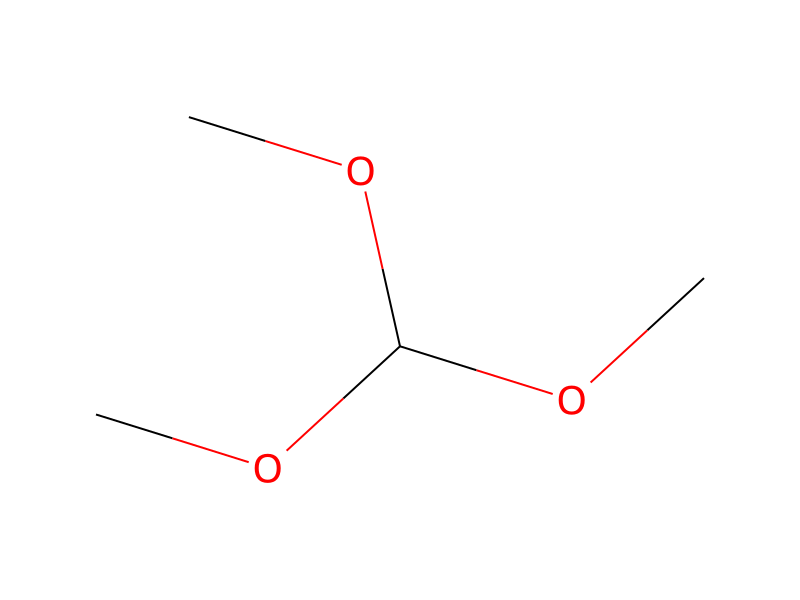
[NH2:1][C:2]1[CH:10]=[CH:9][CH:8]=[C:7]([NH2:11])[C:3]=1[C:4]([NH2:6])=[O:5].[CH3:12]OC(OC)OC.S(=O)(=O)(O)O.N>CN(C)C(=O)C.CO>[NH2:1][C:2]1[CH:10]=[CH:9][CH:8]=[C:7]2[C:3]=1[C:4](=[O:5])[NH:6][CH:12]=[N:11]2Participants
7






Procedure
900 mg (5.958 mmol) 2,6-diaminobenzamide are dissolved in 3.6 ml N,N-dimethylacetamide and combined with 6.3 ml (57.01 mmol) trimethylorthoformate and 792 μl (8.865 mmol) 98% sulphuric acid. After 16 h at 25° C. the reaction mixture is taken up with 20 ml of methanol and the solvent is eliminated in vacuo. The residue is again taken up in 20 ml of methanol, neutralised with concentrated ammonia. The solvent is eliminated in vacuo and the residue purified by chromatography. The carrier used is silica gel and the eluant used is dichloromethane, to which 7% of a mixture of 90% methanol and 10% saturated aqueous ammonia solution are added.
Workup
- customthe residue purified by chromatography
- additionto which 7% of a mixture of 90% methanol and 10% saturated aqueous ammonia solution are added
Sources & evidence
- ORD record
- ord-96aaa5a6cebb4c6a95e2a5aa678e4360
- Source dataset
- uspto-grants-2009_04
- Patent number
- US07521457B2
Reaction notes
Loading…