2,5-Dibromopyridine → HCID 61373405, compound
Reaction equation

[NH2:1][C:2]1[CH:11]=[CH:10][CH:9]=[C:8]2[C:3]=1[CH:4]=[CH:5][N:6]=[CH:7]2.Br[C:13]1[CH:18]=[CH:17][C:16]([Br:19])=[CH:15][N:14]=1.CC(C)([O-])C.[Na+]>C([O-])(=O)C.[Pd+2].C([O-])(=O)C.C1(P(C2C=CC=CC=2)C2C=CC3C(=CC=CC=3)C=2C2C3C(=CC=CC=3)C=CC=2P(C2C=CC=CC=2)C2C=CC=CC=2)C=CC=CC=1>[Br:19][C:16]1[CH:17]=[CH:18][C:13]([NH:1][C:2]2[C:3]3[CH:4]=[CH:5][N:6]=[CH:7][C:8]=3[CH:9]=[CH:10][CH:11]=2)=[N:14][CH:15]=1Participants





Conditions
- Temperature
- 130 °C
Procedure
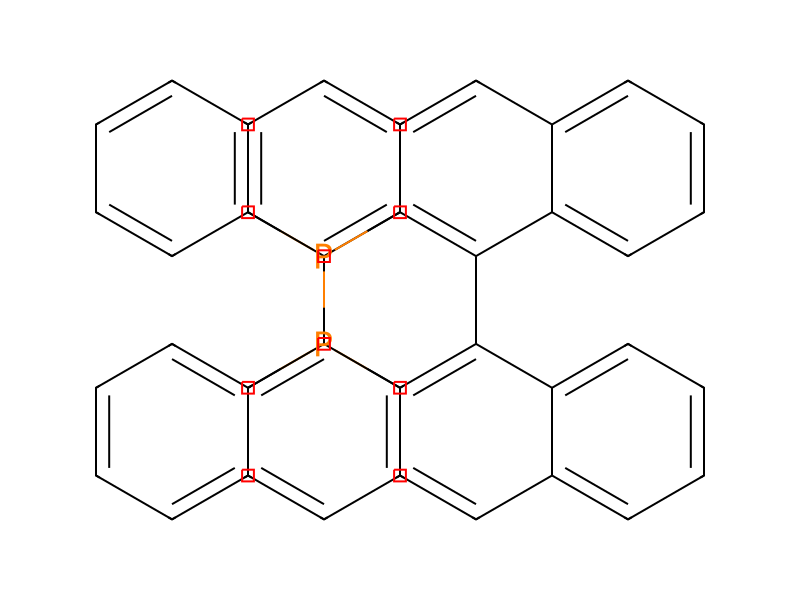
To a mixture of 5-aminoisoquinoline (2.53 g, 17.5 mmol) and 2,5-dibromopyridine (3.62 g, 15.3 mmol) was added palladium acetate (0.17 g, 0.76 mmol) and rac-2,2′-bis(diphenylphosphino)-1,1′-binaphthyl (0.47 g, 0.76 mmol). The flask was flushed with nitrogen and p-xylene was added followed by sodium tert-butoxide (2.2 g, 22.9 mmol). Nitrogen was bubbled through the mixture for 5 minutes and the reaction was then heated with stirring at 130° C. for 12 hours under an atmosphere of nitrogen. The mixture was allowed to cool to room temperature and poured onto a mixture of chloroform/water (200 ml/20 ml). The phases were separated and the aqueous phase was extracted twice with chloroform. The combined organic layers were washed with brine, dried over sodium sulfate and adsorbed onto silica gel. Purification by flash chromatography (50% ethyl acetate-isohexane) followed by recrystallisation from ethanol gave N-(5-bromopyridin-2-yl)isoquinolin-5-amine (3.4 g, 74%). A portion (0.71 g, 2.37 mmol) was added to 4(trifluoromethyl) phenylboronic acid (0.68 g, 3.59 mmol) in anhydrous dioxane (10 ml) and tetrakis(triphenylphosphino)-palladium (0) (0.14 g, 0.12 mmol) and saturated aqueous sodium carbonate solution (4 ml) were added. Nitrogen was bubbled through the mixture for 5 minutes and the reaction was then heated with stirring at 100° C. for 12 hours under an atmosphere of nitrogen. The mixture was allowed to cool to room temperature and poured into a mixture of ethyl acetate/water (100 ml/30 ml). The phases were separated and the aqueous phase was extracted two times more with ethyl acetate. The combined organic layers were washed with brine, dried over sodium sulfate and adsorbed onto silica gel. Purification by flash chromatography (50% ethyl acetate-iso-hexane) followed by recrystallisation from methanol/water (1:1) yielded the title compound (0.22 g, 25%). m/z (ES+) 366 (M+H+).
Workup
- customThe flask was flushed with nitrogen and p-xylene
- additionwas added
- customNitrogen was bubbled through the mixture for 5 minutes
- temperaturethe reaction was then heated
- temperatureto cool to room temperature
- additionpoured onto a mixture of chloroform/water (200 ml/20 ml)
- customThe phases were separated
- extractionthe aqueous phase was extracted twice with chloroform
- washThe combined organic layers were washed with brine
- dry with materialdried over sodium sulfate
- customPurification by flash chromatography (50% ethyl acetate-isohexane)
- customfollowed by recrystallisation from ethanol
Sources & evidence
- ORD record
- ord-3a9a5cda545243a8a51b6514fab833e2
- Source dataset
- uspto-grants-2008_10
- Patent number
- US07442701B2
Reaction notes
Loading…