Sodium Hydroxide → HCID 25179063, compound
Reaction equation

B.CSC.[F:5][C:6]([F:18])([F:17])[C:7]([C:13]([F:16])([F:15])[F:14])([OH:12])[CH2:8][C:9]([CH3:11])=[CH2:10].[OH-:19].[Na+]>C1COCC1>[F:5][C:6]([F:17])([F:18])[C:7]([C:13]([F:14])([F:15])[F:16])([OH:12])[CH2:8][CH:9]([CH3:11])[CH2:10][OH:19]Participants




Procedure
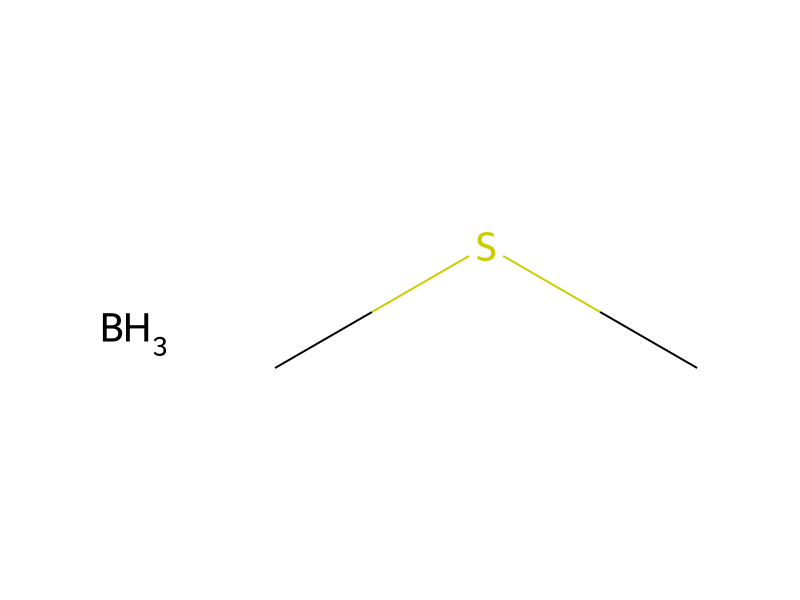
To a 3-necked, 500 mL round bottomed flask equipped with an overhead stirrer, digital thermometer and a 125 mL constant-pressure addition funnel with a nitrogen inlet was added 27 mL (0.27 mol) of borane-dimethylsulfide complex (10.0M in THF). The addition funnel was charged with a solution of 50 g (0.23 mol) of 1,1,1-trifluoro-2-trifluoromethyl-4-methyl-pent-4-en-2-ol (1) in 140 mL of anhydrous THF. The flask was cooled and the olefin was added slowly with stirring while maintaining a temperature below 15° C. The mixture was stirred at room temperature overnight after which time it was recooled and 100 mL (0.3 mol) of 3M NaOH (aq) was added carefully. The reaction mixture was reduced in volume on a rotary evaporator and subsequently co-evaporated with two 500 mL portions of diethyl ether. The resulting heavy oil was taken up in 50 mL of THF and the solution transferred to a 250 mL 3-necked round bottomed flask equipped with a 125-mL addition funnel, a digital thermometer, and a magnetic stirbar. The addition funnel was charged with 70 mL of 30% hydrogen peroxide. The flask was cooled and the hydrogen peroxide added slowly with stirring. After stirring overnight at room temperature, the solution was diluted with 500 mL of diethyl ether and adjusted to pH 6 (wet litmus) with 5% HCl. The ether layer was separated and the aqueous layer was extracted with 2×250 mL of ether. The combined organic phases were washed with 2×500 mL of saturated ammonium chloride and brine, dried over MgSO4, and evaporated to a yellow oil. The oil was purified by distillation through a Vigreux column, bp 57° [email protected] mm Hg to yield 46 g (85%) of (2) as a low melting solid. The identity of the product was confirmed using 1H NMR spectroscopy and HRMS.
Workup
- customTo a 3-necked, 500 mL round bottomed flask equipped with an overhead stirrer
- additiondigital thermometer and a 125 mL constant-pressure addition funnel with a nitrogen inlet
- temperatureThe flask was cooled
- temperaturewhile maintaining a temperature below 15° C
- stirringThe mixture was stirred at room temperature overnight after which time it
- customThe reaction mixture was reduced in volume on a rotary evaporator and subsequently co-evaporated with two 500 mL portions of diethyl ether
- customthe solution transferred to a 250 mL 3-necked round bottomed flask
- customequipped with a 125-mL addition funnel
- additionThe addition funnel was charged with 70 mL of 30% hydrogen peroxide
- temperatureThe flask was cooled
- additionthe hydrogen peroxide added slowly
- stirringwith stirring
- stirringAfter stirring overnight at room temperature
- additionthe solution was diluted with 500 mL of diethyl ether
- customThe ether layer was separated
- extractionthe aqueous layer was extracted with 2×250 mL of ether
- washThe combined organic phases were washed with 2×500 mL of saturated ammonium chloride and brine
- dry with materialdried over MgSO4
- customevaporated to a yellow oil
- distillationThe oil was purified by distillation through a Vigreux column, bp 57° C.
Sources & evidence
- ORD record
- ord-57518296d3d74b2fa6eeab3846281bb5
- Source dataset
- uspto-grants-2008_10
- Patent number
- US07442828B2
Reaction notes
Loading…