Triethylamine → HCID 13391496, compound
Reaction equation

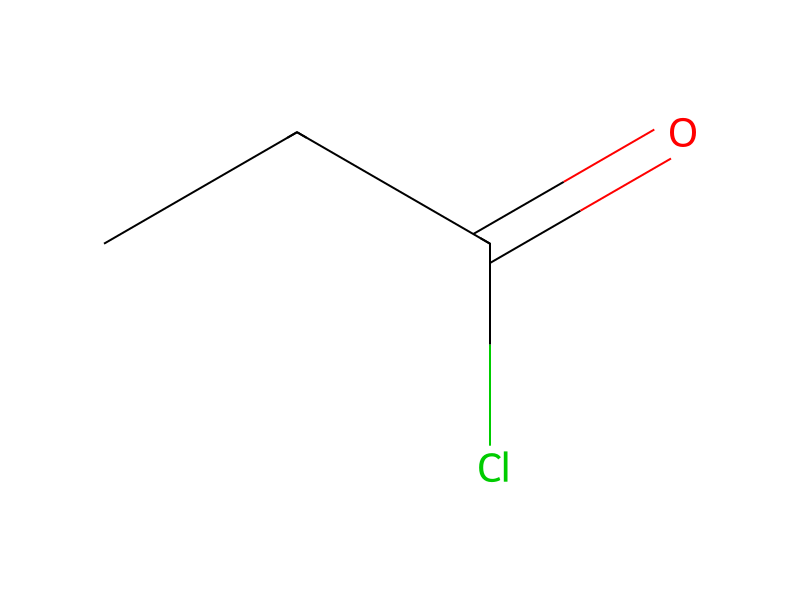
[O:1]=[C:2]1[CH2:7][C:6](=[O:8])[CH2:5][CH:4]([C:9]([O:11][CH2:12][CH3:13])=[O:10])[CH2:3]1.C(N(CC)CC)C.[C:21](Cl)(=[O:24])[CH2:22][CH3:23]>ClCCl>[O:8]=[C:6]1[CH:7]([C:21](=[O:24])[CH2:22][CH3:23])[C:2](=[O:1])[CH2:3][CH:4]([C:9]([O:11][CH2:12][CH3:13])=[O:10])[CH2:5]1Participants
Reactant 3


Product 1

Reagents, catalysts & solvents 1

Procedure
4.2 g of ethyl 3,5-dioxocyclohexanecarboxylate and 3.4 g of triethylamine were dissolved in 50 ml of dichloromethane, to which was added dropwise 2.9 g of propionyl chloride under stirring at room temperature. The resultant mixture was allowed to react at ambient temperature for 2 hours, after which the reaction solution was washed with water and admixed with a dilute aqueous sodium bicarbonate solution to remove the acidic matters from the reaction solution. The organic layer was then separated from the aqueous phase, dried and concentrated to a small volume. The concentrated solution was taken up in 20 ml of toluene, followed by addition of 0.5 g of 4-N,N-dimethylaminopyridine and heating the mixture at 85° C. for 3 hours. Thereafter, the toluene was removed from the reaction solution by distillation under reduced pressure, and the residue was chromatographed on silica gel using benzene as developing solvent to afford 2.5 g of the title compound (Compound No. 9 of Table 1) as colorless flakes having a melting point of 55°- 56° C.
Workup
- customto react at ambient temperature for 2 hours
- washafter which the reaction solution was washed with water
- customto remove the acidic matters from the reaction solution
- customThe organic layer was then separated from the aqueous phase
- customdried
- concentrationconcentrated to a small volume
- additionfollowed by addition of 0.5 g of 4-N,N-dimethylaminopyridine
- temperatureheating the mixture at 85° C. for 3 hours
- customThereafter, the toluene was removed from the reaction solution by distillation under reduced pressure
- customthe residue was chromatographed on silica gel
Sources & evidence
- ORD record
- ord-97bc0a0590984e2cbfd26d0d704bb00a
- Source dataset
- uspto-grants-1987_07
- Patent number
- US04678496
Reaction notes
Loading…