Ammonia → 3,6-Dibromo-9-(prop-2-yn-1-yl)-9H-carbazole
Reaction equation

[NH2-].[Na+].[Br:3][C:4]1[CH:5]=[CH:6][C:7]2[NH:8][C:9]3[C:14]([C:15]=2[CH:16]=1)=[CH:13][C:12]([Br:17])=[CH:11][CH:10]=3.N.[CH2:19](Br)[C:20]#[CH:21]>C1(C)C=CC=CC=1>[CH2:21]([N:8]1[C:7]2[CH:6]=[CH:5][C:4]([Br:3])=[CH:16][C:15]=2[C:14]2[C:9]1=[CH:10][CH:11]=[C:12]([Br:17])[CH:13]=2)[C:20]#[CH:19]Participants
6
Reactant 4


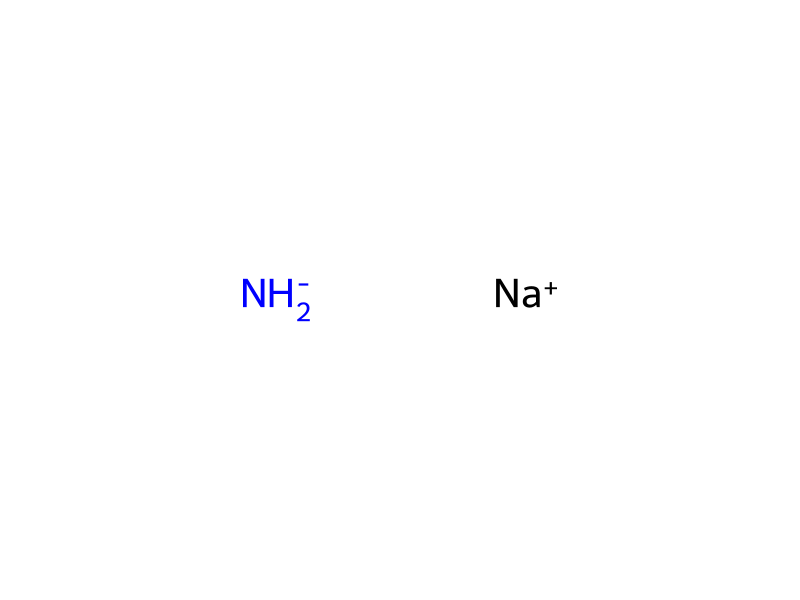

Product 1

Reagents, catalysts & solvents 1

Procedure
Sodium amide (7.73 g, 0.198 mole) was carefully added to a suspension of 3,6-dibromocarbazole (54.7 g, 0.168 mole) in liquid ammonia (ca. 600 ml.) under argon atmosphere. After solution occurred, propargyl bromide (20.2 g, 0.170 mole) in toluene was added dropwise to the solution over 25 minute period. The reaction mixture was stirred for an additional 100 minutes, and the ammonia was allowed to evaporate. The resultant solid was washed with water and recrystallized from ethanol to give 39 g (63% yield) tan needles, mp 193°-194°. This solid gave an infrared spectrum with significant features at 3290, 2120, 870, 830, 800, and 790 cm-1.
Workup
- customto evaporate
- washThe resultant solid was washed with water
- customrecrystallized from ethanol
Sources & evidence
- ORD record
- ord-0228a60ae136407ab7cd7b47bd81465f
- Source dataset
- uspto-grants-1987_07
- Patent number
- US04681920
Reaction notes
Loading…