Ethylene Glycol → HCID 23441498, compound
Reaction equation

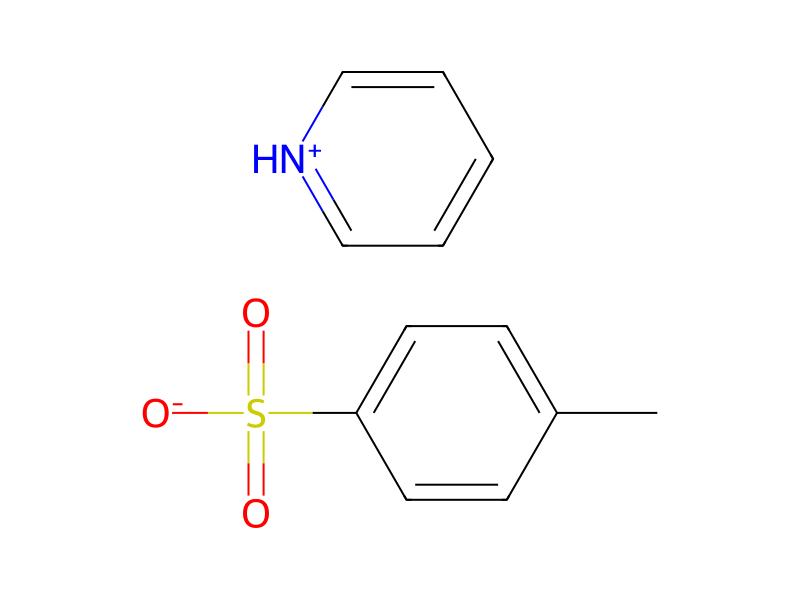
[C:1]([C:4]1([C:7]2[CH:12]=[CH:11][C:10]([N+:13]([O-:15])=[O:14])=[CH:9][CH:8]=2)[CH2:6][CH2:5]1)(=[O:3])[CH3:2].[CH2:16](O)[CH2:17][OH:18].C1(C)C=CC(S([O-])(=O)=O)=CC=1.[NH+]1C=CC=CC=1>C1C=CC=CC=1>[CH3:2][C:1]1([C:4]2([C:7]3[CH:12]=[CH:11][C:10]([N+:13]([O-:15])=[O:14])=[CH:9][CH:8]=3)[CH2:6][CH2:5]2)[O:18][CH2:17][CH2:16][O:3]1Participants
5
Reactant 3


Product 1

Reagents, catalysts & solvents 1

Procedure
A solution of 4-(1-acetylcyclopropan-1-yl)nitrobenzene (2.40 g), ethylene glycol (6.5 mL), and pyridinium p-toluenesulfonate (1.47 g) in benzene (120 mL) was heated under reflux with Dean-Stark apparatus for 15 hours. After cooling, dilution with saturated sodium hydrogencarbonate solution, the mixture was extracted with ethyl acetate. The organic extracts were washed with brine, dried over anhydrous magnesium sulfate, filtered, and then concentrated in vacuo. Flash chromatography (silica, hexane:ethyl acetate=4:1) of the residue gave 4-(1-(2-methyl-1,3-dioxolan-2-yl)cyclopropan-1-yl)nitrobenzene (2.83 g).
Workup
- temperatureunder reflux with Dean-Stark apparatus for 15 hours
- temperatureAfter cooling
- extractiondilution with saturated sodium hydrogencarbonate solution, the mixture was extracted with ethyl acetate
- washThe organic extracts were washed with brine
- dry with materialdried over anhydrous magnesium sulfate
- filtrationfiltered
- concentrationconcentrated in vacuo
Sources & evidence
- ORD record
- ord-19f9d6592bc44261b5e51549ee410b24
- Source dataset
- uspto-grants-2004_02
- Patent number
- US06686363B2
Reaction notes
Loading…