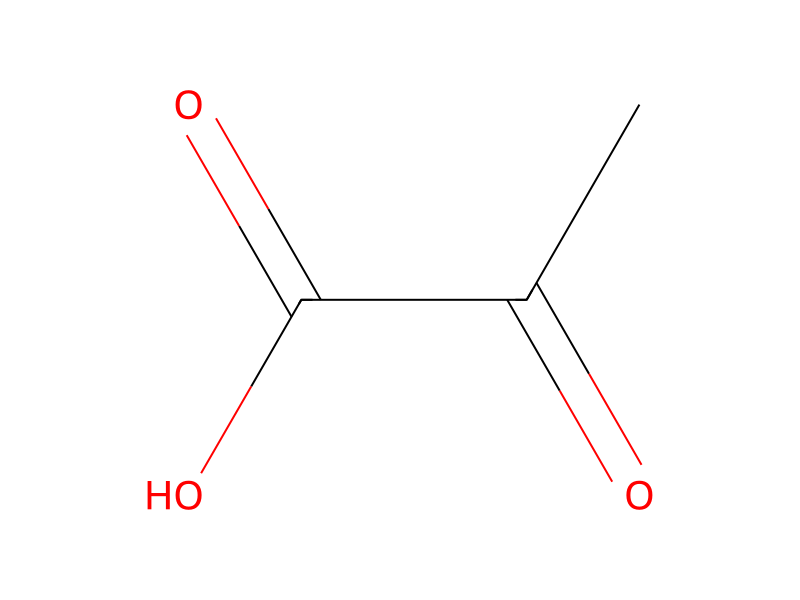
Pyruvic Acid → 1,3-dimethylquinoxalin-2(1H)-one
Reaction equation

O(CC1C(=O)NC2C(N=1)=CC=CC=2)C1C=CC=CC=1.[CH3:20][N:21]1[C:30]2[C:25](=[CH:26][CH:27]=[CH:28][CH:29]=2)[N:24]=[C:23]([CH2:31]OC2C=CC=CC=2C(NC2C=CC=CC=2)=O)[C:22]1=[O:48].CNC1C=CC=CC=1N.C(O)(=O)C(C)=O>C(O)C>[CH3:20][N:21]1[C:30]2[C:25](=[CH:26][CH:27]=[CH:28][CH:29]=2)[N:24]=[C:23]([CH3:31])[C:22]1=[O:48]Participants



Conditions
- Temperature
- 50 °C
Procedure
A particularly preferred embodiment of the phenoxymethylquinoxalinone compounds of the present invention, 2-(4-Methyl-3-oxo-3,4-dihydroquinoxalin-2-yl-methoxy)-N-phenylbenzamide, was synthesized as follows. The compound 1,3-Dimethyl-1H-quinoxalin-2-one (Compound A) was prepared by dissolving N-methyl-1,2-phenylenediamine (6.68 g, 54.7 mmol) and pyruvic acid (3.8 mL, 54.7 mmol) in ethanol (230 mL) and warming the mixture to 50° C. The color changed dramatically from a dark, cloudy brown to clear orange. Ethanol was evaporated and the crude product was filtered through a silica bed with CH2Cl2/EtOAc (1:1) to give 7.36 g of product as a yellow solid (mp. 75-77° C., 42.3 mmol, 77.2%). FT-IR (KBr): 3075-2975 cm−1 (aromatic CH), 2950-2850 (aliphatic CH), 1650 (C═O), 1600 (C═N). 1H-NMR (CDCl3): δ 7.80 (d, 1H, J=7.9 Hz), 7.52 (t, 1H, J=7.8 Hz), 7.33 (m, 2H), 3.70 (s, 3H), 2.59 (s, 3H).
Workup
- customEthanol was evaporated
- filtrationthe crude product was filtered through a silica bed with CH2Cl2/EtOAc (1:1)
Sources & evidence
- ORD record
- ord-81397c789485404487588d8fa466f64e
- Source dataset
- uspto-grants-2004_02
- Patent number
- US06693112B2
Reaction notes
Loading…