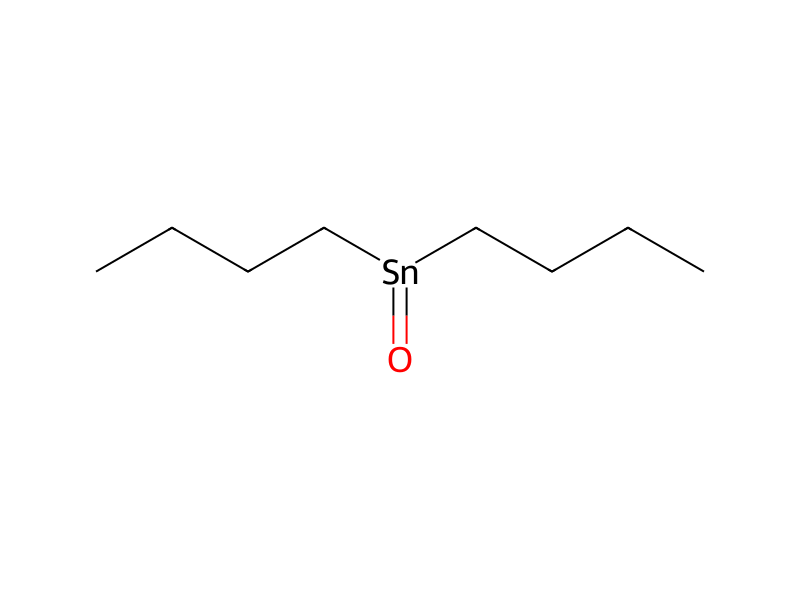
Dibutyltin oxide → HCID 178525128, compound
Reaction equation

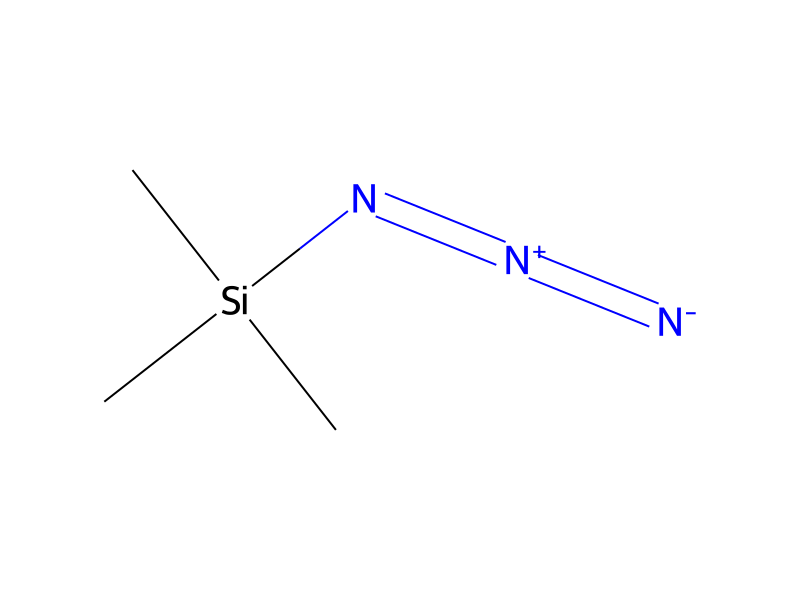
[CH2:1]([O:8][C:9]([N:11]1[CH2:16][CH2:15][CH2:14][CH:13]([C:17]#[N:18])[CH2:12]1)=[O:10])[C:2]1[CH:7]=[CH:6][CH:5]=[CH:4][CH:3]=1.C([Sn](=O)CCCC)CCC.C[Si]([N:33]=[N+:34]=[N-:35])(C)C>C1(C)C=CC=CC=1>[CH2:1]([O:8][C:9]([N:11]1[CH2:16][CH2:15][CH2:14][CH:13]([C:17]2[NH:35][N:34]=[N:33][N:18]=2)[CH2:12]1)=[O:10])[C:2]1[CH:3]=[CH:4][CH:5]=[CH:6][CH:7]=1Participants
5
Reactant 3

Product 1

Reagents, catalysts & solvents 1

Conditions
- Temperature
- 95 °C
Procedure
To a mixture of 3-cyano-piperidine-1-carboxylic acid benzyl ester (1 g, 4.1 mmol), and dibutyltinoxide (153 mg, 0.6 mmol) in toluene (8 mL) is added trimethylsilylazide (1.1 mL, 8.2 mmol) at room temperature. After the mixture is heated at 95° C. for 15 h, more trimethylsilylazide (2 mL, 15 mmol) is added and the stirring is continued for 6 h at 95° C. The mixture is concentrated, and the resulting solid is triturated with heptane (30 mL) and filtered to afford 3-(1H-tetrazol-5-yl)-piperidine-1-carboxylic acid benzyl ester (1 g). LCMS: RT=2.31 minutes, MS: 288 (M+H).
Workup
- concentrationThe mixture is concentrated
- customthe resulting solid is triturated with heptane (30 mL)
- filtrationfiltered
Sources & evidence
- ORD record
- ord-b08746de43ee4d22b143e094f79e51de
- Source dataset
- uspto-grants-2012_06
- Patent number
- US08193183B2
Reaction notes
Loading…