Diethyl (ethoxymethylene)malonate → Diethyl [(3-nitroanilino)methylidene]propanedioate
Reaction equation

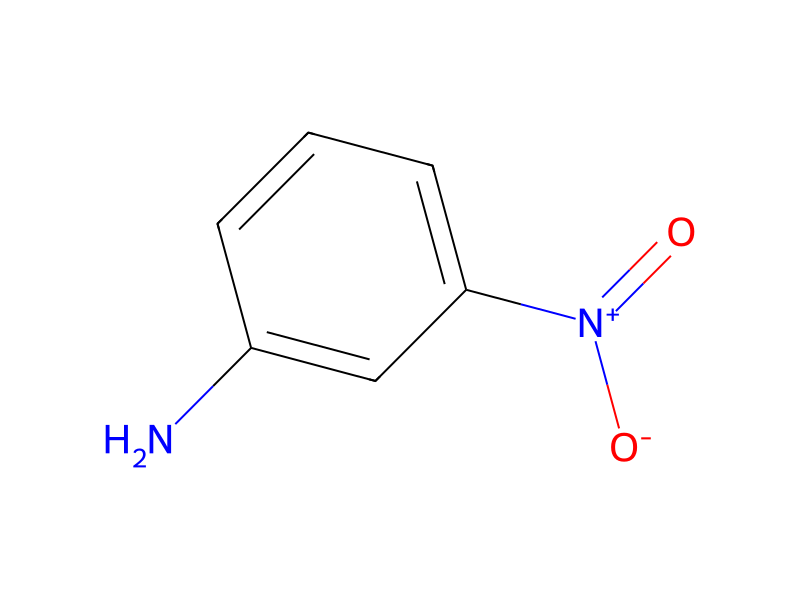
[N+:1]([C:4]1[CH:5]=[C:6]([CH:8]=[CH:9][CH:10]=1)[NH2:7])([O-:3])=[O:2].C(O[CH:14]=[C:15]([C:21]([O:23][CH2:24][CH3:25])=[O:22])[C:16]([O:18][CH2:19][CH3:20])=[O:17])C>>[N+:1]([C:4]1[CH:5]=[C:6]([CH:8]=[CH:9][CH:10]=1)[NH:7][CH:14]=[C:15]([C:16]([O:18][CH2:19][CH3:20])=[O:17])[C:21]([O:23][CH2:24][CH3:25])=[O:22])([O-:3])=[O:2]Participants


Procedure
The intermediate lower-alkyl 7-amino-1-R-1,4-dihydro-4-oxo-3-quinolinecarboxylates of formula II are prepared in several steps by convention procedures as follows: m-nitroaniline is reacted with diethyl ethoxymethylenemalonate to form diethyl m-nitroanilinomethylenemalonate which is cyclized by heating in an appropriate solvent such as Dowtherm® A (eutectic mixture of 26.5% diphenyl and 73.5% diphenyl ether) or mineral oil at about 250°-260° C. to produce lower-alkyl 1,4-dihydro-7-nitro-4-oxo-3-quinolinecarboxylate, which is then alkylated at the 1-position by reaction with an appropriate alkylating agent, e.g., methyl, ethyl or n-propyl halide, diethyl sulfate, triethyl phosphate, or the like, preferably in the presence of an inert solvent, e.g., dimethylformamide, and an appropriate acid-acceptor, e.g., anhydrous potassium carbonate, to produce lower-alkyl 1-R-1,4-dihydro-7-nitro-4-oxo-3-quinolinecarboxylate, catalytically hydrogenating the 7-nitro compound in the presence of an appropriate catalyst, e.g., palladium-on-charcoal, to produce the corresponding ethyl 7-amino-1-R-1,4-dihydro-4-oxo-3-quinolinecarboxylate (II).
Sources & evidence
- ORD record
- ord-23e3b6e217b347a295f599bc70f7ba3a
- Source dataset
- uspto-grants-1979_01
- Patent number
- US04137227
Reaction notes
Loading…