Sodium Carbonate → 5-t-Butyl-3-methacryloylaminopyrazole
Reaction equation

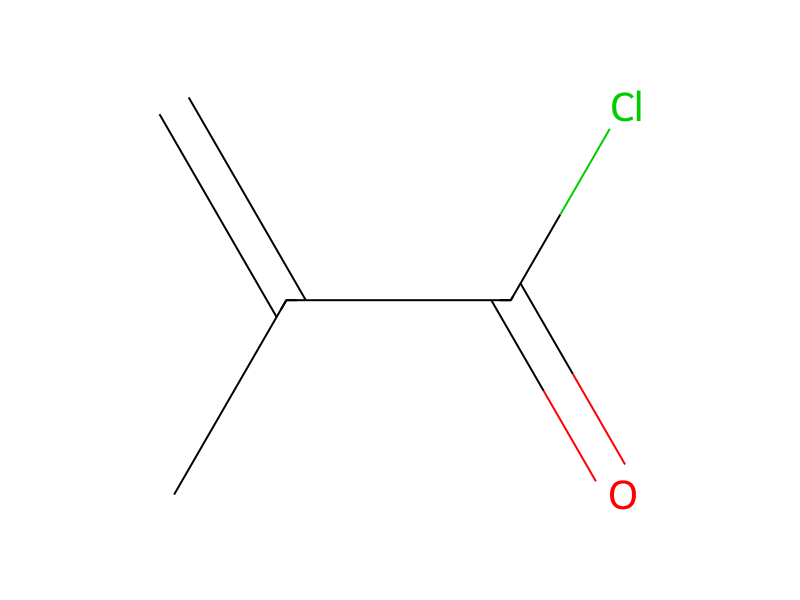
[NH2:1][C:2]1[CH:6]=[C:5]([C:7]([CH3:10])([CH3:9])[CH3:8])[NH:4][N:3]=1.C(=O)([O-])[O-].[Na+].[Na+].[C:17](Cl)(=[O:21])[C:18]([CH3:20])=[CH2:19]>O.C(Cl)(Cl)(Cl)Cl>[C:7]([C:5]1[NH:4][N:3]=[C:2]([NH:1][C:17](=[O:21])[C:18]([CH3:20])=[CH2:19])[CH:6]=1)([CH3:10])([CH3:9])[CH3:8]Participants
6





Procedure
4.2 g (0.03 mole) of 3-amino-5-t-butylpyrazole as prepared in Example 1 was dissolved in 50 ml of water, and 3.2 g of sodium carbonate was added thereto. To the resulting aqueous solution was added dropwise 3.2 g of methacryloyl chloride dissolved in 20 ml of carbon tetrachloride at 0° C. while cooling with ice for one hour. The reaction mixture was placed at room temperature (i.e., about 20° to 30° C.), followed by filtration and washing with water to obtain 3.6 g of 5-t-butyl-3-methacryloylaminopyrazole. The mass analysis showed the presence of a molecular ion peak at 207.
Workup
- temperaturewhile cooling with ice for one hour
- customwas placed at room temperature
- custom(i.e., about 20° to 30° C.)
- filtrationfollowed by filtration
- washwashing with water
Sources & evidence
- ORD record
- ord-06d265f21e9b4f4ab2863abeb3be86fe
- Source dataset
- uspto-grants-1985_03
- Patent number
- US04505739
Reaction notes
Loading…