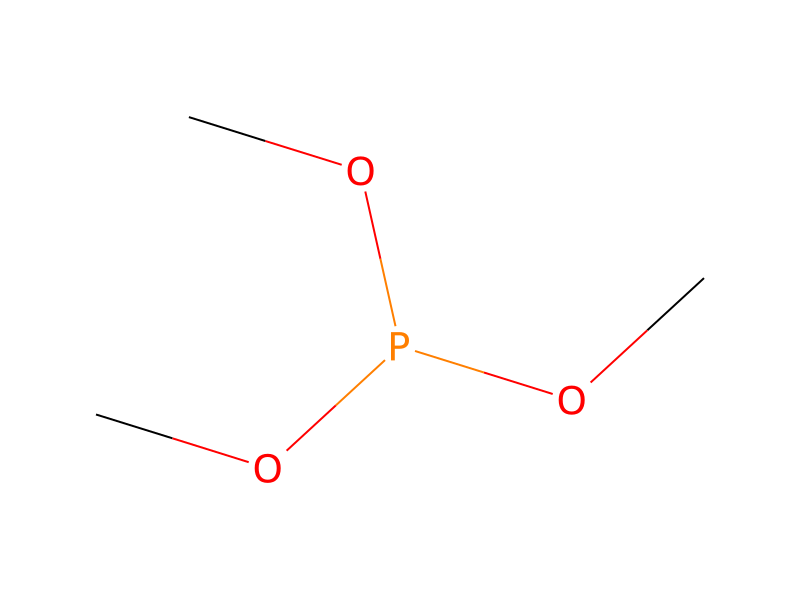
Trimethyl phosphite → HCID 14423944, compound
Reaction equation

[F:1][C:2]1[CH:7]=[CH:6][C:5]([C:8]([C:18]2[CH:23]=[CH:22][C:21]([F:24])=[CH:20][CH:19]=2)=[C:9]([C:12]2[N:16]([CH3:17])[N:15]=[N:14][N:13]=2)[CH2:10]Br)=[CH:4][CH:3]=1.[P:25]([O:30]C)([O:28][CH3:29])[O:26][CH3:27]>>[F:1][C:2]1[CH:7]=[CH:6][C:5]([C:8]([C:18]2[CH:23]=[CH:22][C:21]([F:24])=[CH:20][CH:19]=2)=[C:9]([C:12]2[N:16]([CH3:17])[N:15]=[N:14][N:13]=2)[CH2:10][P:25](=[O:30])([O:28][CH3:29])[O:26][CH3:27])=[CH:4][CH:3]=1Participants
3


Procedure
A slurry of 3,3-bis-(4-fluorophenyl)-1-bromo-2-(1-methyl-1H-tetrazol-5-yl)-2-propene (1.17 g, 3.0 mmol) and trimethyl phosphite (0.41 g, 3.3 mmol) was heated at 100° C. for 5 minutes. After cooling to ambient temperature, excess trimethylphosphite was removed in vacuo to give a light yellow solid. This solid was recrystallized from ethylacetate/hexane mixture to give the title compound as a pure white solid; m.p.=140°-141° C.
Workup
- customexcess trimethylphosphite was removed in vacuo
- customto give a light yellow solid
- customThis solid was recrystallized from ethylacetate/hexane mixture
Sources & evidence
- ORD record
- ord-889e769df0cc4aa2b642d11df1d9ec58
- Source dataset
- uspto-grants-1990_07
- Patent number
- US04939265
Reaction notes
Loading…