1,1-Dichloroethane → 4-tert-Butylbenzaldehyde
Reaction equation

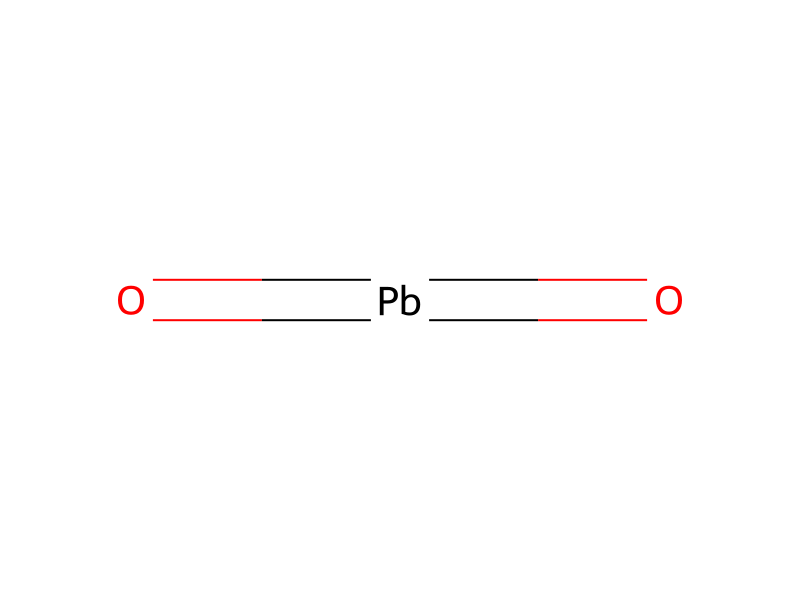
[C:1]([C:5]1[CH:10]=[CH:9][C:8]([CH3:11])=[CH:7][CH:6]=1)([CH3:4])([CH3:3])[CH3:2].ClC(Cl)C.[Pb](=O)=[O:17]>[Ti].[Ni].S(=O)(=O)(O)O>[C:1]([C:5]1[CH:6]=[CH:7][C:8]([CH:11]=[O:17])=[CH:9][CH:10]=1)([CH3:4])([CH3:3])[CH3:2]Participants
Reactant 3


Product 1

Reagents, catalysts & solvents 3



Procedure
2.5 ml of p-tert.butyltoluene, 10 ml of dichloroethane and 110 ml of 10N sulphuric acid are emulsified while stirring magnetically in a glass vessel provided with a cover. Expanded titanium metal (5×5 cm) coated with lead dioxide [lead dioxide-titanium composite electrode described in "Zeitschrift fur Naturforschung" 31 b, 39-50 (1976)] is used as the anode and the cathode is a nickel wire at a distance of 3 cm from the anode. A voltage of 3.4 volt is applied between the electrodes, whereupon a current of 50 mA is set. The temperature is held at 25° C. by external cooling. After the throughput of 1.55 aH, corresponding to 100% of the theoretically required current, the electrolysis is discontinued. The solution is extracted three times with 60 ml of chloroform each time and the combined extracts are analysed quantitatively by gas chromatography. With a conversion of 83% there is obtained a yield of p-tert.butylbenzaldehyde which amounts to 77% of theory.
Workup
- customprovided with a cover
- customis held at 25° C. by external cooling
- extractionThe solution is extracted three times with 60 ml of chloroform each time
Sources & evidence
- ORD record
- ord-c58bf9792d1b40f09ca6102b2420ebbf
- Source dataset
- uspto-grants-1983_06
- Patent number
- US04387007
Reaction notes
Loading…