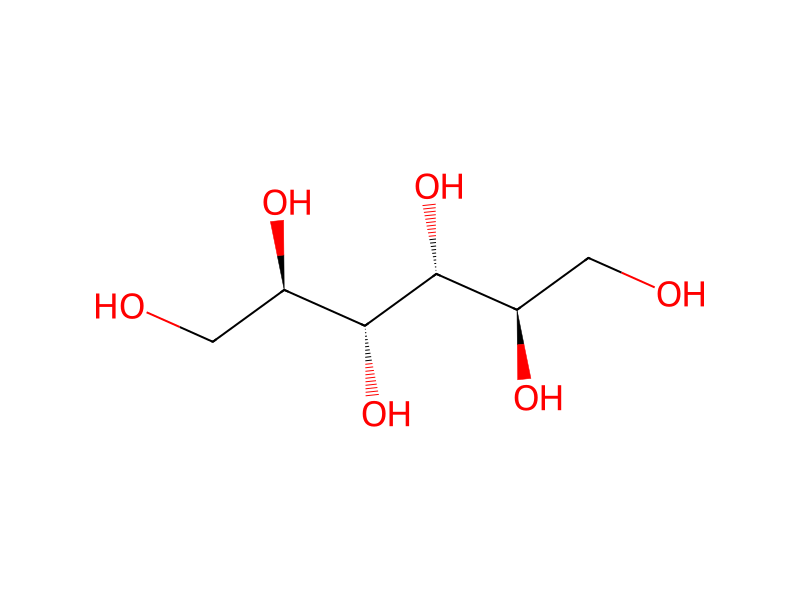
Mannitol → HCID 131732897, compound
Reaction equation

[CH3:1][C@H:2]1[CH2:33][C:32]([CH3:34])=[CH:31][C@@H:30]([CH2:35][CH:36]=[CH2:37])[C:28](=[O:29])[CH2:27][C@H:26]([OH:38])[C@@H:25]([CH3:39])[C@@H:24](/[C:40](/[CH3:51])=[CH:41]/[C@H:42]2[CH2:47][C@@H:46]([O:48][CH3:49])[C@H:45]([OH:50])[CH2:44][CH2:43]2)[O:23][C:21](=[O:22])[C@H:20]2[N:15]([CH2:16][CH2:17][CH2:18][CH2:19]2)[C:13](=[O:14])[C:11](=[O:12])[C@:9]2([OH:52])[O:10][C@@H:5]([C@@H:6]([O:54][CH3:55])[CH2:7][C@H:8]2[CH3:53])[C@@H:4]([O:56][CH3:57])[CH2:3]1.[CH2:58]([OH:69])[C@H:59]([C@H:61]([C@@H:63]([C@@H:65]([CH2:67][OH:68])[OH:66])[OH:64])[OH:62])[OH:60].C(#N)C>O>[CH3:1][C@H:2]1[CH2:33][C:32]([CH3:34])=[CH:31][C@@H:30]([CH2:35][CH:36]=[CH2:37])[C:28](=[O:29])[CH2:27][C@H:26]([OH:38])[C@@H:25]([CH3:39])[C@@H:24](/[C:40](/[CH3:51])=[CH:41]/[C@H:42]2[CH2:47][C@@H:46]([O:48][CH3:49])[C@H:45]([OH:50])[CH2:44][CH2:43]2)[O:23][C:21](=[O:22])[C@H:20]2[N:15]([CH2:16][CH2:17][CH2:18][CH2:19]2)[C:13](=[O:14])[C:11](=[O:12])[C@:9]2([OH:52])[O:10][C@@H:5]([C@@H:6]([O:54][CH3:55])[CH2:7][C@H:8]2[CH3:53])[C@@H:4]([O:56][CH3:57])[CH2:3]1.[CH2:67]([OH:68])[C@H:65]([C@H:63]([C@@H:61]([C@@H:59]([CH2:58][OH:69])[OH:60])[OH:62])[OH:64])[OH:66]Participants
Reactant 3

Product 1

Reagents, catalysts & solvents 1

Conditions
- Temperature
- -50 °C
Procedure
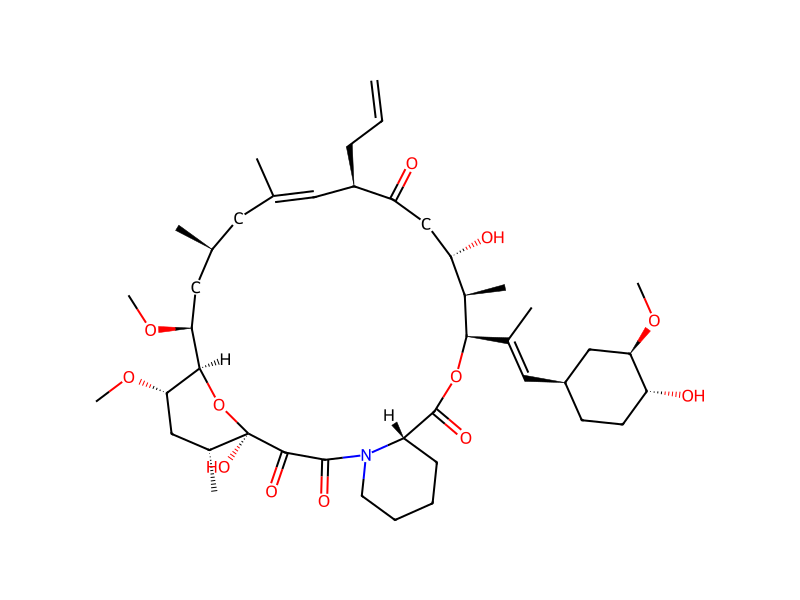
A formulation of tacrolimus (TAC) was produced using TAC and mannitol (MAN) in ratio 1:1. The TAC:MAN 1:1 formulation was prepared using the ultra-rapid freezing (URF) process. The composition was prepared by dissolving TAC and MAN at a 1:1 ratio and 0.75% solids in a 60/40 mixture of acetonitrile and water. The solution of drug and excipient was applied to the surface of a solid substrate, which is cooled using a cryogenic substrate maintained at −50° C. The frozen compositions were then collected and the solvent was removed by lyophilization using a VirTis Advantage Lyophilizer (VirTis Company, Inc. Gardiner, N.Y.). The dried powders were stored at room temperature under vacuum. The result of XRD characterization (following the procedure in example 2) is that the composition is amorphous. The result of SEM (following the procedure in example 4) is that the morphology is nanostructured aggregates with small primary particles consisting of TAC and MAN with primary particle sizes of about 100-200 nm.
Workup
- customThe composition was prepared
- temperatureis cooled
- customThe frozen compositions were then collected
- customthe solvent was removed by lyophilization
- customwere stored at room temperature under vacuum
- customThe result of XRD characterization (
- customThe result of SEM (
Sources & evidence
- ORD record
- ord-ea165849b33c47658c121f0523af428f
- Source dataset
- uspto-grants-2015_06
- Patent number
- US09044391B2
Reaction notes
Loading…