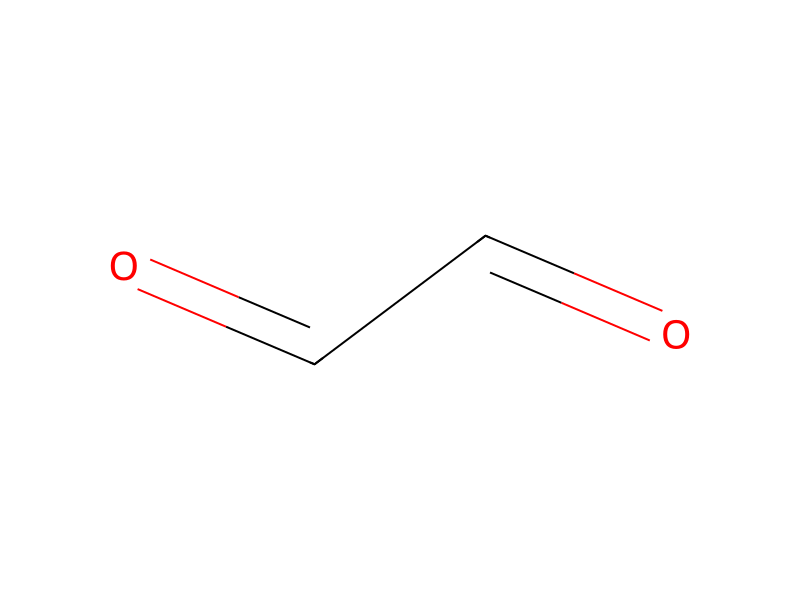
Glyoxal → HCID 77231154, compound
Reaction equation

[Cl:1][C:2]1[CH:7]=[C:6]([Cl:8])[N:5]=[C:4]([NH2:9])[C:3]=1[NH2:10].[CH:11]([CH:13]=O)=O>C1COCC1.O>[Cl:8][C:6]1[CH:7]=[C:2]([Cl:1])[C:3]2[C:4]([N:5]=1)=[N:9][CH:11]=[CH:13][N:10]=2Participants
5
Reactant 2

Product 1

Reagents, catalysts & solvents 2


Procedure
A solution of 4.81 g (27 mmol) 4,6-dichloro-pyridine-2,3-diamine (synthesis described in J. E. Schelling, C. A. Salemink, Rec. Tray. Chim. Pays-Bas 91, 650 [1972]) in 50 ml THF was treated with 5.22 g (27 mmol) of a 30% solution of glyoxal in water and the mixture was stirred for 3 days at room temperature. The reaction mixture was evaporated and the residue was partitioned between dichloromethane and diluted sodium carbonate solution. The organic phase was dried over sodium sulfate and evaporated. The residue was chromatographed on a silica gel column with cyclohexane/ethyl acetate as eluent yielding 6,8-dichloro-pyrido[2,3-b]pyrazine as off-white fine needles; HPLC/MS (B): 1.93 min, [M+H] 200.
Workup
- customThe reaction mixture was evaporated
- customthe residue was partitioned between dichloromethane and diluted sodium carbonate solution
- dry with materialThe organic phase was dried over sodium sulfate
- customevaporated
- customThe residue was chromatographed on a silica gel column with cyclohexane/ethyl acetate as eluent
Sources & evidence
- ORD record
- ord-e1e86b2fc4c84196b86151c3cb371551
- Source dataset
- uspto-grants-2015_06
- Patent number
- US09051318B2
Reaction notes
Loading…