Cesium carbonate → 5-Cyclopropylpyridin-3-amine
Reaction equation

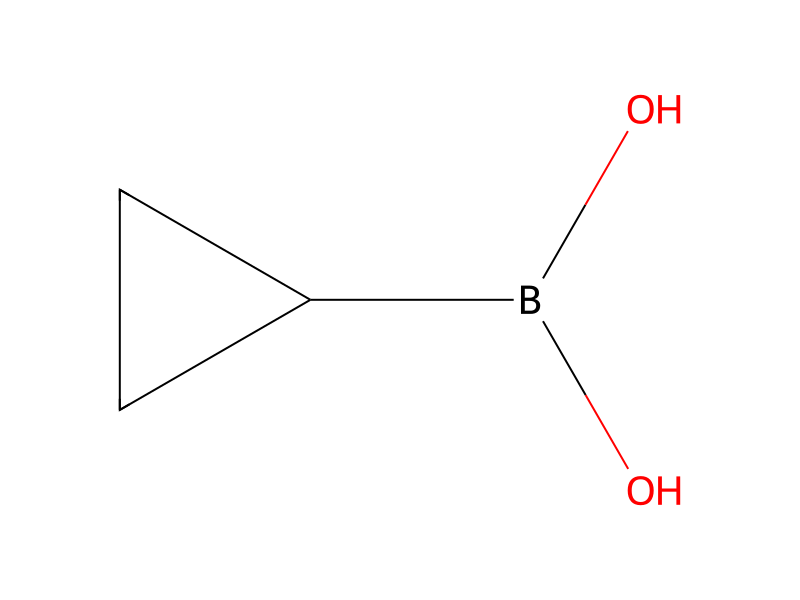
[CH:1]1(B(O)O)[CH2:3][CH2:2]1.C(=O)([O-])[O-].[Cs+].[Cs+].O1CCOCC1.O.Br[C:21]1[CH:22]=[C:23]([NH2:27])[CH:24]=[N:25][CH:26]=1>C1C=CC([P]([Pd]([P](C2C=CC=CC=2)(C2C=CC=CC=2)C2C=CC=CC=2)([P](C2C=CC=CC=2)(C2C=CC=CC=2)C2C=CC=CC=2)[P](C2C=CC=CC=2)(C2C=CC=CC=2)C2C=CC=CC=2)(C2C=CC=CC=2)C2C=CC=CC=2)=CC=1.O>[CH:1]1([C:21]2[CH:22]=[C:23]([NH2:27])[CH:24]=[N:25][CH:26]=2)[CH2:3][CH2:2]1Participants
7






Conditions
- Temperature
- 100 °C
Procedure
Cyclopropylboronic acid (360 mg), cesium carbonate (1.4 g), and Pd(PPh3)4 (166 mg) were added to a 1,4-dioxane/water (4.5 ml/0.5 ml) solution containing 5-bromopyridin-3-amine (500 mg) in a nitrogen atmosphere, followed by stirring in a sealed tube at 100° C. for 5 hours. The reaction solution was adjusted to room temperature and water was added to the reaction solution, followed by extraction with ethyl acetate. The organic layers were washed with saturated saline and dried over anhydrous sodium sulfate, the solvent was distilled away under reduced pressure, and the obtained residue was purified by silica gel chromatography (chloroform:MeOH=1:0 to 30:1). A brown solid of 5-cyclopropyl pyridin-3-amine (314 mg) was thus obtained.
Workup
- customwas adjusted to room temperature
- extractionfollowed by extraction with ethyl acetate
- washThe organic layers were washed with saturated saline
- dry with materialdried over anhydrous sodium sulfate
- distillationthe solvent was distilled away under reduced pressure
- customthe obtained residue was purified by silica gel chromatography (chloroform:MeOH=1:0 to 30:1)
Sources & evidence
- ORD record
- ord-794a78d0be494970a4d12b919ed4c965
- Source dataset
- uspto-grants-2015_06
- Patent number
- US09051310B2
Reaction notes
Loading…